
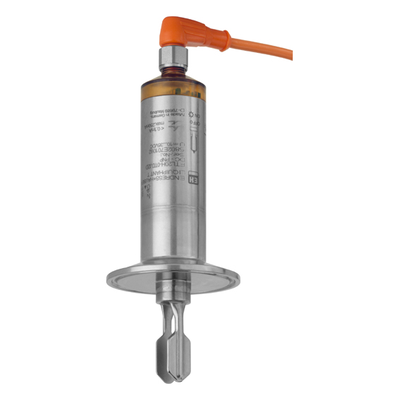
Technical Data
ComparePoint Level / Liquids
| Measuring Principle | |
| Characteristic / Application | most compact hygiene housing and process connections CIP / SIP Switch point 38mm EHEDG approvals |
| Supply / Communication | 19 ... 253V AC 10 ... 35V DC-PNP ASI-Bus |
| Ambient temperature | -40 °C ... 70 °C (-40 °F ... 158 °F) -25 °C ... 70 °C - ASi (-13 °F ... 158 °F - ASi) |
| Process temperature | -40 °C ... 150 °C (-40 °F ... 302 °F) |
| Process pressure / max. overpressure limit | Vacuum ... 40 bar (Vacuum ... 580 psi) |
| Min. density of medium | 0,7g/cm3 (0,5g/cm3 optional) |
| Main wetted parts | 316L |
| Process connection | G1/2A, G3/4A, G1A, NPT1/2", NPT3/4", R1/2", R3/4" |
| Process connection hygienic | Tri-Clamp ISO2852 Dairy coupling Flush mount solutions |
| Sensor length | 64mm (2.52") |
| Communication | AC, DC-PNP, ASi |
| Certificates / Approvals | WHG/ Overfill prevention EHEDG GL Marine |
| Successor | Product phase out planned, Successor FTL33 |
Application
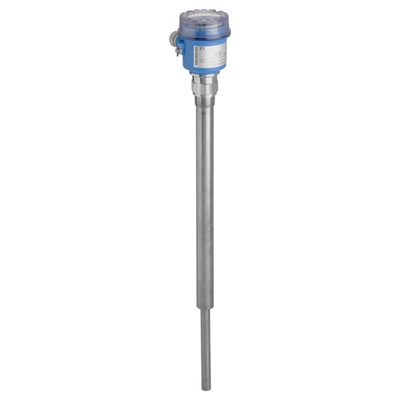
Liquiphant T FTL20 is a point level switch for all kinds of liquids; it can be used in storage tanks, vessels and pipes.
It provides overflow protection or pump protection in cleaning/filter systems and in tanks for refrigerants or lubricants.
The FTL20 is unaffected by medium conductivity, buildup, turbulence, flow or bubbles, and is an ideal replacement for float switches, conductive and capacitive sensors and optical sensors.
The FTL20 is not suitable for hazardous areas or media temperatures above 150 °C. The FTL20 can also be used in hygienic applications.
Performance
High operational safety and reliability with a wide range of applications
External LED display for on-site control
Compact design for installation in hard-to-reach places
Robust stainless steel housing (316L)
Plug connection for easy maintenance
Medium temperature up to 150 °C
Spare Parts & Accessories 19
19 spare parts · click to collapse
| Order code | Description | |
|---|---|---|
| 52021717 | O-ringfor weld-in adapter G3/4 D=50 316L Liquiphant T FTL20H | Details |
| 52014472 | O-ringfor weld-in adapter G1 (52001051) Liquiphant M "GW2" Liquiphant T "7", Liquicap M "GWJ", Cerabar T PMP135 "N", Ceraphant T PTP35 "BB" for weld-in andapter G1, 316L 3.1 (52011896) Liquiphant M "GW2", Cerabar T PMP135 "N", Ceraphant T PTP35 "BB" for sliding sleeve Soliphant T | Details |
| 52014424 | Sealing gasketfor weld-in adapter G1, adjustable, 316L (52001221) Liquiphant M "GW2" for weld-in adapter G1, adjustable, 316L (52011898) Liquiphant M "GW2" for weld-in adapter G1, adjustable Liquiphant FTL330H/FTL330L, Liquiphant T FTL20H "UPJ | Details |
| 52012018 | valve plugLiquiphant FTL20 | Details |
| 52012025 | valve plugLiquiphant FTL20 | Details |
| 52012026 | valve plugwith QUICKON-connection cut-crimp connection, IP65 Liquiphant FTL20 | Details |
| 52010156 | socket wrenchLiquiphant T FTL20/FTL20H | Details |
| 52027421 | Compression ringFlush mount FTL20/FTL20H Liquiphant T | Details |
| 52028295 | weld socketFlush mount process connection FTL20 "1", FTL20H "GDJ" w/o flange Material: 316L, EHEDG compliant Seal: Silicone O-ring Inspection cert. EN10204-3.1 material (316L wetted parts) | Details |
| 52028294 | Welding adapter G3/4, d=29, 316L, sleeve, 3.1Flush mount FTL20/FTL20H, FTL31/FTL33, w/o flange. Only weld-in adapter w/o seal and ring. Inspection cert. EN10204-3.1 material (316L wetted parts). | Details |
| 52018765 | weld socketFlush mount process connection FTL20 "1", FTL20H "GDJ", FMI51, FTI51 "GQJ" Material: 316L, EHEDG compliant Seal: Silicone O-ring Inspection cert. EN10204-3.1 material (316L wetted parts) | Details |
| 52028293 | Welding Boss Spare PartsFlush mount FTL20/FTL20H, FTL31/FTL33, flange. Only weld-in adapter w/o seal and ring. Inspection cert. EN10204-3.1 material (316L wetted parts). | Details |
| 71093129 | weld socketFlush mount process connection. Material: 316L. Inspection cert. EN10204-3.1 material Seal: silicone O-ring FDA, 3-A compliant. Additional EPDM O-ring. FDA, EHEDG, 3-A, USP Class VI compliant. Usage: FMI51, FMI52, FTI51, FTI52, FTL31, FTL20H, FTL33, FTL41, FTL43, FTL50, FTL50H, FTL51, FTL51B, FTL51H, FTL63, FTL80, FTL81, FTL260, PMP135, PTP35, PTP33B, PMP23, PMP43, PMP51, FTW23, FTW33, QMW43. | Details |
| 52001051 | Process connection | Weld-in G1, d=60, 316L齐平安装式过程连接 FTL260 "0", FTL20 "7", FTL20H "GEJ", FTL330H/FTL330L "G", FTL50/FTL51, FTL50H/FTL51H "GW2", FMI51/FMI52, FTI51/FTI52 "GWJ", PMP135 "N", PTP35 "BB" 材质: 316L 密封: 硅橡胶 O-ring | Details |
| 52001221 | weld socketFlush mount process connection FTL260 "0", FTL20 "7", FTL20H "GEJ", FTL330H/FTL330L "G", FTL50/FTL51, FTL50H/FTL51H "GW2" Liquiphant is adjustable Material: 316L Seal: Silicone O-ring | Details |
| 52011898 | weld socketFlush mount process connection FTL260 "0", FTL20H "GEJ", FTL50/FTL51, FTL50H/FTL51H "GW2" Liquiphant is adjustable Material: 316L Seal: Silicone O-ring Inspection cert. EN10204-3.1 material (316L wetted parts) | Details |
| 52001047 | weld socket齐平式安装 过程连接 材质: 316L | Details |
| 52006909 | weld socketFlush mount process connection FTL20H "UPJ", FTL50H/FTL51H "EE2" Material: 316L Inspection cert. EN10204-3.1 material (316L wetted parts) | Details |
| 52021715 | Stainless steel union nut DIN11851, F25, SSfor process connection UPJ flush mount weld in adapter 52001047 Liquiphant T FTL20H | Details |
Configurator / Comparison
Source: public information from the Endress+Hauser website
Measuring principle video
 Click to play
Manuals & Documents 5
All documents for this model5 documents · click to expand
TI 焊接接头、过程转接头和法兰 Chinese
技术资料 Liquiphant T FTL20H Chinese
TI Weld-in adapter, process adapter and flanges English
Technical Information Vibration Limit Switch <br>Liquiphant T FTL 20 H English
Technical Information Vibration Limit Switch <br>Liquiphant T FTL 20 H English
Case Studies
Municipal Wastewater Treatment · tuning fork — Application Case
Site Conditions
This is a Municipal Wastewater Treatment customer whose plant is at the inlet, biological and outlet stages of a municipal plant. The main task was vibrating-fork point level detection and high/low alarms.
The Problem
The difficulty lies in high solids and corrosive fractions, with large diurnal flow swings; at the same time effluent parameters drift and probes foul with sludge and biofilm. Specification therefore means choosing fork length and surface finish by density and stickiness.
What We Did
We took a level range approach — level solution matched to the actual tank and silo geometry. Delivery was built around choosing fork length and surface finish by density and stickiness, with point-by-point checks on: stable compliance with Grade 1A discharge limits and online data reporting.
Operating Outcome
In service the system performs as intended — no calibration needed, with dependable switching, with routine maintenance falling noticeably.
Food & Beverage · tuning fork — Application Case
Application Context
dosing, pasteurising, filling and CIP stages is a typical Food & Beverage duty. The project started from tuning fork, focusing on vibrating-fork point level detection and high/low alarms.
Process Constraints
frequent cleaning demands instruments that withstand hot CIP/SIP caustic cycles, and syrups, dairy and beverages that scale easily, under strict hygienic requirements only amplify it. The tuning fork specification must therefore cover choosing fork length and surface finish by density and stickiness.
Delivery Approach
Delivery was handled as the level range — level solution matched to the actual tank and silo geometry. Execution centred on choosing fork length and surface finish by density and stickiness, together with food-safety and hygienic design per 3-A / EHEDG.
Field Results
Operation shows the benefit clearly — no calibration needed, with dependable switching, with confidence in this measuring point improving markedly.
Chemical & Pharmaceutical · tuning fork — Application Case
Customer Profile
The typical setting in Chemical & Pharmaceutical is reactors, metering vessels and finished-product tanks. The measuring point is tuning fork; the focus is vibrating-fork point level detection and high/low alarms.
Key Difficulties
Conditions are highly corrosive media with solvents and crystallisation, partly in explosive atmospheres and, on top of that, corrosion plus Ex protection shortens instrument life and makes downtime costly, which a standard configuration cannot handle for long. The design therefore starts with choosing fork length and surface finish by density and stickiness.
Implementation
The scope ran through the level range: level solution matched to the actual tank and silo geometry. Technically it hinges on choosing fork length and surface finish by density and stickiness, and on these requirements: Ex certification and GMP traceability of records.
Customer Benefit
In practice this means no calibration needed, with dependable switching, which cut the workload on the site maintenance team.
Power & Energy · tuning fork — Application Case
Project Background
The project covers boiler feedwater, turbine condensate and FGD/DeNOx systems. The work centres on tuning fork and the core task is vibrating-fork point level detection and high/low alarms.
Operating Challenges
The medium and duty are characterised by high temperature and pressure with both steam and saline water, and drift under high temperature and pressure, with very costly unplanned outages. So tuning fork cannot be specified generically — it calls for choosing fork length and surface finish by density and stickiness.
Solution
The Ainstru engineering team worked through the level range: level solution matched to the actual tank and silo geometry. The configuration involves choosing fork length and surface finish by density and stickiness, with these requirements in view: compliance with power-industry codes and unit availability targets.
Results
Since start-up the system has run steadily; the practical result is no calibration needed, with dependable switching.
Related Products
 Endress+Hauser
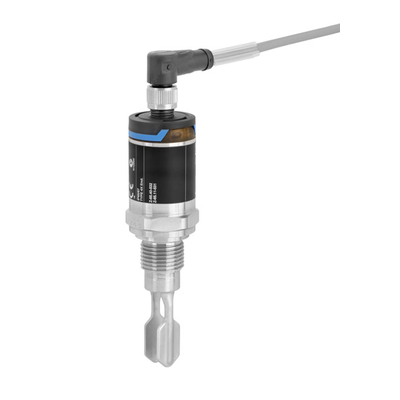
Liquiphant FTL31
 Endress+Hauser
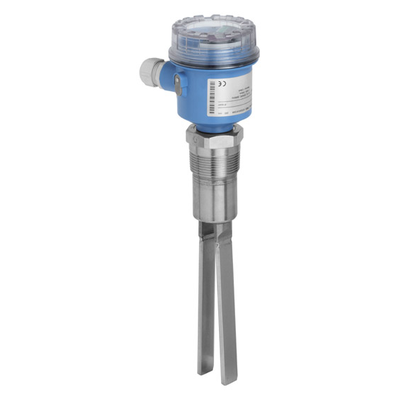
Soliphant M FTM50
 Endress+Hauser
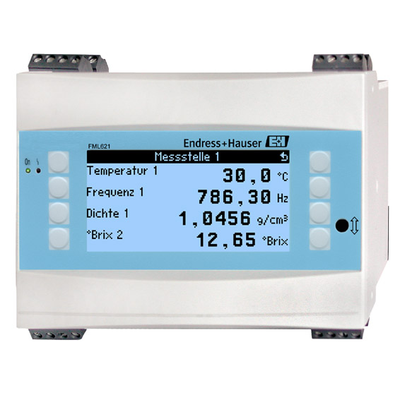
Density controller FML621 for Liquiphant
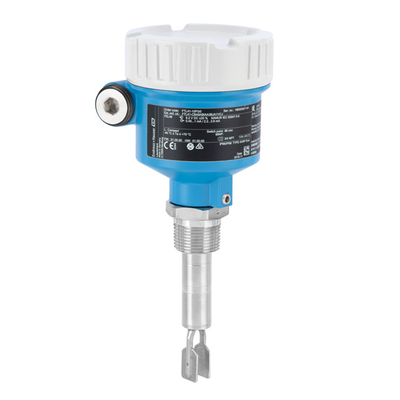 Endress+Hauser
Liquiphant FTL41
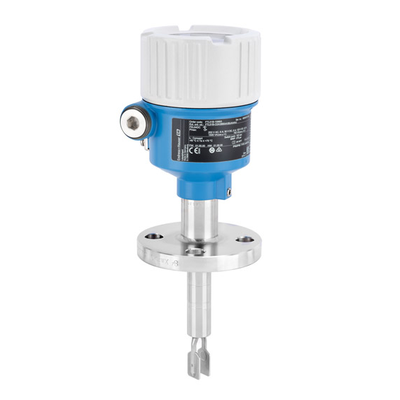 Endress+Hauser
Tuning fork level switch
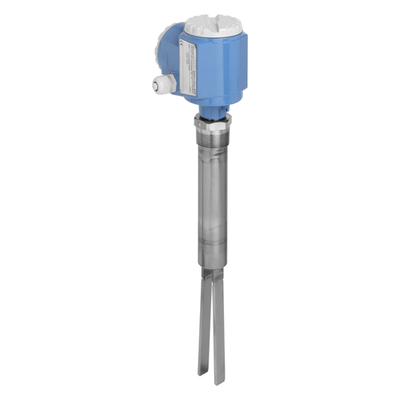 Endress+Hauser
Soliphant M FTM51
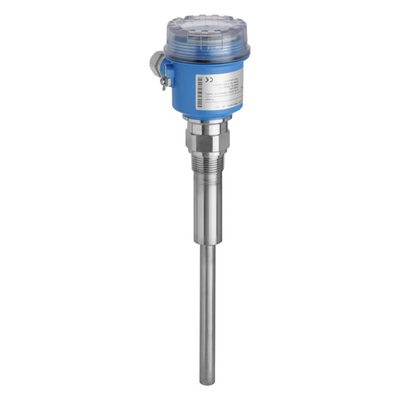 Endress+Hauser
Soliphant T FTM20
 Endress+Hauser