
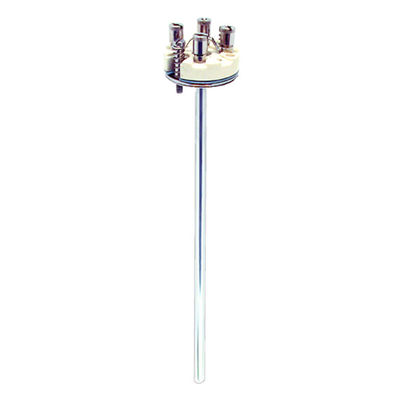
Technical Data
CompareThermometer
| Measuring Principle | Resistance Temperature Detector |
Modular temperature transmitter
Compared with direct sensor wiring, instruments fitted with an Endress+Hauser temperature transmitter offer higher measurement
accuracy and measurement reliability. Flexible selection of output signals and communication methods makes it easy to customize the instrument:
• Analog output 4 … 20 mA
• HART®
• PROFIBUS® PA
• FOUNDATION Fieldbus™
Benefits
• Customizable insertion length for maximum flexibility
• Different Pt100 types and accuracy classes (IEC 60751): - Wire-wound, Class A accuracy or 1/3 DIN B, single or dual element - Thin-film, Class A accuracy or 1/3 DIN B
• 4-wire connection for single-element Pt100, 3-wire connection for dual-element Pt100
• Factory calibration certificate
• Certification for use in hazardous areas
Spare Parts & Accessories 4
4 spare parts · click to collapse
| Order code | Description | |
|---|---|---|
| TPR100- | RTD insert TPR100Mineral insulated cable (MgO) Replaceable insert acc.EN60751. max. measuring range: -200...600 oC (depending on configuration) | Enquire |
| 71111513 | Ceramic terminal block | Details |
| 71111514 | Ceramic terminal block | Details |
| 71111515 | Ceramic terminal block | Details |
Configurator / Comparison
Source: Endress+Hauser public information from the website
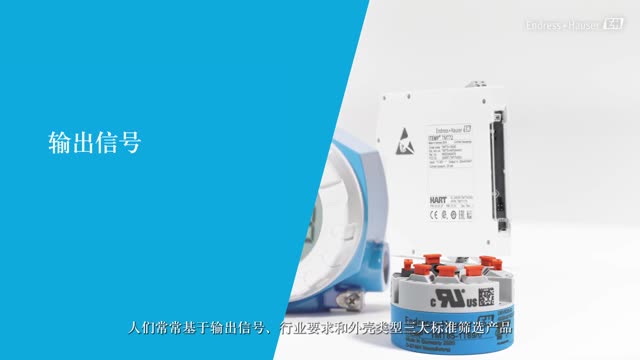
Measuring principle video
 Click to play
Case Studies
Municipal Wastewater Treatment · temperature casing — Application Case
Application Context
the inlet, biological and outlet stages of a municipal plant is a typical Municipal Wastewater Treatment duty. The project started from temperature casing, focusing on providing pressure-tight isolation and protection for temperature elements.
Process Constraints
effluent parameters drift and probes foul with sludge and biofilm, and high solids and corrosive fractions, with large diurnal flow swings only amplify it. The temperature casing specification must therefore cover sizing strength and vibration frequency against flow velocity, pressure and corrosivity.
Delivery Approach
Delivery was handled as the temperature range — temperature solution matched to measuring point and response needs. Execution centred on sizing strength and vibration frequency against flow velocity, pressure and corrosivity, together with stable compliance with Grade 1A discharge limits and online data reporting.
Field Results
Operation shows the benefit clearly — longer well life, avoiding breakage that disrupts the process, with confidence in this measuring point improving markedly.
Municipal Wastewater Treatment · Temperature transmitter — Application Case
Site Conditions
This is a Municipal Wastewater Treatment customer whose plant is at the inlet, biological and outlet stages of a municipal plant. The main task was converting RTD or thermocouple signals into a standard current output.
The Problem
The difficulty lies in high solids and corrosive fractions, with large diurnal flow swings; at the same time effluent parameters drift and probes foul with sludge and biofilm. Specification therefore means choosing integral or remote versions by ambient, Ex zone and mounting.
What We Did
We took a temperature range approach — temperature solution matched to measuring point and response needs. Delivery was built around choosing integral or remote versions by ambient, Ex zone and mounting, with point-by-point checks on: stable compliance with Grade 1A discharge limits and online data reporting.
Operating Outcome
In service the system performs as intended — better noise immunity and much smaller transmission error, with routine maintenance falling noticeably.
Municipal Wastewater Treatment · thermistor — Application Case
Project Overview
The site is the inlet, biological and outlet stages of a municipal plant. The customer wanted thermistor properly configured on the existing plant, with the aim of high-accuracy temperature measurement with platinum resistance elements.
Technical Challenges
What actually causes trouble is high solids and corrosive fractions, with large diurnal flow swings, and effluent parameters drift and probes foul with sludge and biofilm. All of this means the thermistor configuration has to involve choosing Pt100 or Pt1000 by accuracy class, wiring system and insertion depth.
Configuration
Supply and installation were organised through the temperature range: temperature solution matched to measuring point and response needs. On site this meant choosing Pt100 or Pt1000 by accuracy class, wiring system and insertion depth, checked line by line against: stable compliance with Grade 1A discharge limits and online data reporting.
Performance
After commissioning the outcome is clear accuracy advantage at low temperatures, giving tighter process windows, and the readings are now used for process tuning.
Municipal Wastewater Treatment · thermocouples — Application Case
Project Background
The project covers the inlet, biological and outlet stages of a municipal plant. The work centres on thermocouples and the core task is high-temperature measurement with thermocouples.
Operating Challenges
The medium and duty are characterised by high solids and corrosive fractions, with large diurnal flow swings, and effluent parameters drift and probes foul with sludge and biofilm. So thermocouples cannot be specified generically — it calls for choosing the type by temperature limit, atmosphere and response speed.
Solution
The Ainstru engineering team worked through the temperature range: temperature solution matched to measuring point and response needs. The configuration involves choosing the type by temperature limit, atmosphere and response speed, with these requirements in view: stable compliance with Grade 1A discharge limits and online data reporting.
Results
Since start-up the system has run steadily; the practical result is strong high-temperature capability, measuring furnace temperatures directly.