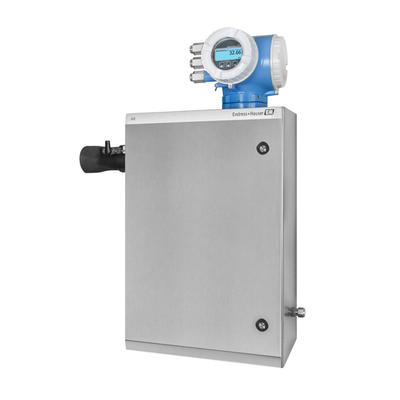
Rxn5 is an industry-leading, turnkey Raman spectroscopy analyzer based on laser spectroscopy technology. It uses Raman spectroscopy analysis technology for quantitative measurement of chemical composition. The Raman spectroscopy analyzer Rxn5 is compact, minimizing sample usage and power consumption, and meets customer requirements for maintenance and hazardous area certifications. The analyzer features high optical analysis efficiency and is ideal for typical gas-phase sample measurements.
Advantages
-
Non-destructive gas analysis, including homonuclear diatomic analysis (H2, N2, O2)
-
Compact design, smaller than most wall-mounted gas chromatograph analyzers
-
One main unit with four probes can replace up to four traditional analytical instruments
-
Rugged and durable, with minimal sample usage and power consumption requirements, no sample transport needed, and no consumables (GC columns, valves, gases, pumps)
-
Shortest analyzer maintenance time, highest safety (toxic gases do not enter the analyzer)
-
Multi-channel measurement, simultaneous measurement of four sample streams
-
Ambient temperature: -20...+50°C
Application Areas
-
Process measurement points:
-
Steam methane reforming for hydrogen production
-
Gasifiers (coal, petroleum coke, waste, biomass)
-
Converter
-
Hydrotreating
-
Hydrocracking
-
CO2 removal
-
Product synthesis loop
-
Typical industries:
-
Hydrogen production/hydrogen purity, HyCO, hydrogen recovery
-
Methanol production
-
Ammonia production
-
Gas turbine fuel feed
-
Synthetic natural gas/IGCC power plants
-
LNG base load customer transfer, LNG send-out to storage tanks, LNG mixed refrigerant optimization
Source: Endress+Hauser website public information
Case Studies
Municipal Wastewater Treatment · Gas Analysis — Application Case
Project Overview
The site is the inlet, biological and outlet stages of a municipal plant. The customer wanted Gas Analysis properly configured on the existing plant, with the aim of continuous analysis of target components in flue or process gas.
Technical Challenges
What actually causes trouble is high solids and corrosive fractions, with large diurnal flow swings, and effluent parameters drift and probes foul with sludge and biofilm. All of this means the Gas Analysis configuration has to involve choosing the analysis principle by range, background gas and conditioning.
Configuration
Supply and installation were organised through the analyser range: selecting as part of a complete water-analysis system. On site this meant choosing the analysis principle by range, background gas and conditioning, checked line by line against: stable compliance with Grade 1A discharge limits and online data reporting.
Performance
After commissioning the outcome is optimised combustion, cutting both fuel use and emissions, and the readings are now used for process tuning.
Food & Beverage · Gas Analysis — Application Case
Site Conditions
This is a Food & Beverage customer whose plant is at dosing, pasteurising, filling and CIP stages. The main task was continuous analysis of target components in flue or process gas.
The Problem
The difficulty lies in syrups, dairy and beverages that scale easily, under strict hygienic requirements; at the same time frequent cleaning demands instruments that withstand hot CIP/SIP caustic cycles. Specification therefore means choosing the analysis principle by range, background gas and conditioning.
What We Did
We took a analyser range approach — selecting as part of a complete water-analysis system. Delivery was built around choosing the analysis principle by range, background gas and conditioning, with point-by-point checks on: food-safety and hygienic design per 3-A / EHEDG.
Operating Outcome
In service the system performs as intended — optimised combustion, cutting both fuel use and emissions, with routine maintenance falling noticeably.
Chemical & Pharmaceutical · Gas Analysis — Application Case
Application Context
reactors, metering vessels and finished-product tanks is a typical Chemical & Pharmaceutical duty. The project started from Gas Analysis, focusing on continuous analysis of target components in flue or process gas.
Process Constraints
corrosion plus Ex protection shortens instrument life and makes downtime costly, and highly corrosive media with solvents and crystallisation, partly in explosive atmospheres only amplify it. The Gas Analysis specification must therefore cover choosing the analysis principle by range, background gas and conditioning.
Delivery Approach
Delivery was handled as the analyser range — selecting as part of a complete water-analysis system. Execution centred on choosing the analysis principle by range, background gas and conditioning, together with Ex certification and GMP traceability of records.
Field Results
Operation shows the benefit clearly — optimised combustion, cutting both fuel use and emissions, with confidence in this measuring point improving markedly.
Power & Energy · Gas Analysis — Application Case
Customer Profile
The typical setting in Power & Energy is boiler feedwater, turbine condensate and FGD/DeNOx systems. The measuring point is Gas Analysis; the focus is continuous analysis of target components in flue or process gas.
Key Difficulties
Conditions are high temperature and pressure with both steam and saline water and, on top of that, drift under high temperature and pressure, with very costly unplanned outages, which a standard configuration cannot handle for long. The design therefore starts with choosing the analysis principle by range, background gas and conditioning.
Implementation
The scope ran through the analyser range: selecting as part of a complete water-analysis system. Technically it hinges on choosing the analysis principle by range, background gas and conditioning, and on these requirements: compliance with power-industry codes and unit availability targets.
Customer Benefit
In practice this means optimised combustion, cutting both fuel use and emissions, which cut the workload on the site maintenance team.