
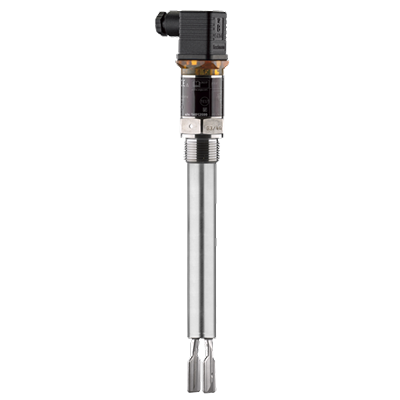
Technical Data
CompareProcess conditions
| Sensor length (L) | 100 … 1000 mm (3.94 … 39.37 in) |
| Process pressure | -1 … +64 bar/-100 … +6400 kPa (-14.5 … +928 psig) |
| Process temperature - standard | -40 … +100 ℃ (-40 … +212 ℉) |
| Process temperature - high temp. | -40 … +150 °C (-40 … +302 °F) Viscosity - dynamic 0.1 … 10000 mPa s Density 0.7 … 2.5 g/cm³ (0.025 … 0.09 lbs/in³) Density - optionally 0.5 … 2.5 g/cm³ (0.018 … 0.09 lbs/in³) Ambient temperature on the housing -40 … +70 °C (-40 … +158 °F) Storage and transport temperature -40 … +80 °C (-40 … +176 °F) Hysteresis approx. 2 mm (0.08 in) with vertical installation |
| Process fitting | Thread from G½, ¾ NPT, hygienic fitting |
Electrical & communication
| Operating voltage | 9.6 … 35 V DC |
| Power consumption | max. 0.5 W Switching-on delay 500 ms (on/off) 0.5 … 60 s (optional) |
Application area
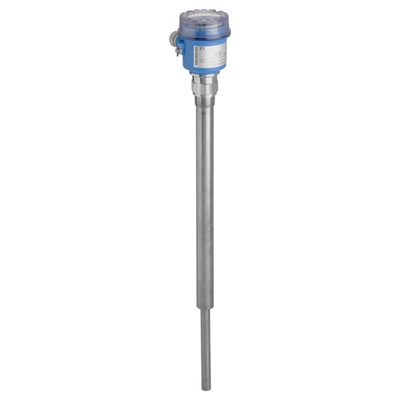
The VEGASWING 53 is used as a universal level switch in liquids withsmall dimensions. Independent of the mounting position, it detectsreliably with millimetre accuracy the limit level. The position of theswitching point is determined via the tube extension. The instrumentcan be used as empty or full detector, as approved overfill protection,dry run protection or pump protection in vessels and pipelines. TheVEGASWING 53 is an economical solution with maximum reliabilityand safety.
Your benefit
- Minimum time and cost expenditure due to simple setup without
- medium
- Precise and reliable function due to product-independent switching
- point
- Low maintenance costs
Function
The heart of the sensor is the vibration drive by which the tuning forkis energized to vibrate at its resonance frequency. When coveredwith medium, the frequency of the fork decreases. This frequencychange is processed by the integrated electronics and converted intoa switching command. With the tuning fork with only 38 mm length, theVEGASWING work reliably independent of the installation position inany liquid. Pressure, temperature, foam, viscosity and the compositionof the liquid do not influence the switching accuracy.
Case Studies
Municipal Wastewater Treatment · tuning fork — Application Case
Site Conditions
This is a Municipal Wastewater Treatment customer whose plant is at the inlet, biological and outlet stages of a municipal plant. The main task was vibrating-fork point level detection and high/low alarms.
The Problem
The difficulty lies in high solids and corrosive fractions, with large diurnal flow swings; at the same time effluent parameters drift and probes foul with sludge and biofilm. Specification therefore means choosing fork length and surface finish by density and stickiness.
What We Did
We took a level range approach — level solution matched to the actual tank and silo geometry. Delivery was built around choosing fork length and surface finish by density and stickiness, with point-by-point checks on: stable compliance with Grade 1A discharge limits and online data reporting.
Operating Outcome
In service the system performs as intended — no calibration needed, with dependable switching, with routine maintenance falling noticeably.
Food & Beverage · tuning fork — Application Case
Application Context
dosing, pasteurising, filling and CIP stages is a typical Food & Beverage duty. The project started from tuning fork, focusing on vibrating-fork point level detection and high/low alarms.
Process Constraints
frequent cleaning demands instruments that withstand hot CIP/SIP caustic cycles, and syrups, dairy and beverages that scale easily, under strict hygienic requirements only amplify it. The tuning fork specification must therefore cover choosing fork length and surface finish by density and stickiness.
Delivery Approach
Delivery was handled as the level range — level solution matched to the actual tank and silo geometry. Execution centred on choosing fork length and surface finish by density and stickiness, together with food-safety and hygienic design per 3-A / EHEDG.
Field Results
Operation shows the benefit clearly — no calibration needed, with dependable switching, with confidence in this measuring point improving markedly.
Chemical & Pharmaceutical · tuning fork — Application Case
Customer Profile
The typical setting in Chemical & Pharmaceutical is reactors, metering vessels and finished-product tanks. The measuring point is tuning fork; the focus is vibrating-fork point level detection and high/low alarms.
Key Difficulties
Conditions are highly corrosive media with solvents and crystallisation, partly in explosive atmospheres and, on top of that, corrosion plus Ex protection shortens instrument life and makes downtime costly, which a standard configuration cannot handle for long. The design therefore starts with choosing fork length and surface finish by density and stickiness.
Implementation
The scope ran through the level range: level solution matched to the actual tank and silo geometry. Technically it hinges on choosing fork length and surface finish by density and stickiness, and on these requirements: Ex certification and GMP traceability of records.
Customer Benefit
In practice this means no calibration needed, with dependable switching, which cut the workload on the site maintenance team.
Power & Energy · tuning fork — Application Case
Project Background
The project covers boiler feedwater, turbine condensate and FGD/DeNOx systems. The work centres on tuning fork and the core task is vibrating-fork point level detection and high/low alarms.
Operating Challenges
The medium and duty are characterised by high temperature and pressure with both steam and saline water, and drift under high temperature and pressure, with very costly unplanned outages. So tuning fork cannot be specified generically — it calls for choosing fork length and surface finish by density and stickiness.
Solution
The Ainstru engineering team worked through the level range: level solution matched to the actual tank and silo geometry. The configuration involves choosing fork length and surface finish by density and stickiness, with these requirements in view: compliance with power-industry codes and unit availability targets.
Results
Since start-up the system has run steadily; the practical result is no calibration needed, with dependable switching.
Related Products
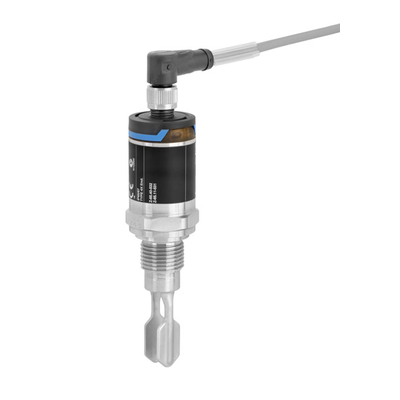 Endress+Hauser
Liquiphant FTL31
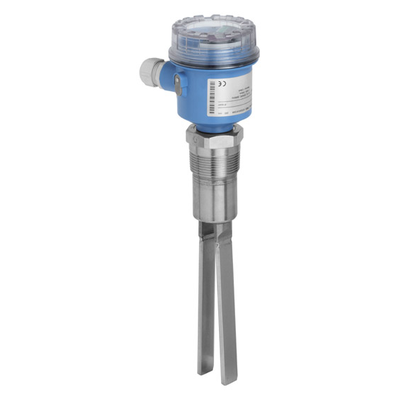 Endress+Hauser
Soliphant M FTM50
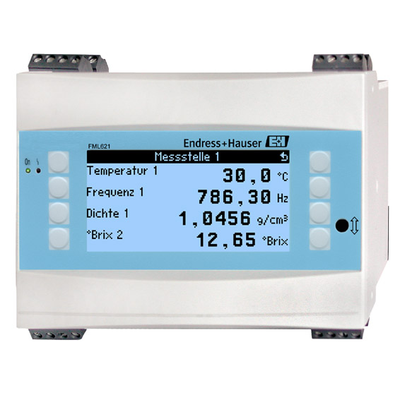 Endress+Hauser
Density controller FML621 for Liquiphant
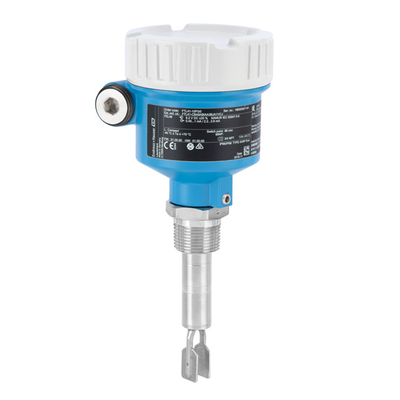 Endress+Hauser
Liquiphant FTL41
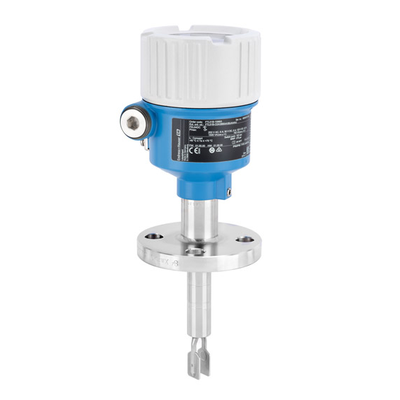 Endress+Hauser
Tuning fork level switch
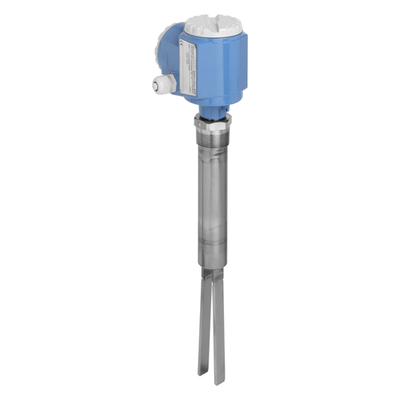 Endress+Hauser
Soliphant M FTM51
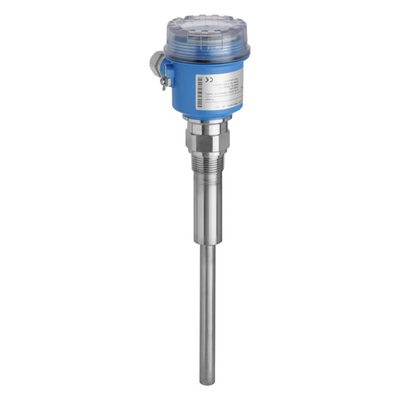 Endress+Hauser
Soliphant T FTM20
 Endress+Hauser