
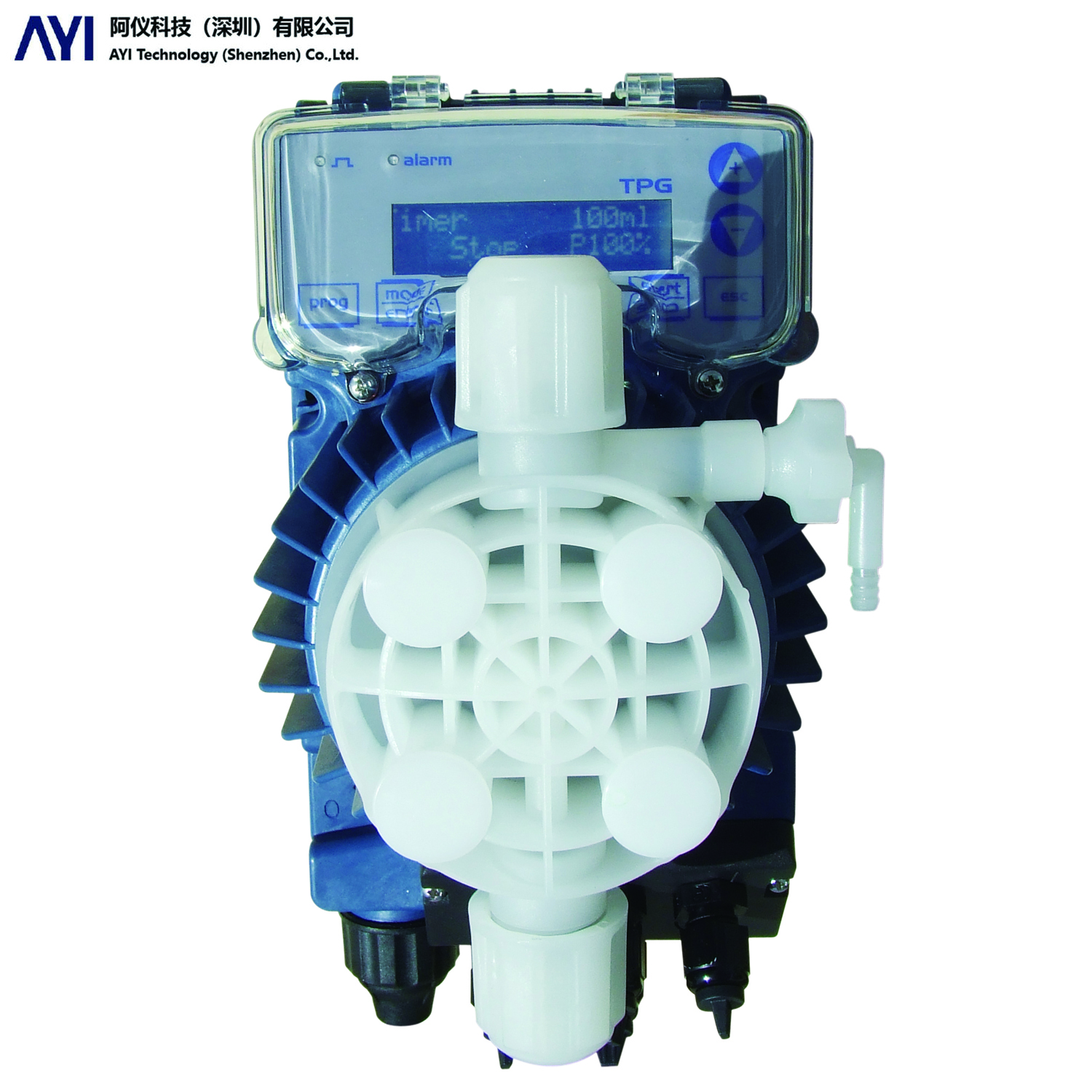
Bomba de diafragma electromagnética SEKO
SEKO TEKNA series electromagnetic drive diaphragm pump
Tekna series is the most widely used, well-known and best-selling classic in our metering pump family worldwide. It can be installed in both vertical and wall-mounted. (AKS, AKL,APG,TPG,TPR) five models are available, manual flow adjustment and automatic adjustment, analog signal input or digital pulse signal input, can meet the requirements of any installation conditions in the water treatment industry.
performance characteristics:
- flow range: 0.4-110 liters/hour, maximum pressure 20 bar
- contact end: PVDF (pump head), PTFE (diaphragm), EPDM/FPM/PTFE (seal ring) and ceramic (valve ball)
- Flow control mode: manual flow control or automatic flow control
simple selection, standard PVDF pump head
Only 5 models cover almost all flow ranges, set almost all functions of electromagnetic metering pumps, and each model uses a PVDF pump head.
Since the installation dimensions of the 5 types of pumps are almost the same, no matter which type of pump the customer chooses, it can bein the engineering design, the fixed point of the pump is planned in advance. Reduce inventory levels and reduce spare parts inventory pressure.
compatibility
PVDF pump head and ceramic ball valve as the standard configuration of the pump
PVDF pump heads are compatible with almost all chemicals used in industry, wastewater treatment and drinking water. The use of ceramic ball valves improves the reliability of dosing and the chemical compatibility of the entire contact end
reliable performance
After inspection, the service life of the diaphragm exceeds 5 years
The diaphragm is made of pure solid PTFE material, which is compatible with most chemicals. The service life of the diaphragm is more than 5 years
no longer need to regularly replace the diaphragm,reduces the workload of maintenance, with super compatibility.
administration
The pump can work stably in the voltage range of 100 to 240 volts
depending on the working environment, the coil uses the rated voltage to start the pump, thus saving electricity.
improves the efficiency of the pump because it is not affected by voltage fluctuations. Reduced inventory pressure.
program settings are intuitive and visible,Program Menu
program menu uses a functional display mode and is available in 5 different languages.
Intelligent display: Once a function is selected, the metering pump only displays the parameters that need to be set. This parameter is related to the set function,
reduces program setup time.
Installation Method
Vertical and wall mounting (with mounting bracket)
| PVDF pump head is the standard configuration of the pump |
| AKS: Flow Manual Adjustment |
| AKL: manual flow adjustment, with liquid level probe interface |
| APG: manual and automatic flow adjustment (4-20mA analog current signal/digital pulse signal input control) |
| TPG: digital display, manual and automatic flow adjustment (4-20mA analog current signal/digital pulse signal input control),can choose a variety of dosing modes: PPM, timing, batch, etc. |
| TPR: digital display, built-in PH/ORP monitor, according to the PH/ORP value measured by the monitor, automatically control the flow of the pump,optional PT100 probe for temperature compensation |
| Optional self-venting PVDF pump head and stainless steel pump head |
|
Optional Modbus RTU RS485 serial interface:
|
technical parameters:
| Series | |||||||||
| AKS | analog | Flow Manual Adjustment | |||||||
| AKL | flow manual adjustment, with liquid level probe interface | ||||||||
| APG | Flow manual adjustment and automatic adjustment, with liquid level probe interface, (according to external analog signal (4-20mA current signal) or digital pulse signal input control) | ||||||||
| TPG | digital explicit | Flow manual adjustment and automatic adjustment, with liquid level probe interface (according to external analog signal (4-20mA current signal) or digital pulse signal input control), can choose a variety of dosing modes: PPM, timing, batch, etc. | |||||||
| TPR | Flow manual adjustment and automatic adjustment, built-in PH/ORP monitor, according to the PH value measured by the monitor, automatically control the flow of the pump, optional PT100 probe for temperature compensation | ||||||||
| Model | pressure | flow | stroke flow | Connecting pipe dimension ID/OD [mm] | stroke frequency | power | gross weight | carton size | |
| [bar] | [l/h] | [ml/stroke] | [stroke/minute] | [tile] | [kg] | [length×width×height] [mm] | |||
| 500 | 20 | 0.4 | 0.06 | 4 / 6 suction 4 / 7 discharge | 120 | 15 | 3.4 | 285*185*240 | |
| 16 | 0.8 | 0.11 | |||||||
| 10 | 1.2 | 0.16 | |||||||
| 6 | 1.5 | 0.21 | |||||||
| 600 | 20 | 2.5 | 0.35 | 4 / 6 suction 4 / 7 discharge | 120 | 20 | 3.9 | ||
| 18 | 3 | 0.42 | |||||||
| 14 | 4.2 | 0.58 | |||||||
| 8 | 7 | 0.97 | |||||||
| 603 | 12 | 4 | 0.42 | 4/6 | 160 | 20 | 3.4 | ||
| 10 | 5 | 0.52 | |||||||
| 8 | 6 | 0.63 | |||||||
| 2 | 8 | 0.83 | |||||||
| 800 | 16 | 7 | 0.38 | 4/6 | 300 | 40 | 4.4 | ||
| 10 | 10 | 0.55 | |||||||
| 5 | 15 | 0.83 | |||||||
| 1 | 18 | 1 | |||||||
| 803 | 5 | 20 | 1.11 | 8/12 | 300 | 40 | 4.4 | ||
| 4 | 32 | 1.78 | |||||||
| 2 | 62 | 3.44 | |||||||
| 0.1 | 110 | 6.11 | |||||||
Model Code:
| Series | Tekba | ||||||||
| AKS | Flow Manual Adjustment | ||||||||
| AKL | flow manual adjustment, with liquid level probe interface | ||||||||
| APG | Manual flow adjustment/flow ratio adjustment, with liquid level probe port, through external analog signal (0/4-20mA current signal) or digital pulse signal to adjust the flow ratio | ||||||||
| TPG | Manual flow adjustment/flow ratio adjustment, with liquid level probe port, through external analog signal (0/4-20mA current signal) or digital pulse signal to adjust the flow ratio | ||||||||
| TPR | Manual flow adjustment/flow ratio adjustment, built-in PH/ORP monitor, according to the PH/ORP value measured by the monitor, automatically monitor the flow of the pump, optional PT100 probe for temperature compensation | ||||||||
| Model | pressure (bar) | flow (L/H) | stroke flow (ml/stroke) |
Connecting pipe size Inner diameter/outer diameter (mm) |
maximum frequency (stroke/minute) |
power (W) | weight (KG) | carton size Length X Width X Height (mm) |
|
| 500 | 20 | 0.4 | 0.06 | 4 / 6 suction 4 / 7 discharge | 120 | 15 | 3.4 | 295X245X185 | |
| 16 | 0.8 | 0.11 | |||||||
| 10 | 1.2 | 0.16 | |||||||
| 6 | 1.5 | 0.21 | |||||||
| 600 | 20 | 2.5 | 0.35 | 4 / 6 suction 4 / 7 discharge | 120 | 20 | 3.9 | ||
| 18 | 3 | 0.42 | |||||||
| 14 | 4.2 | 0.58 | |||||||
| 8 | 7 | 0.97 | |||||||
| 603 | 12 | 4 | 0.42 | 4/6 | 160 | 20 | 3.4 | ||
| 10 | 5 | 0.52 | |||||||
| 8 | 6 | 0.63 | |||||||
| 2 | 8 | 0.83 | |||||||
| 800 | 16 | 7 | 0.38 | 4/6 | 300 | 40 | 4.4 | ||
| 10 | 10 | 0.55 | |||||||
| 5 | 15 | 0.83 | |||||||
| 1 | 18 | 1 | |||||||
| 803 | 5 | 20 | 1.11 | 8/12 | 300 | 40 | 4.4 | ||
| 4 | 32 | 1.78 | |||||||
| 2 | 62 | 3.44 | |||||||
| 0.1 | 110 | 6.11 | |||||||
| power supply | |||||||||
| N | 100-240Vac,50/60Hz | ||||||||
| Material of touch end | pump head | valve ball | diaphragm | ||||||
| H | PVDF | ceramic | PTFE | ||||||
| A | PVDF (exhaust pump head) | ceramic | PTFE | ||||||
| Installation accessories | |||||||||
| P | PVDF | ||||||||
| sealing ring | |||||||||
| 0 | FPM | ||||||||
| 1 | EPDM | ||||||||
| 2 | PTFE | ||||||||
| alternatives | |||||||||
| 8 | standard | ||||||||
| customization | |||||||||
| 00 | standard | ||||||||
| M0 | Modbus RTU RS485 | ||||||||
| DML | 600 | N | H | P | 0 | 8 | 00 | ||
Casos de servicio
Tratamiento de Aguas Residuales Municipales — TEKNA: caso de aplicación
Situación en planta
Se trata de un cliente del sector Tratamiento de Aguas Residuales Municipales cuya planta está en las etapas de entrada, biológica y salida de una planta municipal. La tarea principal era dosificación regulable por solenoide con la serie TEKNA.
El problema
La dificultad está en alto contenido de sólidos y componentes corrosivos, con grandes variaciones diarias de caudal; a la vez, los parámetros del efluente oscilan y las sondas se ensucian con lodos y biopelícula. Por eso la especificación implica configurar por rango de regulación, frecuencia de carrera y señal externa.
Qué hicimos
Adoptamos un enfoque de solenoide: seleccionar por el comportamiento de dosificación por solenoide. La entrega se construyó en torno a configurar por rango de regulación, frecuencia de carrera y señal externa; se verificó punto por punto: cumplimiento estable del nivel 1A y reporte de datos en línea.
Resultado operativo
En servicio el sistema responde a lo previsto: dosificación proporcional al caudal, con calidad más estable, con un mantenimiento rutinario notablemente menor.
Alimentación y Bebidas — TEKNA: caso de aplicación
Contexto de aplicación
las etapas de dosificación, pasteurización, llenado y limpieza CIP es un servicio típico de Alimentación y Bebidas. El proyecto partió de TEKNA, centrándose en dosificación regulable por solenoide con la serie TEKNA.
Limitaciones del proceso
las limpiezas frecuentes exigen instrumentos resistentes a ciclos CIP/SIP con sosa caliente, y jarabes, lácteos y bebidas proclives a incrustaciones, con estrictos requisitos higiénicos no hace sino acentuarlo. Por eso la especificación de TEKNA debe cubrir configurar por rango de regulación, frecuencia de carrera y señal externa.
Enfoque de suministro
La entrega se gestionó como solenoide: seleccionar por el comportamiento de dosificación por solenoide. La ejecución se centró en configurar por rango de regulación, frecuencia de carrera y señal externa, junto con requisitos de seguridad alimentaria y diseño higiénico 3-A / EHEDG.
Resultados en campo
La operación evidencia el beneficio: dosificación proporcional al caudal, con calidad más estable, con una confianza claramente mayor en este punto de medición.
Química y Farmacéutica — TEKNA: caso de aplicación
Perfil del cliente
El entorno típico en Química y Farmacéutica es reactores, vasijas de dosificación y tanques de producto terminado. El punto de medición es TEKNA; el foco es dosificación regulable por solenoide con la serie TEKNA.
Dificultades clave
Las condiciones son medios muy corrosivos con disolventes y cristalización, en parte en atmósferas explosivas y, encima, la corrosión y la protección Ex acortan la vida útil y encarecen las paradas, algo que una configuración estándar no soporta mucho tiempo. El diseño parte de configurar por rango de regulación, frecuencia de carrera y señal externa.
Implementación
El alcance se canalizó por la vía de solenoide: seleccionar por el comportamiento de dosificación por solenoide. Técnicamente se apoya en configurar por rango de regulación, frecuencia de carrera y señal externa, y en estos requisitos: certificación Ex y trazabilidad de datos según GMP.
Beneficio para el cliente
En la práctica esto significa dosificación proporcional al caudal, con calidad más estable, lo que redujo la carga del equipo de mantenimiento.
Energía y Electricidad — TEKNA: caso de aplicación
Antecedentes del proyecto
El proyecto abarca agua de alimentación, condensado de turbina y sistemas de desulfuración/DeNOx. El trabajo se centra en TEKNA y la tarea principal es dosificación regulable por solenoide con la serie TEKNA.
Condiciones de servicio
El medio y el servicio se caracterizan por alta temperatura y presión, con vapor y agua salina, y además deriva a alta temperatura y presión, con paradas no programadas muy costosas. Por eso TEKNA no puede especificarse de forma genérica: requiere configurar por rango de regulación, frecuencia de carrera y señal externa.
Solución
El equipo técnico de Ainstru trabajó por la vía de solenoide: seleccionar por el comportamiento de dosificación por solenoide. La configuración incluye configurar por rango de regulación, frecuencia de carrera y señal externa; se cuidaron estos requisitos: cumplimiento de normativas del sector y objetivos de disponibilidad.
Resultados
Desde la puesta en marcha el sistema funciona de forma estable; el resultado práctico es dosificación proporcional al caudal, con calidad más estable.