
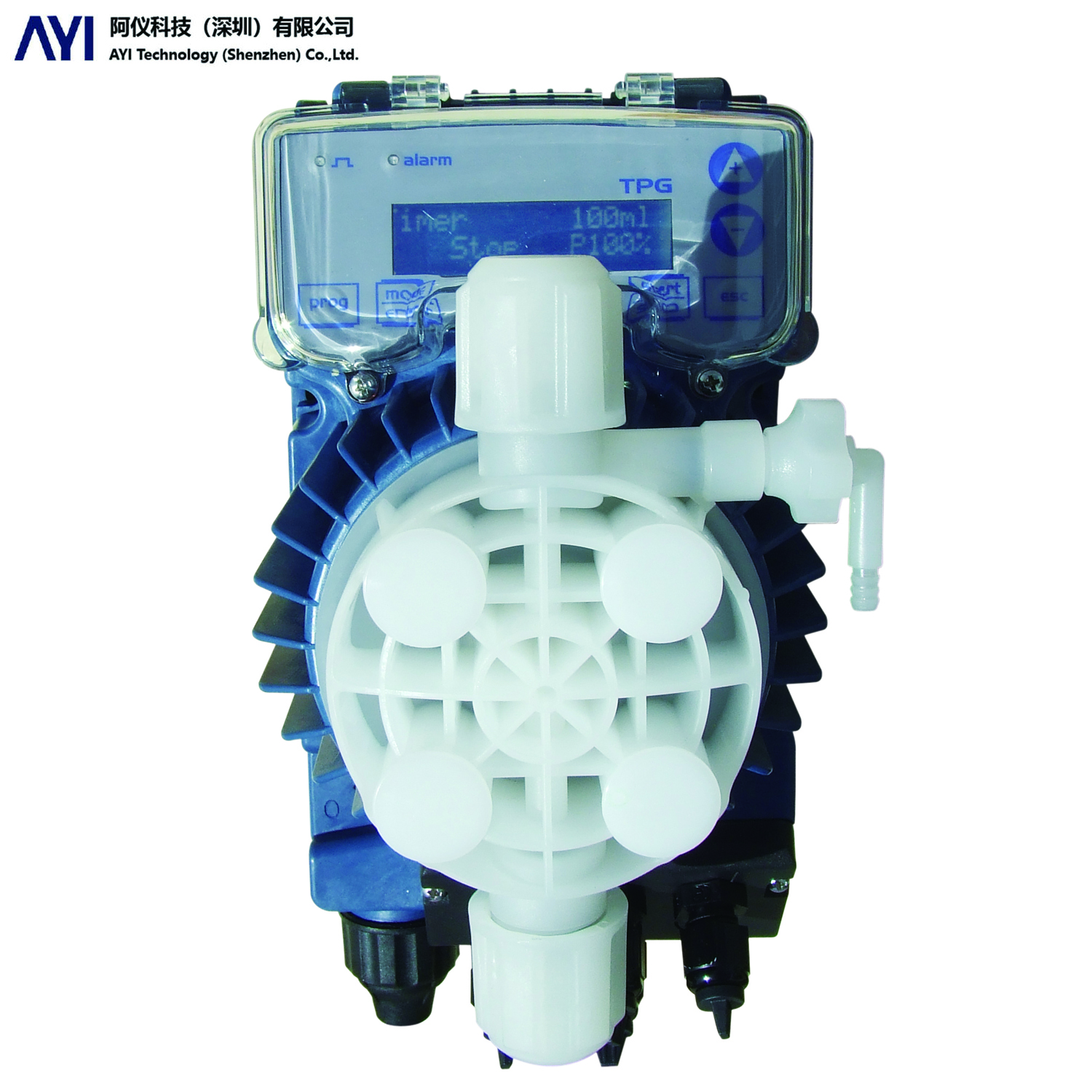
SEKO solenoid diaphragm pump
SEKO TEKNA series electromagnetic drive diaphragm pump
Tekna series is the most widely used, well-known and best-selling classic in our metering pump family worldwide. It can be installed in both vertical and wall-mounted. (AKS, AKL,APG,TPG,TPR) five models are available, manual flow adjustment and automatic adjustment, analog signal input or digital pulse signal input, can meet the requirements of any installation conditions in the water treatment industry.
performance characteristics:
- flow range: 0.4-110 liters/hour, maximum pressure 20 bar
- contact end: PVDF (pump head), PTFE (diaphragm), EPDM/FPM/PTFE (seal ring) and ceramic (valve ball)
- Flow control mode: manual flow control or automatic flow control
simple selection, standard PVDF pump head
Only 5 models cover almost all flow ranges, set almost all functions of electromagnetic metering pumps, and each model uses a PVDF pump head.
Since the installation dimensions of the 5 types of pumps are almost the same, no matter which type of pump the customer chooses, it can bein the engineering design, the fixed point of the pump is planned in advance. Reduce inventory levels and reduce spare parts inventory pressure.
compatibility
PVDF pump head and ceramic ball valve as the standard configuration of the pump
PVDF pump heads are compatible with almost all chemicals used in industry, wastewater treatment and drinking water. The use of ceramic ball valves improves the reliability of dosing and the chemical compatibility of the entire contact end
reliable performance
After inspection, the service life of the diaphragm exceeds 5 years
The diaphragm is made of pure solid PTFE material, which is compatible with most chemicals. The service life of the diaphragm is more than 5 years
no longer need to regularly replace the diaphragm,reduces the workload of maintenance, with super compatibility.
administration
The pump can work stably in the voltage range of 100 to 240 volts
depending on the working environment, the coil uses the rated voltage to start the pump, thus saving electricity.
improves the efficiency of the pump because it is not affected by voltage fluctuations. Reduced inventory pressure.
program settings are intuitive and visible,Program Menu
program menu uses a functional display mode and is available in 5 different languages.
Intelligent display: Once a function is selected, the metering pump only displays the parameters that need to be set. This parameter is related to the set function,
reduces program setup time.
Installation Method
Vertical and wall mounting (with mounting bracket)
| PVDF pump head is the standard configuration of the pump |
| AKS: Flow Manual Adjustment |
| AKL: manual flow adjustment, with liquid level probe interface |
| APG: manual and automatic flow adjustment (4-20mA analog current signal/digital pulse signal input control) |
| TPG: digital display, manual and automatic flow adjustment (4-20mA analog current signal/digital pulse signal input control),can choose a variety of dosing modes: PPM, timing, batch, etc. |
| TPR: digital display, built-in PH/ORP monitor, according to the PH/ORP value measured by the monitor, automatically control the flow of the pump,optional PT100 probe for temperature compensation |
| Optional self-venting PVDF pump head and stainless steel pump head |
|
Optional Modbus RTU RS485 serial interface:
|
technical parameters:
| Series | |||||||||
| AKS | analog | Flow Manual Adjustment | |||||||
| AKL | flow manual adjustment, with liquid level probe interface | ||||||||
| APG | Flow manual adjustment and automatic adjustment, with liquid level probe interface, (according to external analog signal (4-20mA current signal) or digital pulse signal input control) | ||||||||
| TPG | digital explicit | Flow manual adjustment and automatic adjustment, with liquid level probe interface (according to external analog signal (4-20mA current signal) or digital pulse signal input control), can choose a variety of dosing modes: PPM, timing, batch, etc. | |||||||
| TPR | Flow manual adjustment and automatic adjustment, built-in PH/ORP monitor, according to the PH value measured by the monitor, automatically control the flow of the pump, optional PT100 probe for temperature compensation | ||||||||
| Model | pressure | flow | stroke flow | Connecting pipe dimension ID/OD [mm] | stroke frequency | power | gross weight | carton size | |
| [bar] | [l/h] | [ml/stroke] | [stroke/minute] | [tile] | [kg] | [length×width×height] [mm] | |||
| 500 | 20 | 0.4 | 0.06 | 4 / 6 suction 4 / 7 discharge | 120 | 15 | 3.4 | 285*185*240 | |
| 16 | 0.8 | 0.11 | |||||||
| 10 | 1.2 | 0.16 | |||||||
| 6 | 1.5 | 0.21 | |||||||
| 600 | 20 | 2.5 | 0.35 | 4 / 6 suction 4 / 7 discharge | 120 | 20 | 3.9 | ||
| 18 | 3 | 0.42 | |||||||
| 14 | 4.2 | 0.58 | |||||||
| 8 | 7 | 0.97 | |||||||
| 603 | 12 | 4 | 0.42 | 4/6 | 160 | 20 | 3.4 | ||
| 10 | 5 | 0.52 | |||||||
| 8 | 6 | 0.63 | |||||||
| 2 | 8 | 0.83 | |||||||
| 800 | 16 | 7 | 0.38 | 4/6 | 300 | 40 | 4.4 | ||
| 10 | 10 | 0.55 | |||||||
| 5 | 15 | 0.83 | |||||||
| 1 | 18 | 1 | |||||||
| 803 | 5 | 20 | 1.11 | 8/12 | 300 | 40 | 4.4 | ||
| 4 | 32 | 1.78 | |||||||
| 2 | 62 | 3.44 | |||||||
| 0.1 | 110 | 6.11 | |||||||
Model Code:
| Series | Tekba | ||||||||
| AKS | Flow Manual Adjustment | ||||||||
| AKL | flow manual adjustment, with liquid level probe interface | ||||||||
| APG | Manual flow adjustment/flow ratio adjustment, with liquid level probe port, through external analog signal (0/4-20mA current signal) or digital pulse signal to adjust the flow ratio | ||||||||
| TPG | Manual flow adjustment/flow ratio adjustment, with liquid level probe port, through external analog signal (0/4-20mA current signal) or digital pulse signal to adjust the flow ratio | ||||||||
| TPR | Manual flow adjustment/flow ratio adjustment, built-in PH/ORP monitor, according to the PH/ORP value measured by the monitor, automatically monitor the flow of the pump, optional PT100 probe for temperature compensation | ||||||||
| Model | pressure (bar) | flow (L/H) | stroke flow (ml/stroke) |
Connecting pipe size Inner diameter/outer diameter (mm) |
maximum frequency (stroke/minute) |
power (W) | weight (KG) | carton size Length X Width X Height (mm) |
|
| 500 | 20 | 0.4 | 0.06 | 4 / 6 suction 4 / 7 discharge | 120 | 15 | 3.4 | 295X245X185 | |
| 16 | 0.8 | 0.11 | |||||||
| 10 | 1.2 | 0.16 | |||||||
| 6 | 1.5 | 0.21 | |||||||
| 600 | 20 | 2.5 | 0.35 | 4 / 6 suction 4 / 7 discharge | 120 | 20 | 3.9 | ||
| 18 | 3 | 0.42 | |||||||
| 14 | 4.2 | 0.58 | |||||||
| 8 | 7 | 0.97 | |||||||
| 603 | 12 | 4 | 0.42 | 4/6 | 160 | 20 | 3.4 | ||
| 10 | 5 | 0.52 | |||||||
| 8 | 6 | 0.63 | |||||||
| 2 | 8 | 0.83 | |||||||
| 800 | 16 | 7 | 0.38 | 4/6 | 300 | 40 | 4.4 | ||
| 10 | 10 | 0.55 | |||||||
| 5 | 15 | 0.83 | |||||||
| 1 | 18 | 1 | |||||||
| 803 | 5 | 20 | 1.11 | 8/12 | 300 | 40 | 4.4 | ||
| 4 | 32 | 1.78 | |||||||
| 2 | 62 | 3.44 | |||||||
| 0.1 | 110 | 6.11 | |||||||
| power supply | |||||||||
| N | 100-240Vac,50/60Hz | ||||||||
| Material of touch end | pump head | valve ball | diaphragm | ||||||
| H | PVDF | ceramic | PTFE | ||||||
| A | PVDF (exhaust pump head) | ceramic | PTFE | ||||||
| Installation accessories | |||||||||
| P | PVDF | ||||||||
| sealing ring | |||||||||
| 0 | FPM | ||||||||
| 1 | EPDM | ||||||||
| 2 | PTFE | ||||||||
| alternatives | |||||||||
| 8 | standard | ||||||||
| customization | |||||||||
| 00 | standard | ||||||||
| M0 | Modbus RTU RS485 | ||||||||
| DML | 600 | N | H | P | 0 | 8 | 00 | ||
Case Studies
Municipal Wastewater Treatment · TEKNA — Application Case
Site Conditions
This is a Municipal Wastewater Treatment customer whose plant is at the inlet, biological and outlet stages of a municipal plant. The main task was adjustable solenoid diaphragm dosing with the TEKNA range.
The Problem
The difficulty lies in high solids and corrosive fractions, with large diurnal flow swings; at the same time effluent parameters drift and probes foul with sludge and biofilm. Specification therefore means configured by turndown, stroke rate and external control signal.
What We Did
We took a solenoid diaphragm series approach — selecting for solenoid-driven diaphragm dosing behaviour. Delivery was built around configured by turndown, stroke rate and external control signal, with point-by-point checks on: stable compliance with Grade 1A discharge limits and online data reporting.
Operating Outcome
In service the system performs as intended — flow-proportional dosing that keeps water quality steadier, with routine maintenance falling noticeably.
Food & Beverage · TEKNA — Application Case
Application Context
dosing, pasteurising, filling and CIP stages is a typical Food & Beverage duty. The project started from TEKNA, focusing on adjustable solenoid diaphragm dosing with the TEKNA range.
Process Constraints
frequent cleaning demands instruments that withstand hot CIP/SIP caustic cycles, and syrups, dairy and beverages that scale easily, under strict hygienic requirements only amplify it. The TEKNA specification must therefore cover configured by turndown, stroke rate and external control signal.
Delivery Approach
Delivery was handled as the solenoid diaphragm series — selecting for solenoid-driven diaphragm dosing behaviour. Execution centred on configured by turndown, stroke rate and external control signal, together with food-safety and hygienic design per 3-A / EHEDG.
Field Results
Operation shows the benefit clearly — flow-proportional dosing that keeps water quality steadier, with confidence in this measuring point improving markedly.
Chemical & Pharmaceutical · TEKNA — Application Case
Customer Profile
The typical setting in Chemical & Pharmaceutical is reactors, metering vessels and finished-product tanks. The measuring point is TEKNA; the focus is adjustable solenoid diaphragm dosing with the TEKNA range.
Key Difficulties
Conditions are highly corrosive media with solvents and crystallisation, partly in explosive atmospheres and, on top of that, corrosion plus Ex protection shortens instrument life and makes downtime costly, which a standard configuration cannot handle for long. The design therefore starts with configured by turndown, stroke rate and external control signal.
Implementation
The scope ran through the solenoid diaphragm series: selecting for solenoid-driven diaphragm dosing behaviour. Technically it hinges on configured by turndown, stroke rate and external control signal, and on these requirements: Ex certification and GMP traceability of records.
Customer Benefit
In practice this means flow-proportional dosing that keeps water quality steadier, which cut the workload on the site maintenance team.
Power & Energy · TEKNA — Application Case
Project Background
The project covers boiler feedwater, turbine condensate and FGD/DeNOx systems. The work centres on TEKNA and the core task is adjustable solenoid diaphragm dosing with the TEKNA range.
Operating Challenges
The medium and duty are characterised by high temperature and pressure with both steam and saline water, and drift under high temperature and pressure, with very costly unplanned outages. So TEKNA cannot be specified generically — it calls for configured by turndown, stroke rate and external control signal.
Solution
The Ainstru engineering team worked through the solenoid diaphragm series: selecting for solenoid-driven diaphragm dosing behaviour. The configuration involves configured by turndown, stroke rate and external control signal, with these requirements in view: compliance with power-industry codes and unit availability targets.
Results
Since start-up the system has run steadily; the practical result is flow-proportional dosing that keeps water quality steadier.