
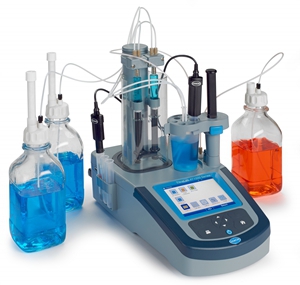
Working principle:
An automatic potentiometric titrator is a common analytical instrument designed based on the principle of potentiometry for volumetric analysis. An appropriate indicator electrode and reference electrode are selected to form a working cell with the test solution. As the titrant is added, due to the chemical reaction, the concentration of the measured ions continuously changes, and therefore the potential of the indicator electrode changes accordingly. Near the titration endpoint, the concentration of the measured ions changes abruptly, causing a sudden jump in the electrode potential. Therefore, the titration endpoint can be determined based on the sudden jump in electrode potential.
Application industries:
-
The Titralab®1000 series automatic potentiometric titrators can be used in many fields such as chemical, petrochemical, cosmetics, biotechnology, food and beverage, environmental, surface treatment and electroplating.
-
Among them, the TIM854/856 trace moisture analyzers also feature constant pH/mV titration functionality. By monitoring the addition of acid or base to maintain the reaction system at a specific pH/mV value, they can be widely used in biological and pharmaceutical fields, especially for the determination of enzyme activity, sustained-release drug kinetics, and series of reactions requiring a constant pH/mV value.
-
The TIM9XX series rapid moisture analyzers also feature wireless RFID technology, which can automatically identify relevant information of the titrant.
Instrument features:
-
1) The TitraLab® series automatic potentiometric titrators use a burette with 1/20000 resolution to make experimental results more accurate, with titration volume accurate to 0.001mL.
-
2) This series of automatic potentiometric titrators is equipped with a large-screen LCD display, which can display the titration curve, electrode and titrant status in real time.
-
3) The TitraLab® series automatic potentiometric titrators have good expandability and can be connected to printers, autosamplers, scanners, sampling pumps, etc., to achieve efficient and intelligent potentiometric titration operations.
Technical parameters
-
Titration type Potentiometric (zero or applied current), current, colorimetric
-
Titration modes Sample, blank, sample plus blank, QC sample, QC sample plus blank
-
Parameters mV/pH, conductivity, temperature
-
Resolution mV/pH: ±0.1mV/±0.001pH Conductivity: ±0.5% of reading Temperature: ±0.3°C/±0.51°F
-
Sample stand Integrated design with magnetic stirring, maximum beaker capacity 250mL
-
Electrodes INTELLICAL (digital electrode, plug and play), analog, colorimetric; dual-channel input
-
Burette capacity 2.5/5/10/25mL, ISO8655-3
-
Burette motor resolution 20,000 steps, with μstepping technology (128μsteps/step)
-
Calibration Electrode and titrant (automatic, fixed, and custom three modes, up to 5-point titration)
-
Calibration interval/alarm/reminder function Yes, user-definable interval
-
Data storage Last 100 measurement data (sample, QC sample, blank) and last 10 calibration results, with date, time, operator ID, sample ID and other information
-
Data recording method USB flash drive, CSV format
-
Operation interface Silicone keyboard
-
Display 5.7-inch, color VGA display
-
Calibration curve display Direct or derivative calibration curve, electrode calibration curve
-
Optional accessories PC software, balance, autosampler, keyboard, mouse, barcode scanner, sampling pump, paddle stirrer
-
Maintenance schedule Yes, user-definable interval
-
Preset functions Tubing bubble removal, reagent pre-installation, replaceable burette and pump
-
Password protection function Yes, user-definable
-
Operating languages English, French, German, Italian, Spanish
-
Interfaces Electrode connectors*2, USB*2, serial port*1, Ethernet port*1
-
Dimensions (HxWXD) 220mmx400mmx360mm
-
Weight 4kg
-
Power supply 100/240VAC, 50/60Hz
-
Operating environment 15-35°C (59-95°F), 20-80% relative humidity, non-condensing
-
Storage environment -5-40°C (23-104°F)
-
Certifications SafetyIEC/EN61010-1; EMCIEC/EN61326-1
Ordering guide
-
TitraLab AT/KF1000 series titrator main unit
-
AT1102.97 TITRALAB AT1000 series potentiometric titrator, burette*1
-
AT1112.97 TITRALAB AT1000 series potentiometric titrator, burette*1+pump*1
-
AT1122.97 TITRALAB AT1000 series potentiometric titrator, burette*1+pump*2
-
AT1222.97 TITRALAB AT1000 series potentiometric titrator, burette*2+pump*2
-
KF1121.97 TITRALAB KF1000 series volumetric Karl Fischer moisture analyzer, burette*1+pump*2
-
AS1000 series autosampler
-
AS1000.99.12150 AS1000 autosampler, 12 positions, 50 & 150 mL
-
AS1000.99.20090 AS1000 autosampler, 20 positions, 90 mL
-
AS1000.99.30050 AS1000 autosampler, 30 positions, 50 mL
Application packages
-
AP0001.AT1102 pH/alkalinity in water
-
AP0002.AT1102 pH/alkalinity/conductivity in water
-
AP0003.AT1112 Calcium and magnesium hardness in water (ISE)
-
AP0004.AT1112 Total hardness in water (photometric method)
-
AP0005.AT1222 pH/alkalinity/hardness in water (ISE)
-
AP0006.AT1102 VFA/ALK (anaerobic digestion) (recommended optional [LZE119] glass bottle, 1L)
-
AP0007.AT1122 Free chlorine and total chlorine, chlorine dioxide, sulfite (AUTOCAT)
-
AP0008.AT1102 pH/total acidity in food and beverages (soft drinks, juices, energy drinks
-
AP0009.AT1112 Chloride in water
-
AP0010.AT1112 Salt content in food
-
AP0011.AT1222 pH/total acidity/chloride in food and beverages
-
AP0012.AT1122 Free and total SO2 in wine
-
AP0013.AT1222 pH/total acidity/free and total SO2 in wine
-
AP0014.KF1121 Moisture (Karl Fischer)
-
AP0015.AT1102 Petrochemical-TAN (total acid number)
-
AP0016.AT1102 Petrochemical-TBN (total base number)
-
AP0017.AT1112 Petrochemical-mercaptan
-
AP0018.AT1102 Petrochemical-bromine/iodine value
-
AP0025.AT1122 pH/total alkalinity in food and beverages
-
AP0026.AT1122 pH/total acidity in food and beverages (beer, tea, soft drinks, juices, energy drinks)
Source: Public information from HACH water quality website
Case Studies
Municipal Wastewater Treatment · Hach-lab — Application Case
Project Overview
The site is the inlet, biological and outlet stages of a municipal plant. The customer wanted Hach-lab properly configured on the existing plant, with the aim of laboratory colorimetric and titrimetric water analysis.
Technical Challenges
What actually causes trouble is high solids and corrosive fractions, with large diurnal flow swings, and effluent parameters drift and probes foul with sludge and biofilm. All of this means the Hach-lab configuration has to involve selected by method standard, sample throughput and reagent kit.
Configuration
Supply and installation were organised through the laboratory line: configuring around lab method standards and sample throughput. On site this meant selected by method standard, sample throughput and reagent kit, checked line by line against: stable compliance with Grade 1A discharge limits and online data reporting.
Performance
After commissioning the outcome is standardised methods that make data comparable between labs, and the readings are now used for process tuning.
Food & Beverage · Hach-lab — Application Case
Site Conditions
This is a Food & Beverage customer whose plant is at dosing, pasteurising, filling and CIP stages. The main task was laboratory colorimetric and titrimetric water analysis.
The Problem
The difficulty lies in syrups, dairy and beverages that scale easily, under strict hygienic requirements; at the same time frequent cleaning demands instruments that withstand hot CIP/SIP caustic cycles. Specification therefore means selected by method standard, sample throughput and reagent kit.
What We Did
We took a laboratory line approach — configuring around lab method standards and sample throughput. Delivery was built around selected by method standard, sample throughput and reagent kit, with point-by-point checks on: food-safety and hygienic design per 3-A / EHEDG.
Operating Outcome
In service the system performs as intended — standardised methods that make data comparable between labs, with routine maintenance falling noticeably.
Chemical & Pharmaceutical · Hach-lab — Application Case
Application Context
reactors, metering vessels and finished-product tanks is a typical Chemical & Pharmaceutical duty. The project started from Hach-lab, focusing on laboratory colorimetric and titrimetric water analysis.
Process Constraints
corrosion plus Ex protection shortens instrument life and makes downtime costly, and highly corrosive media with solvents and crystallisation, partly in explosive atmospheres only amplify it. The Hach-lab specification must therefore cover selected by method standard, sample throughput and reagent kit.
Delivery Approach
Delivery was handled as the laboratory line — configuring around lab method standards and sample throughput. Execution centred on selected by method standard, sample throughput and reagent kit, together with Ex certification and GMP traceability of records.
Field Results
Operation shows the benefit clearly — standardised methods that make data comparable between labs, with confidence in this measuring point improving markedly.
Power & Energy · Hach-lab — Application Case
Customer Profile
The typical setting in Power & Energy is boiler feedwater, turbine condensate and FGD/DeNOx systems. The measuring point is Hach-lab; the focus is laboratory colorimetric and titrimetric water analysis.
Key Difficulties
Conditions are high temperature and pressure with both steam and saline water and, on top of that, drift under high temperature and pressure, with very costly unplanned outages, which a standard configuration cannot handle for long. The design therefore starts with selected by method standard, sample throughput and reagent kit.
Implementation
The scope ran through the laboratory line: configuring around lab method standards and sample throughput. Technically it hinges on selected by method standard, sample throughput and reagent kit, and on these requirements: compliance with power-industry codes and unit availability targets.
Customer Benefit
In practice this means standardised methods that make data comparable between labs, which cut the workload on the site maintenance team.
Related Products
 HACH
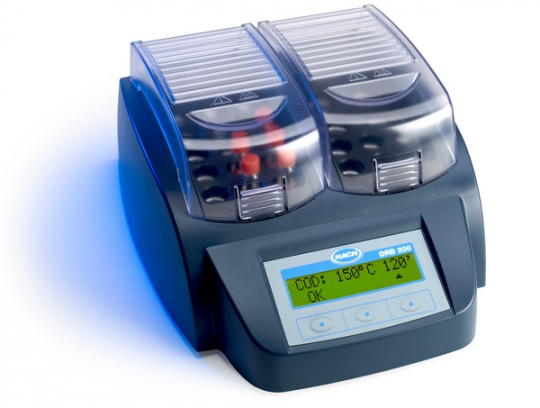
Digester (rapid COD digester)
 HACH
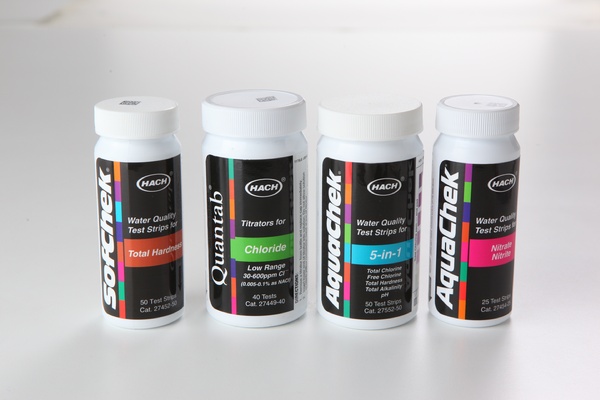
Water quality analysis test strip series
 HACH
Multi-channel electrochemical analyzer
 HACH
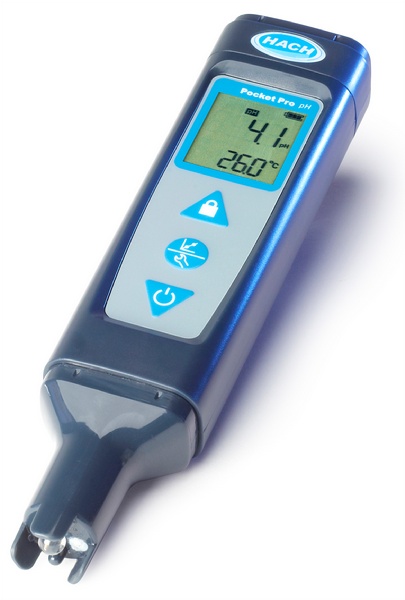
Pro/Pro+ pocket water tester
 HACH
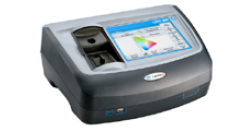
Liquid colorimeter
 HACH
Portable water toxicity analyzer
 HACH
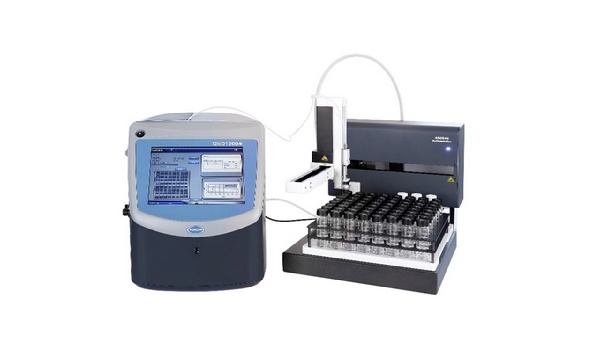
Laboratory TOC analyzer
 HACH