
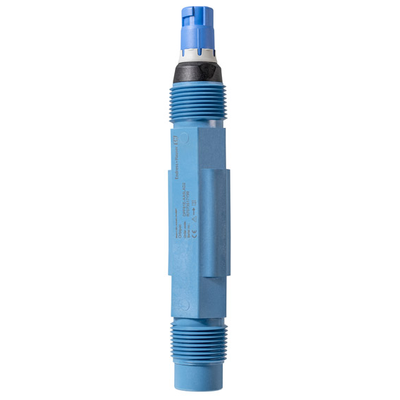
Technical Data
ComparepH
| Measuring Principle | Potentiometric |
| Application | Flotation, leaching, neutralization, outlet monitoring |
| Characteristic | Resistent against electrolyte poisoning and dirt repellent gel-electrode including process connection NPT 3/4" |
| Measuring range | pH 0 to 14 |
| Measuring principle | Gel-compact electrode with double chamber reference system, kalium nitrate bridge electrolyte and PTFE-diaphragm |
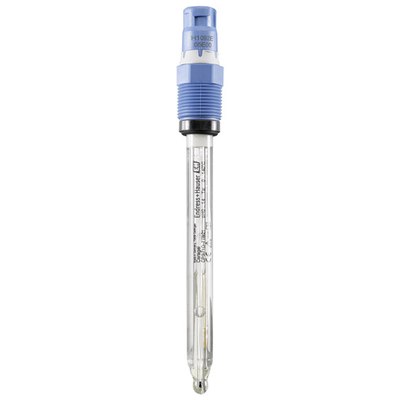
| Design | Compact electrode in PPS housing with NPT 3/4" process connection |
| Material | Housing: PPS pH electrode: lead-free membrane glass Double chamber reference system: KNO3 and KCl/AgCl |
| Dimension | Diameter: 22 mm (0.87 inch) Length (protcetion guard, long shaft): 150 mm (5.91 inch) Length (flat membrane): 140 mm (5.51 inch) |
| Process temperature | Version LH: 0 to 110 °C (32 to 230 °F) Version NN: 0 to 80 °C (32 to 170 °F) |
| Process pressure | 1 to 10 bar abs at 80 °C (15 to 145 psi at 176 °F) |
| Temperature sensor | NTC 30K |
| Ex certification | (optional) FM IS NI Cl. I Div.1&2, Groups A-D |
| Connection | Memosens plug |
| Ingress protection | IP68 |
The Memosens CPF81E is a digital pH electrode that is robust and measures pH values stably under demanding conditions. Measurement is completely unaffected even by corrosive media and high-flow media. The electrode has its own holder and requires little installation space. The CPF81E uses Memosens 2.0 digital technology with high process integrity and very simple operation. The electrode is waterproof and moisture-proof and allows laboratory calibration. It supports extended data storage for calibration and process parameters, making it the perfect basis for predictive maintenance.
Benefits
Memosens 2.0 supports an extended storage unit for calibration and process parameters, enabling better trend identification and providing the perfect basis for future predictive maintenance and improved IIoT services.
-
High long-term stability: double-junction design for better protection against ion toxic diffusion, e.g. S2- or CN-.
-
Robust polymer housing effectively prevents mechanical damage.
-
The optional flat membrane allows measurement in high-flow and abrasive media.
-
Non-contact inductive signal transmission for high process safety.
-
Minimizes production downtime, extends electrode service life and reduces operating costs.
Applications
The Memosens CPF81E pH electrode is robust and suitable for mining industry applications as well as water and wastewater treatment. It reliably monitors:
-
Flotation processes
-
Leaching processes
-
Neutralization processes
-
Inlet and outlet
-
Approved by CSA C/US for use in explosion-protection zones 0, 1 and 2.
Spare Parts & Accessories 4
4 spare parts · click to collapse
| Order code | Description | |
|---|---|---|
| 71038228 | *** sensorfor assignment of sensors to measuring loop. 100 sensor clips with printable labels | Details |
| 71038229 | *** cablefor assignment of Sensors to measuring loop. 50 cable labels with printable labels. | Details |
| CPY4- | KCl electrolyte CPY4For liquid filled electrodes | Enquire |
| CPY20- | pH buffer solution CPY20pH quality buffer solution, referenced to primary reference material of PTB and standard reference material of NIST. With calibration certificate buffer solution | Enquire |
Configurator / Comparison
A
A
Source: Endress+Hauserpublic information from the website
Measuring principle video
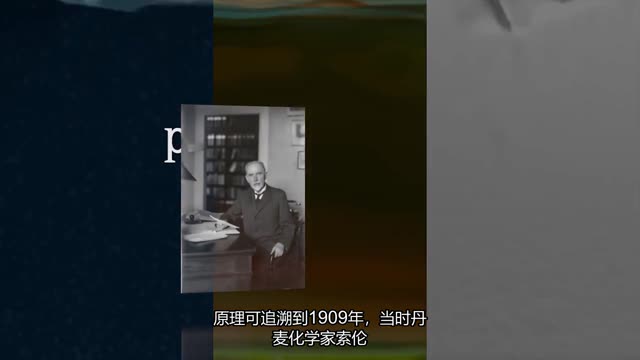 Click to play
Manuals & Documents 4
All documents for this modelCase Studies
Municipal Wastewater Treatment · PH — Application Case
Application Context
the inlet, biological and outlet stages of a municipal plant is a typical Municipal Wastewater Treatment duty. The project started from PH, focusing on continuous pH monitoring for neutralisation and compliance control.
Process Constraints
effluent parameters drift and probes foul with sludge and biofilm, and high solids and corrosive fractions, with large diurnal flow swings only amplify it. The PH specification must therefore cover choosing glass or ISFET sensors by temperature, fluoride content and pressure.
Delivery Approach
Delivery was handled as the analyser range — selecting as part of a complete water-analysis system. Execution centred on choosing glass or ISFET sensors by temperature, fluoride content and pressure, together with stable compliance with Grade 1A discharge limits and online data reporting.
Field Results
Operation shows the benefit clearly — tighter dosing control and lower reagent consumption, with confidence in this measuring point improving markedly.
Food & Beverage · PH — Application Case
Customer Profile
The typical setting in Food & Beverage is dosing, pasteurising, filling and CIP stages. The measuring point is PH; the focus is continuous pH monitoring for neutralisation and compliance control.
Key Difficulties
Conditions are syrups, dairy and beverages that scale easily, under strict hygienic requirements and, on top of that, frequent cleaning demands instruments that withstand hot CIP/SIP caustic cycles, which a standard configuration cannot handle for long. The design therefore starts with choosing glass or ISFET sensors by temperature, fluoride content and pressure.
Implementation
The scope ran through the analyser range: selecting as part of a complete water-analysis system. Technically it hinges on choosing glass or ISFET sensors by temperature, fluoride content and pressure, and on these requirements: food-safety and hygienic design per 3-A / EHEDG.
Customer Benefit
In practice this means tighter dosing control and lower reagent consumption, which cut the workload on the site maintenance team.
Chemical & Pharmaceutical · PH — Application Case
Project Background
The project covers reactors, metering vessels and finished-product tanks. The work centres on PH and the core task is continuous pH monitoring for neutralisation and compliance control.
Operating Challenges
The medium and duty are characterised by highly corrosive media with solvents and crystallisation, partly in explosive atmospheres, and corrosion plus Ex protection shortens instrument life and makes downtime costly. So PH cannot be specified generically — it calls for choosing glass or ISFET sensors by temperature, fluoride content and pressure.
Solution
The Ainstru engineering team worked through the analyser range: selecting as part of a complete water-analysis system. The configuration involves choosing glass or ISFET sensors by temperature, fluoride content and pressure, with these requirements in view: Ex certification and GMP traceability of records.
Results
Since start-up the system has run steadily; the practical result is tighter dosing control and lower reagent consumption.
Power & Energy · PH — Application Case
Project Overview
The site is boiler feedwater, turbine condensate and FGD/DeNOx systems. The customer wanted PH properly configured on the existing plant, with the aim of continuous pH monitoring for neutralisation and compliance control.
Technical Challenges
What actually causes trouble is high temperature and pressure with both steam and saline water, and drift under high temperature and pressure, with very costly unplanned outages. All of this means the PH configuration has to involve choosing glass or ISFET sensors by temperature, fluoride content and pressure.
Configuration
Supply and installation were organised through the analyser range: selecting as part of a complete water-analysis system. On site this meant choosing glass or ISFET sensors by temperature, fluoride content and pressure, checked line by line against: compliance with power-industry codes and unit availability targets.
Performance
After commissioning the outcome is tighter dosing control and lower reagent consumption, and the readings are now used for process tuning.
Related Products
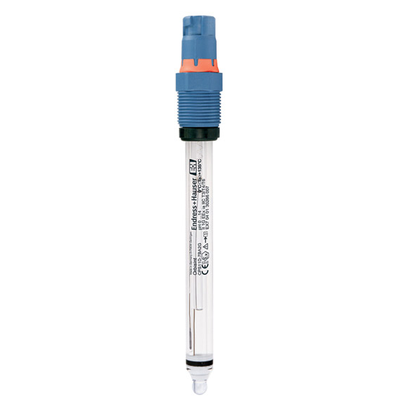 Endress+Hauser
Orbisint CPS11D Memosens
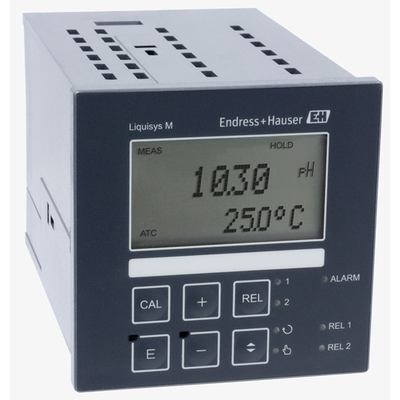 Endress+Hauser
Liquisys M CPM223
 Endress+Hauser
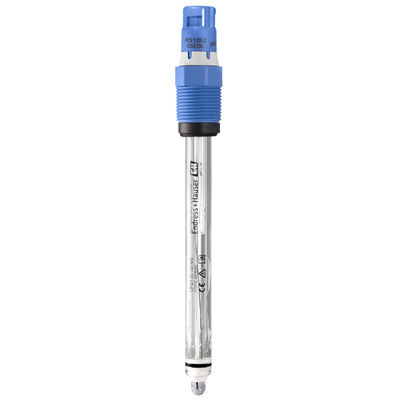
Memosens CPS11E
 Endress+Hauser
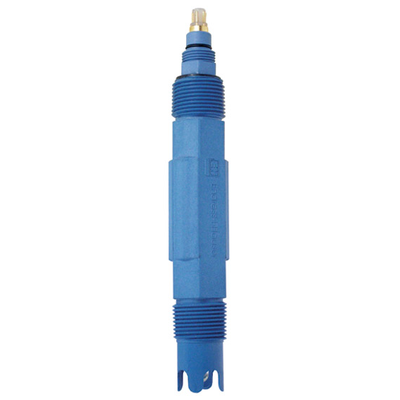
Orbipac CPF81
 Endress+Hauser
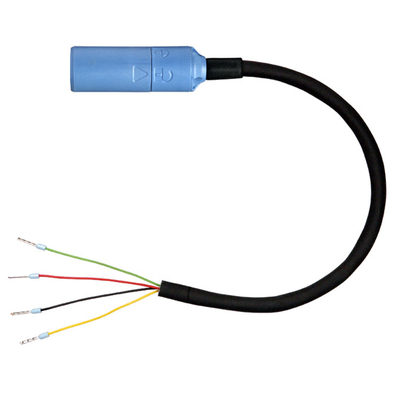
Meas. cable CYK10 Memosens
 Endress+Hauser
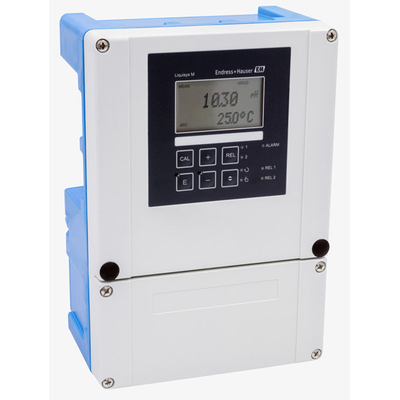
Liquisys M CPM253
 Endress+Hauser
Ceragel CPS71D Memosens
 Endress+Hauser