
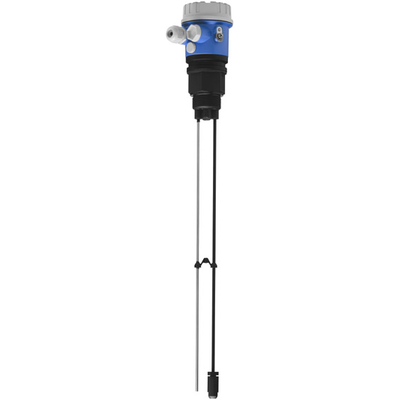
Technical Data
CompareContinuous / Liquids
| Measuring Principle | Capacitive |
| Characteristic / Application | Two-rod probe Preconfigured from factory 0%...100% High quality, non-corrosive materials (carbon fibre, stainless steel) Suitable for aggressive liquids (many acids and alkalis) |
| Specialities | Probe shorting kit available |
| Supply / Communication | 10 ... 30VDC |
| Accuracy | < 1% |
| Ambient temperature | -40 °C ... 70 °C (-40 °F ... 158 °F) |
| Process temperature | -40 °C ... 100 °C (-40 °F ... 212 °F) |
| Process pressure / max. overpressure limit | Vacuum ... 10 bar (Vacuum ... 145 psi) |
| Main wetted parts | Probe rods: 316L/1.4404 / PP Option: carbon fibre PP coated |
| Process connection | G 1½ NPT 1½ |
| Sensor length | Total length of probe 2.5 m |
| Max. measurement distance | 2.5 m (8 ft) |
| Communication | 4 ... 20 mA |
| Certificates / Approvals | ATEX, CSA, CSA C/US |
| Safety approvals | Overfill prevention WHG |
| Options | Display |
| Application limits | Changing, non-conductive media, conductivity 2 000 cst |
The Liquicap FMI21 rod probe is suitable for continuous level measurement of conductive liquids, with a simple design and economical, practical use. Made of high-quality corrosion-resistant materials such as carbon fiber and stainless steel, the probe can be used to measure corrosive liquids (e.g. acids and alkalis). Used together with Fieldgate FXA320 (remote measured value access via Internet technology), Liquicap provides an ideal inventory management solution.
Benefits
Special probe design ensures safety regardless of the tank geometry
No calibration required (0%/100% probe length preset at the factory)
The probe is made of high-quality corrosion-resistant materials such as carbon fiber and stainless steel, can be used in corrosive liquids and toxic water, and has been certified by WHG (German Water Resources Act).
No moving parts, long service life, reliable performance, no wear
Cost-effective continuous level measurement of conductive liquids.
The rod can be shortened on site for simple storage.
Application
The Liquicap FMI21 rod probe is suitable for continuous level measurement of conductive liquids with a conductivity greater than 30μS, and requires no calibration (0%/100% probe length preset at the factory). Above a conductivity of 30μS/cm, the measurement result is independent of the liquid DK value (dielectric constant). Also suitable for hazardous areas, Zone 2.
Spare Parts & Accessories 10
10 spare parts · click to collapse
| Order code | Description | |
|---|---|---|
| 52025605 | Transparent coverCover for display, polyester housing Gasket EPDM Liquicap T/Liquicap M | Details |
| 52025606 | plastic coverGasket EPDM Polyester housing | Details |
| 52004137 | O-ringCover seal set Polyester housing F16 | Details |
| 52025603 | electronic plug-in modulefor level probe, capacitance Continuous 2-wire, 4-20mA Liquicap T | Details |
| 52025604 | Digital display with mounting bracket4-digit and 0-100% display bargraph with holder Please order high transparent cover separately Liquicap T | Details |
| 52025607 | IsolatorLiquicap T | Details |
| 52024300 | Shortening ToolLiquicap T | Details |
| 71127760 | SunshadeUsage: FDR56, FMI21, FMI51/FMI52, FQR56, FTI51/FTI52/FTI55/FTI56, FTI77, FTL50/FTL50H/FTL51/FTL51C/FTL51H, FTL70/FTL71, FTL80/FTL81/FTL85, FTM20/FTM21, FTM50/FTM51/FTM52, FTR20, FTW31/FTW32/FTW33. | Details |
| 52014047 | O-ringProcess gasket for process connections G1-1/2 | Details |
| 52014146 | mounting nut六角形,SW60 适合FTW31,FTW32,FMI21 | Details |
Configurator / Comparison
Measuring Principle Video
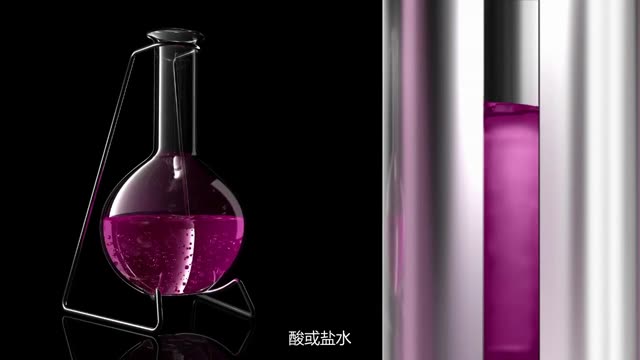 Click to play
Manuals & Documents 5
All documents for this modelCase Studies
Municipal Wastewater Treatment · capacitors — Application Case
Customer Profile
The typical setting in Municipal Wastewater Treatment is the inlet, biological and outlet stages of a municipal plant. The measuring point is capacitors; the focus is capacitive sensing of level, interface or point limit.
Key Difficulties
Conditions are high solids and corrosive fractions, with large diurnal flow swings and, on top of that, effluent parameters drift and probes foul with sludge and biofilm, which a standard configuration cannot handle for long. The design therefore starts with choosing rod, cable or plate probes by dielectric constant and build-up tendency.
Implementation
The scope ran through the level range: level solution matched to the actual tank and silo geometry. Technically it hinges on choosing rod, cable or plate probes by dielectric constant and build-up tendency, and on these requirements: stable compliance with Grade 1A discharge limits and online data reporting.
Customer Benefit
In practice this means reliable detection despite build-up, with far fewer false alarms, which cut the workload on the site maintenance team.
Food & Beverage · capacitors — Application Case
Project Background
The project covers dosing, pasteurising, filling and CIP stages. The work centres on capacitors and the core task is capacitive sensing of level, interface or point limit.
Operating Challenges
The medium and duty are characterised by syrups, dairy and beverages that scale easily, under strict hygienic requirements, and frequent cleaning demands instruments that withstand hot CIP/SIP caustic cycles. So capacitors cannot be specified generically — it calls for choosing rod, cable or plate probes by dielectric constant and build-up tendency.
Solution
The Ainstru engineering team worked through the level range: level solution matched to the actual tank and silo geometry. The configuration involves choosing rod, cable or plate probes by dielectric constant and build-up tendency, with these requirements in view: food-safety and hygienic design per 3-A / EHEDG.
Results
Since start-up the system has run steadily; the practical result is reliable detection despite build-up, with far fewer false alarms.
Chemical & Pharmaceutical · capacitors — Application Case
Project Overview
The site is reactors, metering vessels and finished-product tanks. The customer wanted capacitors properly configured on the existing plant, with the aim of capacitive sensing of level, interface or point limit.
Technical Challenges
What actually causes trouble is highly corrosive media with solvents and crystallisation, partly in explosive atmospheres, and corrosion plus Ex protection shortens instrument life and makes downtime costly. All of this means the capacitors configuration has to involve choosing rod, cable or plate probes by dielectric constant and build-up tendency.
Configuration
Supply and installation were organised through the level range: level solution matched to the actual tank and silo geometry. On site this meant choosing rod, cable or plate probes by dielectric constant and build-up tendency, checked line by line against: Ex certification and GMP traceability of records.
Performance
After commissioning the outcome is reliable detection despite build-up, with far fewer false alarms, and the readings are now used for process tuning.
Power & Energy · capacitors — Application Case
Site Conditions
This is a Power & Energy customer whose plant is at boiler feedwater, turbine condensate and FGD/DeNOx systems. The main task was capacitive sensing of level, interface or point limit.
The Problem
The difficulty lies in high temperature and pressure with both steam and saline water; at the same time drift under high temperature and pressure, with very costly unplanned outages. Specification therefore means choosing rod, cable or plate probes by dielectric constant and build-up tendency.
What We Did
We took a level range approach — level solution matched to the actual tank and silo geometry. Delivery was built around choosing rod, cable or plate probes by dielectric constant and build-up tendency, with point-by-point checks on: compliance with power-industry codes and unit availability targets.
Operating Outcome
In service the system performs as intended — reliable detection despite build-up, with far fewer false alarms, with routine maintenance falling noticeably.
Related Products
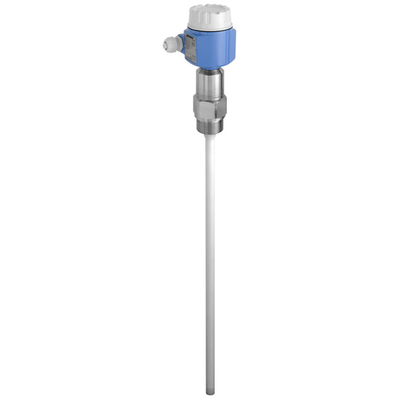 Endress+Hauser
Liquicap M FMI51
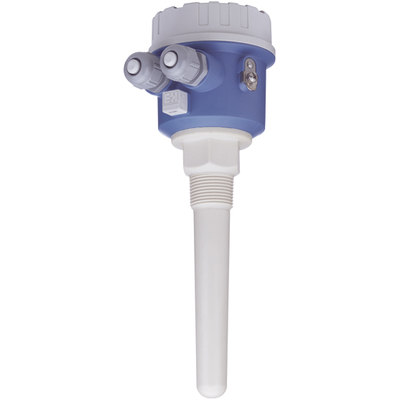 Endress+Hauser
Minicap FTC260
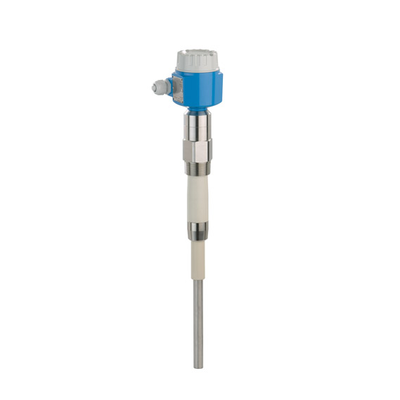 Endress+Hauser
Solicap M FTI55
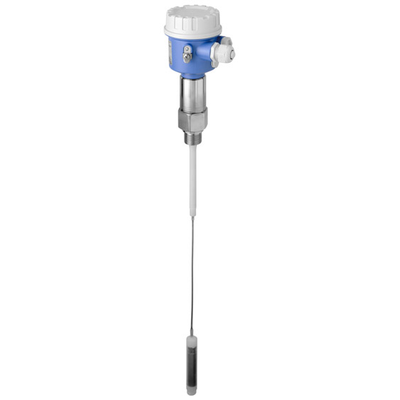 Endress+Hauser
Liquicap M FMI52
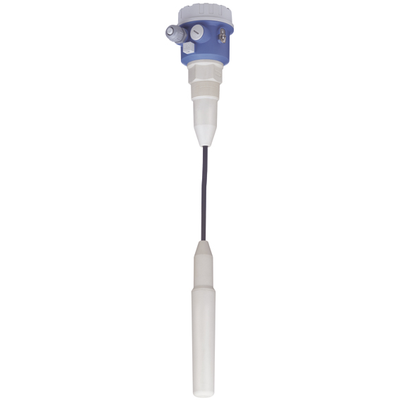 Endress+Hauser
Minicap FTC262
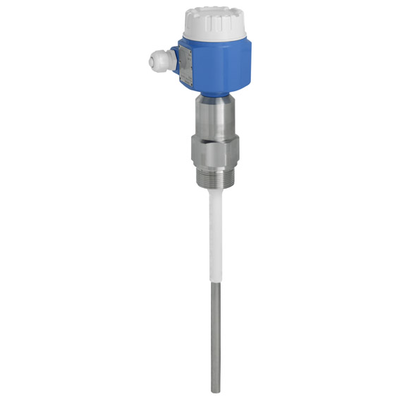 Endress+Hauser
Liquicap M FTI51
 Endress+Hauser
Nivector FTI26
 Endress+Hauser