
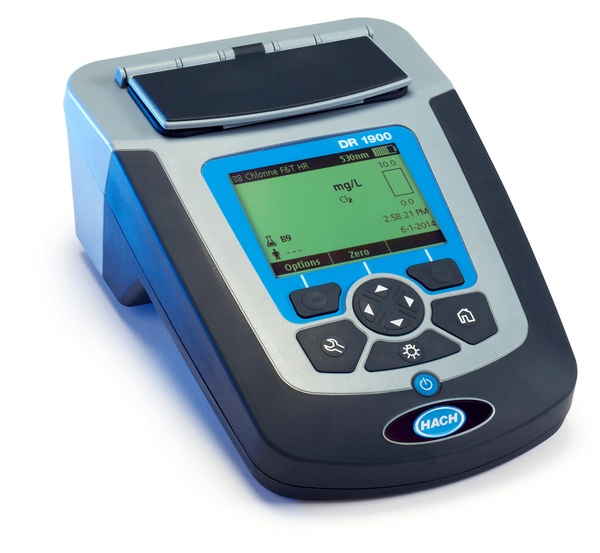
Application Industries:
The DR1900 portable spectrophotometer can be used in municipal wastewater, tap water, drinking water, boiler water, cooling water, water treatment, environmental monitoring, industrial process monitoring, education, agriculture and other fields.
Instrument Features and Advantages:
-
The DR1900 portable spectrophotometer features an ergonomic design, is lightweight and handheld, and uses a cold light source, making it energy-efficient with a long service life.
-
The DR1900 portable spectrophotometer has more than 200 pre-installed application programs and is compatible with cuvettes of various sizes, suitable for a wide range of measurement applications. One instrument serves multiple purposes, eliminating the need to purchase multiple machines.
-
The DR1900 portable spectrophotometer is compatible with sample cells of various sizes, eliminating the need for cumbersome reagent preparation, offering high efficiency and good safety.
-
With IP67 protection class, it is suitable for harsh environments and can be used both on-site and outdoors, with a low repair rate.
-
The DR1900 portable spectrophotometer features a Chinese menu display with backlight design, making it easy for users to operate in dimly lit areas and under direct sunlight.
-
The DR1900 portable spectrophotometer can optionally use AC power or AA batteries as the power supply, with a USB output module, making it more flexible and convenient to use.
Technical Specifications
-
Measurement modes Concentration, Absorbance Abs, Transmittance %
-
Light source Xenon lamp
-
Wavelength range 340~800nm
-
Wavelength selection Automatic
-
Spectral bandwidth 5nm
-
Photometer measuring range 0~3.0Abs
-
Absorbance accuracy ±0.003 Abs at 0.0 to 0.5 Abs; 1% at 0.5 to 2.0 Abs
-
Absorbance linearity <0.5% (0.0-2>2 Abs, at 546 nm neutral glass)
-
Wavelength accuracy ±2nm
-
Wavelength repeatability ±0.1nm
-
Stray light <0.5% T @340nm, NaNO2
-
Pre-installed programs > 220
-
User-defined programs 50
-
Data storage capacity 500 records, GLP compliant
-
Display LCD, with backlight
-
Sample cell dimensions Square - 10x10mm, 1 inch; Round - 13mm/16mm/1 inch
-
Instrument dimensions Width 178 x Length 267 x Height 98mm
-
Instrument weight 1.5kg
-
Operating temperature 10~40℃, max humidity 80% non-condensing
-
Storage temperature -30~60℃, max humidity 80% non-condensing
-
Power supply Standard - AA batteries, 4 pcs; Optional - external power supply 110–240VAC, 50/60Hz
-
Data cable connection Optional - miniUSB
-
Protection class IP67
-
Operating languages Multiple languages, including Chinese
Accessory Information
-
Order No. Product Description
-
LZV804 Power module
-
LZV813 USB + power module
-
2763900 DR/verification absorbance standards (set of 4)
-
LZV537 Filter kit
-
2990700 Small carrying bag with case
-
2990800 Large carrying bag with case
-
2984900 Nylon backpack, small
-
2985000 Nylon backpack, large
Ordering Guide
-
Order No. Description
-
DR1900-05C "Includes DR 1900 instrument, one each of A, B, C, D cell adapters, AA batteries x4, light shield, dust cover, 1-inch sample cells (10mL) x2, basic user manual, certificate, etc."
-
DR1900-05K DR1900 kit, includes instrument, charging and USB module
Source: Public information from the HACH water quality website
Case Studies
Municipal Wastewater Treatment · Hach-lab — Application Case
Project Overview
The site is the inlet, biological and outlet stages of a municipal plant. The customer wanted Hach-lab properly configured on the existing plant, with the aim of laboratory colorimetric and titrimetric water analysis.
Technical Challenges
What actually causes trouble is high solids and corrosive fractions, with large diurnal flow swings, and effluent parameters drift and probes foul with sludge and biofilm. All of this means the Hach-lab configuration has to involve selected by method standard, sample throughput and reagent kit.
Configuration
Supply and installation were organised through the laboratory line: configuring around lab method standards and sample throughput. On site this meant selected by method standard, sample throughput and reagent kit, checked line by line against: stable compliance with Grade 1A discharge limits and online data reporting.
Performance
After commissioning the outcome is standardised methods that make data comparable between labs, and the readings are now used for process tuning.
Food & Beverage · Hach-lab — Application Case
Site Conditions
This is a Food & Beverage customer whose plant is at dosing, pasteurising, filling and CIP stages. The main task was laboratory colorimetric and titrimetric water analysis.
The Problem
The difficulty lies in syrups, dairy and beverages that scale easily, under strict hygienic requirements; at the same time frequent cleaning demands instruments that withstand hot CIP/SIP caustic cycles. Specification therefore means selected by method standard, sample throughput and reagent kit.
What We Did
We took a laboratory line approach — configuring around lab method standards and sample throughput. Delivery was built around selected by method standard, sample throughput and reagent kit, with point-by-point checks on: food-safety and hygienic design per 3-A / EHEDG.
Operating Outcome
In service the system performs as intended — standardised methods that make data comparable between labs, with routine maintenance falling noticeably.
Chemical & Pharmaceutical · Hach-lab — Application Case
Application Context
reactors, metering vessels and finished-product tanks is a typical Chemical & Pharmaceutical duty. The project started from Hach-lab, focusing on laboratory colorimetric and titrimetric water analysis.
Process Constraints
corrosion plus Ex protection shortens instrument life and makes downtime costly, and highly corrosive media with solvents and crystallisation, partly in explosive atmospheres only amplify it. The Hach-lab specification must therefore cover selected by method standard, sample throughput and reagent kit.
Delivery Approach
Delivery was handled as the laboratory line — configuring around lab method standards and sample throughput. Execution centred on selected by method standard, sample throughput and reagent kit, together with Ex certification and GMP traceability of records.
Field Results
Operation shows the benefit clearly — standardised methods that make data comparable between labs, with confidence in this measuring point improving markedly.
Power & Energy · Hach-lab — Application Case
Customer Profile
The typical setting in Power & Energy is boiler feedwater, turbine condensate and FGD/DeNOx systems. The measuring point is Hach-lab; the focus is laboratory colorimetric and titrimetric water analysis.
Key Difficulties
Conditions are high temperature and pressure with both steam and saline water and, on top of that, drift under high temperature and pressure, with very costly unplanned outages, which a standard configuration cannot handle for long. The design therefore starts with selected by method standard, sample throughput and reagent kit.
Implementation
The scope ran through the laboratory line: configuring around lab method standards and sample throughput. Technically it hinges on selected by method standard, sample throughput and reagent kit, and on these requirements: compliance with power-industry codes and unit availability targets.
Customer Benefit
In practice this means standardised methods that make data comparable between labs, which cut the workload on the site maintenance team.
Related Products
 HACH
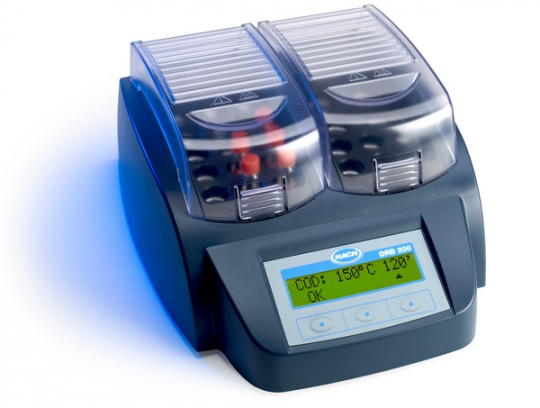
Digester (rapid COD digester)
 HACH
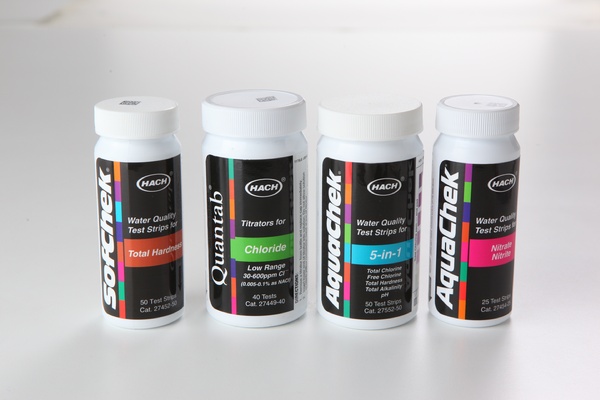
Water quality analysis test strip series
 HACH
Multi-channel electrochemical analyzer
 HACH
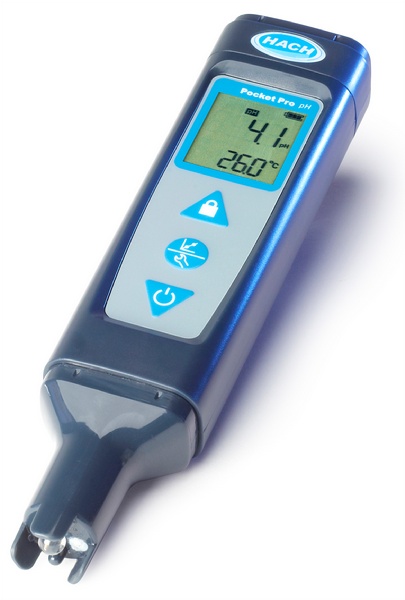
Pro/Pro+ pocket water tester
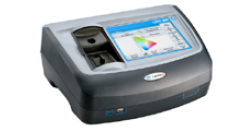 HACH
Liquid colorimeter
 HACH
Portable water toxicity analyzer
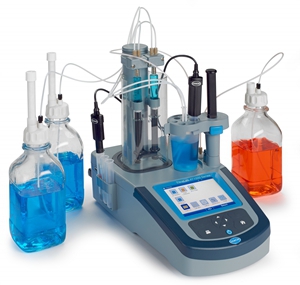 HACH
1000 series automatic potentiometric titrator
 HACH