
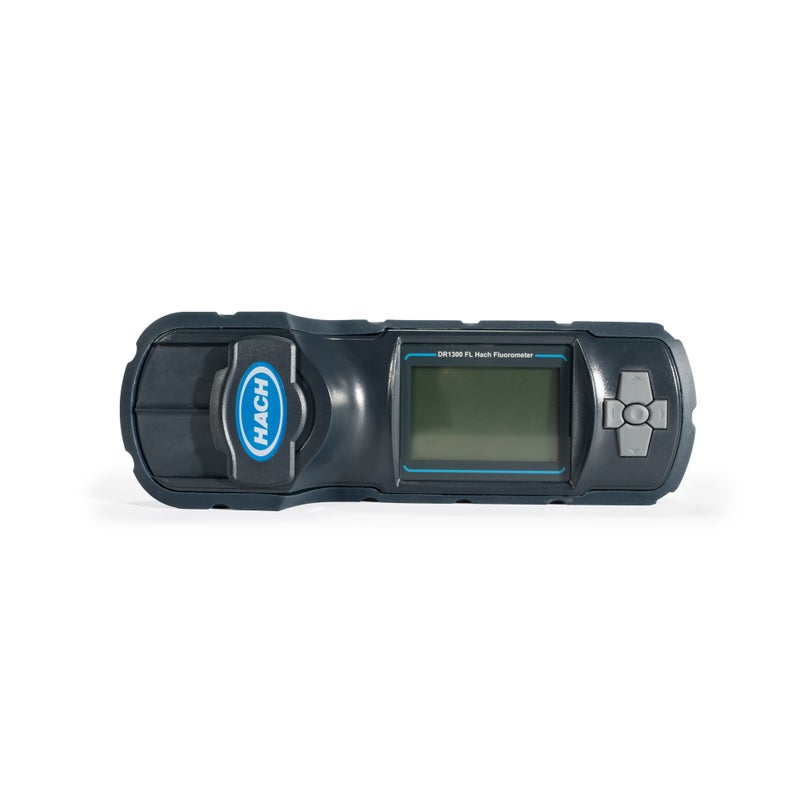
产品概述
Portable lab meter for ultra low range chlorine and sulfite detection
The DR1300 FL portable fluorometer, combined with our specially formulated reagents*, creates a fluorescence that indicates chlorine at ultra low ranges. This portable fluorometer offers an efficient way to be confident that chlorine has been removed or reduced from your process. Measure free and total chlorine plus sulfite in the low ppb range: Free Chlorine: 2 - 100 µg/L Cl₂ Total Chlorine: 3 - 100 µg/L Cl₂ Sulfite: 6 - 500 µg/L SO₃ With this knowledge, you’ll gain the insights you need to manage your dechlorination process and avoid chlorine damage to reverse osmosis (RO) membranes and other valuable assets. Key Benefits • Provides precise and accurate results • Tests are easy-to-perform, with ULR analysis in minutes • Reduce biofouling potential • Save on dechlorination costs • Handles traditional interferences with ease • Bluetooth capability allows easy data transfer • Decrease in toxic reagents and chemical waste (as detector chemical addition is a fraction of traditional tests) • Handheld form factor *Please note that Reagents are not included and need to be purchased separately.
主要特点
- Protect Your Assets:DR1300 FL offers simple methods, with increased accuracy over other traditional methods, to deliver confident results that chlorine has been removed or reduced to meet your process specifications. Accuracy in your water analysis protects your assets, and now you have the control to consistently measure down to 2 ppb chlorine and 6 ppb sulfite with industry-first fluorescence testing methods.
- Monitor and Optimize Your Dechlorination Process:Monitor that you have removed or reduced chlorine or optimize and control by verifying low levels of residual chlorine and sulfite with the DR1300 FL. Reduce biofouling potential and save on dechlorination costs by testing for sulfite and chlorine at ultra-low levels. You will be able to adjust your bisulfite feed or GAC process and keep a low chlorine presence to avoid downtime and corrective measures.
- Depend on Direct Measurements:The DR1300 FL provides portable tests for free and total chlorine as low as 2 ppb and sulfite down to 6 ppb. It works with your monitoring and control tools to improve your current process. You will get quick and easy direct measurements to help ensure product quality.
- New Fluorescence Technology:Groundbreaking ultra-low range fluorescence tests from Hach offer easy-to-perform ultra-low range solutions for free or total chlorine and sulfite. The DR1300 FL and fluorescence methods overcome many common interferences as well. You get the precision and accuracy you need.
技术参数
| 参数名称 | 说明 |
|---|---|
| Altitude | 2000 m (6562 ft) maximum |
| Application | Indoor or outdoor use |
| Data Storage | 16 GB SD Card or 60,000,000 data points |
| Data Transfer | Bluetooth |
| Detector | Silicon photodiode |
| Dimensions | (W x H x D) 26.5 x 8.8 x 6.2 cm (10.43 x 3.46 x 2.44 inches) |
| Display | Graphical LCD with backlight, 160 x 240 pixels |
| Enclosure Rating | IP65 |
| Light Source | UV LED, 365 nm |
| Measurement Method | Hach Fluorescence |
| Measurement Range 2 | Free Chlorine: 2 - 100 µg/L (ppb) |
| Measurement Range 3 | Sulfite: 6 - 500 µg/L (ppb) |
| Operating Temperature Range | 4 - 49 °C (40 - 120 °F), 0 - 85% relative humidity (non-condensing) |
| Parameter | Chlorine free & total, Sulfite |
| Power Supply | Four AA alkaline batteries |
| Range | Total Chlorine: 3 - 100 µg/L (ppb) |
| Storage Conditions | -18 °C - 60 °C (0 - 140 °F) |
| Warranty | 12 months |
| Wavelength Accuracy | ±1 nm |
| Weight | 0.6 kg (1.32 lb) without batteries |
| What's included? | DR1300 FL Fluorometer, 4x AA Batteries, Sample Vial Adapter, Sample Vial Adapter Cover, USB Bluetooth Converter, User Manual Reagents are not included and have to be purchased separately. |
应用领域
Membrane Protection
资料下载
- Protect RO membrane assets with Hach’s DR1300 FL bisulfite dechlorination control
- GAC dechlorination control with Hach’s DR1300 FL to protect RO membrane assets
- Introduction to Hach Services
- Frequently Asked Questions_DR1300 FL Portable Fluorometer
- Domande frequenti: Fluorimetro portatile DR1300 FL
- Preguntas frecuentes: Medidor por fluorescencia portátil DR1300 FL
- Häufig gestellte Fragen: DR1300 FL tragbares Fluorometer
- Foire aux questions : Fluoromètre portable DR1300 FL
Case Studies
Municipal Wastewater Treatment · Hach-lab — Application Case
Project Overview
The site is the inlet, biological and outlet stages of a municipal plant. The customer wanted Hach-lab properly configured on the existing plant, with the aim of laboratory colorimetric and titrimetric water analysis.
Technical Challenges
What actually causes trouble is high solids and corrosive fractions, with large diurnal flow swings, and effluent parameters drift and probes foul with sludge and biofilm. All of this means the Hach-lab configuration has to involve selected by method standard, sample throughput and reagent kit.
Configuration
Supply and installation were organised through the laboratory line: configuring around lab method standards and sample throughput. On site this meant selected by method standard, sample throughput and reagent kit, checked line by line against: stable compliance with Grade 1A discharge limits and online data reporting.
Performance
After commissioning the outcome is standardised methods that make data comparable between labs, and the readings are now used for process tuning.
Food & Beverage · Hach-lab — Application Case
Site Conditions
This is a Food & Beverage customer whose plant is at dosing, pasteurising, filling and CIP stages. The main task was laboratory colorimetric and titrimetric water analysis.
The Problem
The difficulty lies in syrups, dairy and beverages that scale easily, under strict hygienic requirements; at the same time frequent cleaning demands instruments that withstand hot CIP/SIP caustic cycles. Specification therefore means selected by method standard, sample throughput and reagent kit.
What We Did
We took a laboratory line approach — configuring around lab method standards and sample throughput. Delivery was built around selected by method standard, sample throughput and reagent kit, with point-by-point checks on: food-safety and hygienic design per 3-A / EHEDG.
Operating Outcome
In service the system performs as intended — standardised methods that make data comparable between labs, with routine maintenance falling noticeably.
Chemical & Pharmaceutical · Hach-lab — Application Case
Application Context
reactors, metering vessels and finished-product tanks is a typical Chemical & Pharmaceutical duty. The project started from Hach-lab, focusing on laboratory colorimetric and titrimetric water analysis.
Process Constraints
corrosion plus Ex protection shortens instrument life and makes downtime costly, and highly corrosive media with solvents and crystallisation, partly in explosive atmospheres only amplify it. The Hach-lab specification must therefore cover selected by method standard, sample throughput and reagent kit.
Delivery Approach
Delivery was handled as the laboratory line — configuring around lab method standards and sample throughput. Execution centred on selected by method standard, sample throughput and reagent kit, together with Ex certification and GMP traceability of records.
Field Results
Operation shows the benefit clearly — standardised methods that make data comparable between labs, with confidence in this measuring point improving markedly.
Power & Energy · Hach-lab — Application Case
Customer Profile
The typical setting in Power & Energy is boiler feedwater, turbine condensate and FGD/DeNOx systems. The measuring point is Hach-lab; the focus is laboratory colorimetric and titrimetric water analysis.
Key Difficulties
Conditions are high temperature and pressure with both steam and saline water and, on top of that, drift under high temperature and pressure, with very costly unplanned outages, which a standard configuration cannot handle for long. The design therefore starts with selected by method standard, sample throughput and reagent kit.
Implementation
The scope ran through the laboratory line: configuring around lab method standards and sample throughput. Technically it hinges on selected by method standard, sample throughput and reagent kit, and on these requirements: compliance with power-industry codes and unit availability targets.
Customer Benefit
In practice this means standardised methods that make data comparable between labs, which cut the workload on the site maintenance team.
Related Products
 HACH
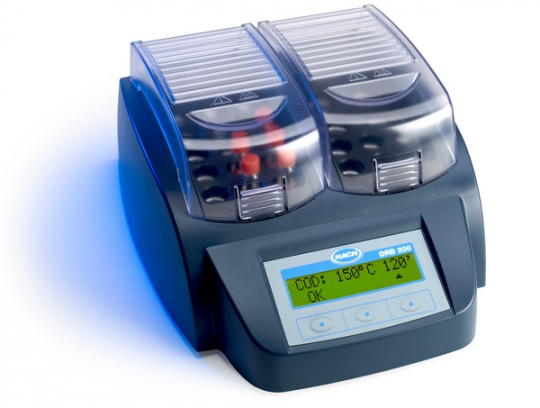
Digester (rapid COD digester)
 HACH
Multi-channel electrochemical analyzer
 HACH
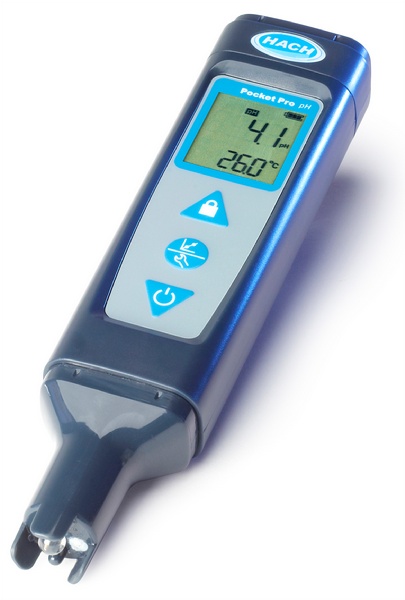
Pro/Pro+ pocket water tester
 HACH
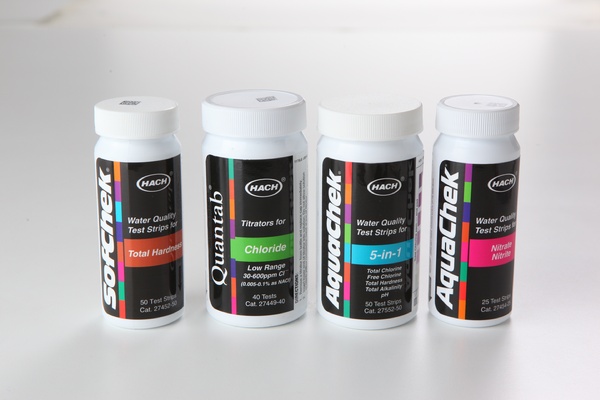
Water quality analysis test strip series
 HACH
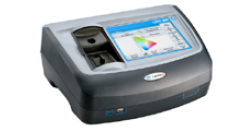
Liquid colorimeter
 HACH
Portable water toxicity analyzer
 HACH
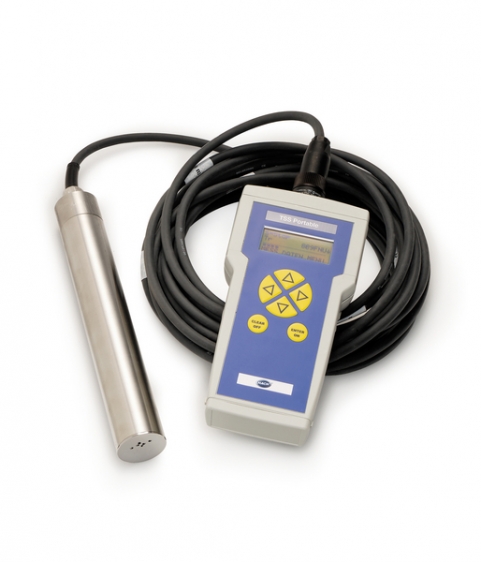
Special Service / Others TSS
 HACH