
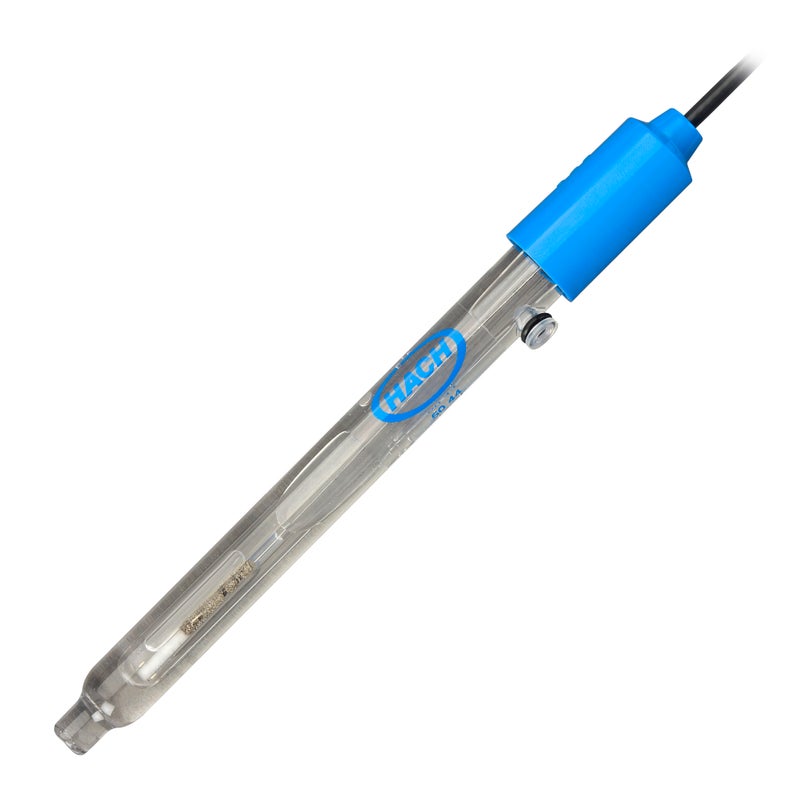
产品概述
Sension+ 5044 is a double junction reference electrode with a glass body and internal gel electrolyte and 0.1M lithium acetate salt bridge. The reference probe has a large, replaceable ceramic diaphragm. The 5044 has a fixed 1 meter cable and banana connector for laboratory use with the Hach Sension+ MM374 Multimeter. The 5044 with lithium acetate electrolyte is recommended for use with all Sension+ half-cell ion selective electrodes (ISE) in drinking water, wastewater and general water quality applications.
主要特点
- Guarded against contamination:Double junction design with internal gel electrolyte makes the 5044 difficult to contaminate
- Quick measurement stabilization with large ceramic junction:The large ceramic junction provides substantial surface area for contact between reference electrolyte and sample, shortening the time required for measurement stabilization.
- Easy to maintain design:The lithium acetate electrolyte is refillable. The large ceramic diaphragm is also easily replaceable in case of damage or fouling.
- Easy to maintain design:The lithium acetate electrolyte is refillable. The large ceramic diaphragm is also easily replaceable in case of damage or fouling.
技术参数
| 参数名称 | 说明 |
|---|---|
| Cable Length | 1 m |
| Connector | Banana |
| Dimensions (D x L) | 12 mm x 120 mm |
| Filling Solution | LZW9901.99 |
| Junction | Ceramic |
| Length | 120 mm |
| Material | Sensor Body: Glass |
| Parameter | Reference ISE |
| Probe Type | Laboratory reference |
| Special Features | Double junction reference electrode for ISEs, large ceramic diaphragm |
| Temperature Range | 0 - 60 °C |
| Type | Lab, reference for ISE |
| Warranty | 6 months |
| What's included? | Includes: Sension+ 5044 laboratory reference electrode and Basic User Manual. |
应用领域
Municipal Water · Sea Water
资料下载
- pH electrode filling
- Poster: Cleaning and maintenance of pH probes
- Poster: Limpieza y mantenimiento de las sondas de pH
- Poster: Nettoyage et entretien des sondes de pH
- Poster: Limpeza e manutenção das sondas de pH
- Introduction to Hach Services
- Sension+ Meters and Probes Data Sheet
- Guia de Productos Electroquimicos Data Sheet
Case Studies
Municipal Wastewater Treatment · Hach-lab — Application Case
Project Overview
The site is the inlet, biological and outlet stages of a municipal plant. The customer wanted Hach-lab properly configured on the existing plant, with the aim of laboratory colorimetric and titrimetric water analysis.
Technical Challenges
What actually causes trouble is high solids and corrosive fractions, with large diurnal flow swings, and effluent parameters drift and probes foul with sludge and biofilm. All of this means the Hach-lab configuration has to involve selected by method standard, sample throughput and reagent kit.
Configuration
Supply and installation were organised through the laboratory line: configuring around lab method standards and sample throughput. On site this meant selected by method standard, sample throughput and reagent kit, checked line by line against: stable compliance with Grade 1A discharge limits and online data reporting.
Performance
After commissioning the outcome is standardised methods that make data comparable between labs, and the readings are now used for process tuning.
Food & Beverage · Hach-lab — Application Case
Site Conditions
This is a Food & Beverage customer whose plant is at dosing, pasteurising, filling and CIP stages. The main task was laboratory colorimetric and titrimetric water analysis.
The Problem
The difficulty lies in syrups, dairy and beverages that scale easily, under strict hygienic requirements; at the same time frequent cleaning demands instruments that withstand hot CIP/SIP caustic cycles. Specification therefore means selected by method standard, sample throughput and reagent kit.
What We Did
We took a laboratory line approach — configuring around lab method standards and sample throughput. Delivery was built around selected by method standard, sample throughput and reagent kit, with point-by-point checks on: food-safety and hygienic design per 3-A / EHEDG.
Operating Outcome
In service the system performs as intended — standardised methods that make data comparable between labs, with routine maintenance falling noticeably.
Chemical & Pharmaceutical · Hach-lab — Application Case
Application Context
reactors, metering vessels and finished-product tanks is a typical Chemical & Pharmaceutical duty. The project started from Hach-lab, focusing on laboratory colorimetric and titrimetric water analysis.
Process Constraints
corrosion plus Ex protection shortens instrument life and makes downtime costly, and highly corrosive media with solvents and crystallisation, partly in explosive atmospheres only amplify it. The Hach-lab specification must therefore cover selected by method standard, sample throughput and reagent kit.
Delivery Approach
Delivery was handled as the laboratory line — configuring around lab method standards and sample throughput. Execution centred on selected by method standard, sample throughput and reagent kit, together with Ex certification and GMP traceability of records.
Field Results
Operation shows the benefit clearly — standardised methods that make data comparable between labs, with confidence in this measuring point improving markedly.
Power & Energy · Hach-lab — Application Case
Customer Profile
The typical setting in Power & Energy is boiler feedwater, turbine condensate and FGD/DeNOx systems. The measuring point is Hach-lab; the focus is laboratory colorimetric and titrimetric water analysis.
Key Difficulties
Conditions are high temperature and pressure with both steam and saline water and, on top of that, drift under high temperature and pressure, with very costly unplanned outages, which a standard configuration cannot handle for long. The design therefore starts with selected by method standard, sample throughput and reagent kit.
Implementation
The scope ran through the laboratory line: configuring around lab method standards and sample throughput. Technically it hinges on selected by method standard, sample throughput and reagent kit, and on these requirements: compliance with power-industry codes and unit availability targets.
Customer Benefit
In practice this means standardised methods that make data comparable between labs, which cut the workload on the site maintenance team.
Related Products
 HACH
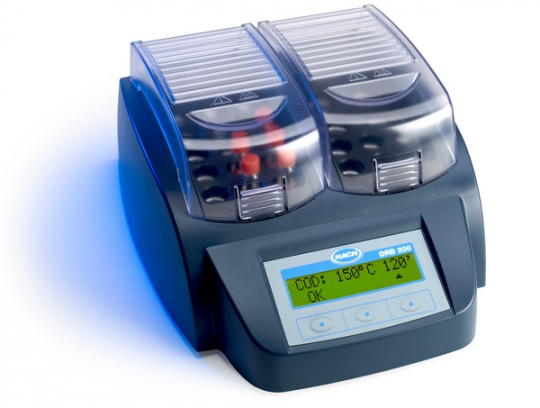
Digester (rapid COD digester)
 HACH
Multi-channel electrochemical analyzer
 HACH
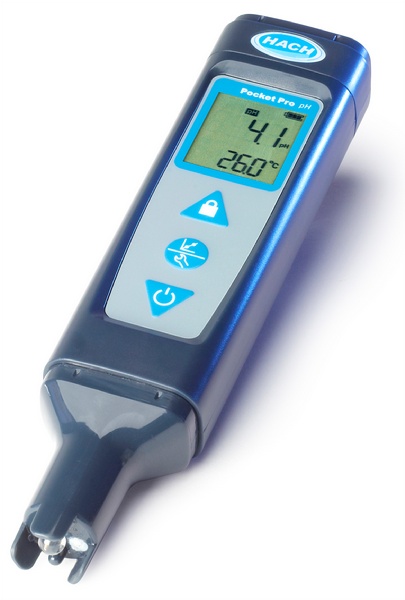
Pro/Pro+ pocket water tester
 HACH
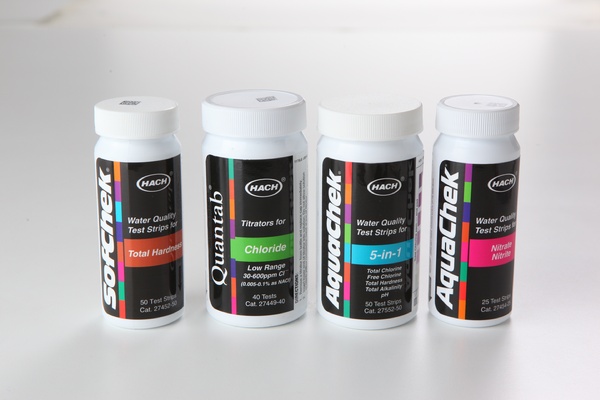
Water quality analysis test strip series
 HACH
Liquid colorimeter
 HACH
Portable water toxicity analyzer
 HACH
Special Service / Others TSS
 HACH