
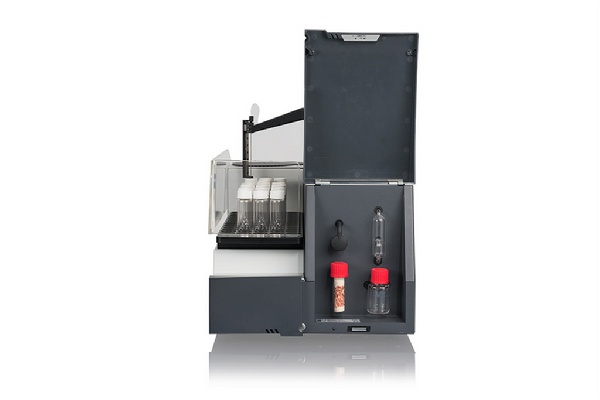
Industries
Petrochemical, industrial wastewater, municipal wastewater, surface water, groundwater, tap water, etc.
Target customers
QC laboratories of petrochemical and other industrial customers, environmental monitoring stations, university environmental laboratories, third-party water quality research institutes or testing centers, etc.
Instrument features
-
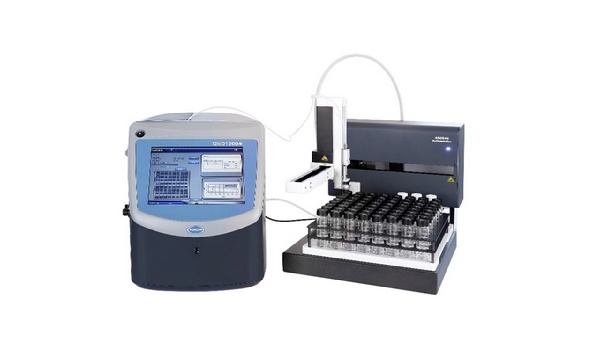
Integrated all-in-one design with a standard integrated 65-position liquid autosampler and stirring device, with an optional TN total nitrogen module, helping customers save laboratory bench space
-
Direct injection sampling avoids contact between the sample and the built-in syringe pump, effectively reducing the risk of sample carryover.
-
Valve-free design allows the QP1680 to accept injection of particulate samples up to 800 µm in size, expanding the application range and reducing clogging.
-
Robust and durable combustion assembly ensures sample oxidation and protects the catalyst.
-
Intuitive software interface makes instrument operation, data analysis and system diagnostics simpler.
-
Plug-and-play common spare parts make routine maintenance and after-sales service faster and more efficient
Technical specifications
-
Model QP1680-TOC QP1680-TOC/TN QP1680-TN
-
Parameters TOC TOC, TN TN
-
Oxidation method 680 °C high-temperature catalytic combustion 720 °C high-temperature catalytic combustion 720 °C high-temperature catalytic combustion
-
Measuring method NDIR (non-dispersive infrared detection) TOC: NDIR (non-dispersive infrared detection)
-
TN: chemiluminescence chemiluminescence
-
Analysis time approx. 3 minutes approx. 4 minutes approx. 3 minutes
-
Gas consumption 200 mL/min** 250 mL/min** 200 mL/min
-
**An additional 300 mL/min is required when preparing samples for NPOC determination.
-
Carrier gas requirement Purity of at least 99.998% (4.8)
-
Temperature Maximum combustion furnace temperature 1050 °C (depending on configuration)
-
Measuring range TC, TIC, NPOC, TN: 0 - 30000 mg/L
-
Limit of detection (LOD) TC, TIC, NPOC: 50 μg/L TN: 20 μg/L
-
Repeatability 0-10 mg/L, TC, TIC, NPOC, TN : < 5% ; >10 mg/L, TC, TIC, NPOC, TN: < 2%
-
Injection volume 10 - 1000 μL
-
Storage temperature -20 - 60 °C
-
Operating conditions 20 - 30 °C; relative humidity 20 - 80% (non-condensing)
-
Standards and norms TOC: ASTM D7573, EN 1484, EPA 415.1, EPA 9060A, ISO 8245, SM5310B, NEN-ISO 20236, HJ501-2009
-
TN: ASTM D8083, EN 12260, ISO 11905-2, NEN-ISO 20236
-
Power supply Analyzer: 100 - 240 VAC, 50/60 Hz, 16 A, with protective earth
-
PC: 100 - 240 VAC, 50/60 Hz, 1.6 A, with protective earth
-
Monitor: 100 - 240 VAC, 50/60 Hz, 1.6 A, with protective earth
-
Power Analyzer: Max. 750 W
-
PC: Max. 90 W
-
Monitor: Max. 100 W
-
Dimensions 440 mm x 380 mm x 700 mm (H x W x D)
Accessory information
-
Order No. Description
-
Consumables and spare parts
-
SMKIT501000 QP1680 consumables kit, 2500 analyses
-
SMKIT501100 QP1680 consumables kit, 5000 analyses
-
SMKIT501200 QP1680 consumables kit, 10000 analyses
Hach service products
-
SA-COM1-QP16 QP1680 on-site installation and commissioning service, orderable only together with a new instrument purchase order
-
SA-PMT1-QP16 QP1680 preventive maintenance service (once a year), orderable only together with a new instrument purchase order
-
SA-PREM1-QP16 QP1680 Premium service plan, including 1 complete on-site installation and commissioning, 1-year preventive maintenance (once a year) and remote professional service (1 year), orderable only together with a new instrument purchase order
Ordering information
Order No. Description
Analyzer
-
LPV448.99.00001 QP1680 TOC analyzer, with 65-position autosampler
-
LPV448.99.00501 QP1680 TOC analyzer, with 96-position autosampler
-
LPV448.99.01001 QP1680 TOC/TN analyzer, with 65-position autosampler
-
LPV448.99.01501 QP1680 TOC/TN analyzer, with 96-position autosampler
-
LPV448.99.02001 QP1680 TN analyzer, with 65-position autosampler
-
LPV448.99.02501 QP1680 TN analyzer, with 96-position autosampler
Source: Public information from the Hach water quality website
Case Studies
Municipal Wastewater Treatment · Hach-lab — Application Case
Project Overview
The site is the inlet, biological and outlet stages of a municipal plant. The customer wanted Hach-lab properly configured on the existing plant, with the aim of laboratory colorimetric and titrimetric water analysis.
Technical Challenges
What actually causes trouble is high solids and corrosive fractions, with large diurnal flow swings, and effluent parameters drift and probes foul with sludge and biofilm. All of this means the Hach-lab configuration has to involve selected by method standard, sample throughput and reagent kit.
Configuration
Supply and installation were organised through the laboratory line: configuring around lab method standards and sample throughput. On site this meant selected by method standard, sample throughput and reagent kit, checked line by line against: stable compliance with Grade 1A discharge limits and online data reporting.
Performance
After commissioning the outcome is standardised methods that make data comparable between labs, and the readings are now used for process tuning.
Food & Beverage · Hach-lab — Application Case
Site Conditions
This is a Food & Beverage customer whose plant is at dosing, pasteurising, filling and CIP stages. The main task was laboratory colorimetric and titrimetric water analysis.
The Problem
The difficulty lies in syrups, dairy and beverages that scale easily, under strict hygienic requirements; at the same time frequent cleaning demands instruments that withstand hot CIP/SIP caustic cycles. Specification therefore means selected by method standard, sample throughput and reagent kit.
What We Did
We took a laboratory line approach — configuring around lab method standards and sample throughput. Delivery was built around selected by method standard, sample throughput and reagent kit, with point-by-point checks on: food-safety and hygienic design per 3-A / EHEDG.
Operating Outcome
In service the system performs as intended — standardised methods that make data comparable between labs, with routine maintenance falling noticeably.
Chemical & Pharmaceutical · Hach-lab — Application Case
Application Context
reactors, metering vessels and finished-product tanks is a typical Chemical & Pharmaceutical duty. The project started from Hach-lab, focusing on laboratory colorimetric and titrimetric water analysis.
Process Constraints
corrosion plus Ex protection shortens instrument life and makes downtime costly, and highly corrosive media with solvents and crystallisation, partly in explosive atmospheres only amplify it. The Hach-lab specification must therefore cover selected by method standard, sample throughput and reagent kit.
Delivery Approach
Delivery was handled as the laboratory line — configuring around lab method standards and sample throughput. Execution centred on selected by method standard, sample throughput and reagent kit, together with Ex certification and GMP traceability of records.
Field Results
Operation shows the benefit clearly — standardised methods that make data comparable between labs, with confidence in this measuring point improving markedly.
Power & Energy · Hach-lab — Application Case
Customer Profile
The typical setting in Power & Energy is boiler feedwater, turbine condensate and FGD/DeNOx systems. The measuring point is Hach-lab; the focus is laboratory colorimetric and titrimetric water analysis.
Key Difficulties
Conditions are high temperature and pressure with both steam and saline water and, on top of that, drift under high temperature and pressure, with very costly unplanned outages, which a standard configuration cannot handle for long. The design therefore starts with selected by method standard, sample throughput and reagent kit.
Implementation
The scope ran through the laboratory line: configuring around lab method standards and sample throughput. Technically it hinges on selected by method standard, sample throughput and reagent kit, and on these requirements: compliance with power-industry codes and unit availability targets.
Customer Benefit
In practice this means standardised methods that make data comparable between labs, which cut the workload on the site maintenance team.
Related Products
 HACH
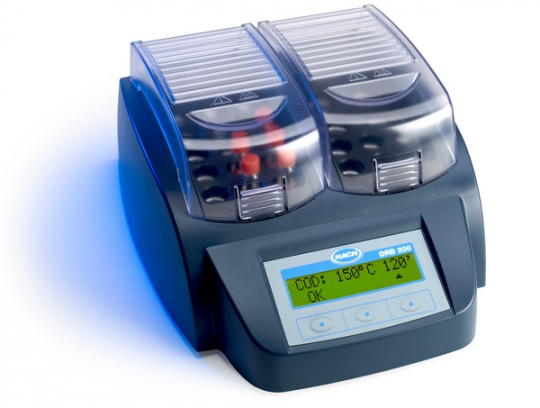
Digester (rapid COD digester)
 HACH
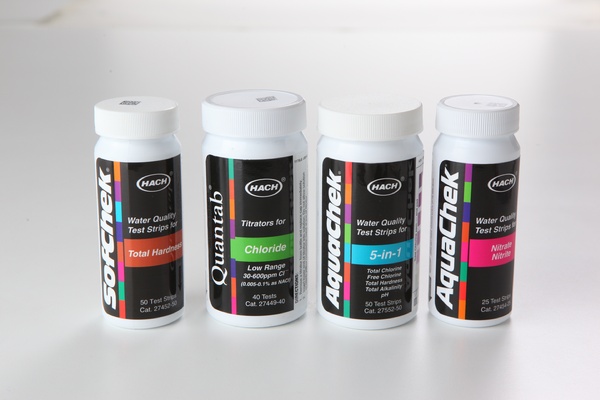
Water quality analysis test strip series
 HACH
Multi-channel electrochemical analyzer
 HACH
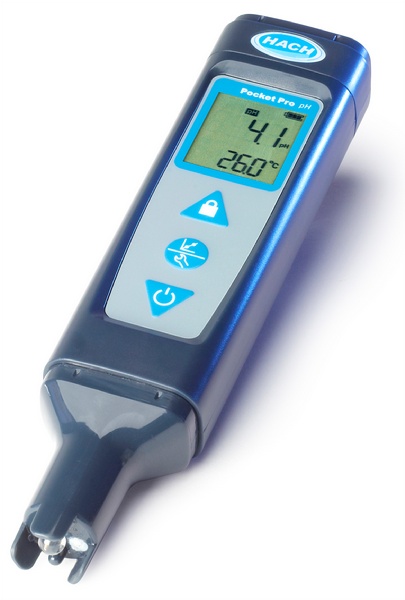
Pro/Pro+ pocket water tester
 HACH
Liquid colorimeter
 HACH
Portable water toxicity analyzer
 HACH
1000 series automatic potentiometric titrator
 HACH