
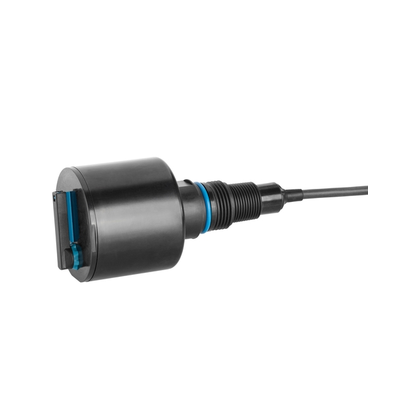
Technical Data
CompareSludge interface
| Measuring principle | Ultrasonic return-time measurement |
| Application | Continuous interface measurement in sedimentation basins |
| Installation | Immersed sensor with fixed cable |
| Measuring range | 0.3 to 30 m (1 to 100 ft) |
| Process temperature | 5 to 80 °C (41 to 176 °F) |
| Process pressure | 0 to 1 bar (0 to 14.5 psi) |
| Material | Housing: PPS GF40; wiper: EPDM or silicone; wiper arm: PPS GF40; wiper shaft: 1.4571 |
| Dimension | Diameter 75.2 mm (3"); standard sensor length 80 mm (3.15"); length with wiper 90.5 mm (3.56") |
| Temperature sensor | -20 to 85 °C (-4 to 185 °F) |
| Connection | Process connection G1 and NPT 3/4"; fixed cable 15 m |
| Ingress protection | IP68 |
| Output / communication | Digital output for connection to Liquiline CM44x |
| Ex certification | ATEX, CSA |
| Certificates, declarations and approvals | CSA GP, ATEX II 3G Ex ec, IECEx Ex ec, CSA US Cl.1 Div.2 |
Product overview
Memosens CUS71E is an ultrasonic sensor for monitoring sediments in basins, tanks, and reservoirs. Precise identification of the interface level between water and sediments enables reliable process control. Manual measurements are no longer required, system availability is increased, and the integrated sensor cleaning ensures consistent measurement results. The unique sedimentation factor serves as a quality indicator of the precipitation process and optimizes chemical dosing.
The sensor uses Memosens digital technology and connects to the Liquiline CM44x transmitter via a digital output. It supports the automation of sedimentation processes in wastewater treatment, drinking water treatment, mining and hydropower.
Benefits
- Make the invisible visible for better process control: measures the interface layers even at large depth and in harsh environments to reliably control and optimize your process.
- High plant availability by reliable measurement and cleaning: automated measurement and integrated cleaning increase system availability while delivering consistent results with minimal manual effort.
- Wide operation range for demanding environments: monitor interface layers across a broad range of applications, from drinking water to hazardous areas, with a complete solution including assembly and transmitter.
- Reliable results under challenging conditions: integrated temperature and medium compensation ensure stable measurements under changing process conditions.
- Seamless integration and easy commissioning: the commissioning wizard supports you step by step for fast integration even under unknown conditions.
- Optimize chemical dosing with a unique sedimentation factor: use the sedimentation factor as a quality indicator to optimize precipitation chemicals and reduce operating costs without compromising process stability.
Field of application
Memosens CUS71E measures the interface layer between water and sediments to support the automation of sedimentation processes in the following applications:
- Wastewater treatment
- Drinking water treatment
- Mining
- Hydropower
Measuring principle
Ultrasonic return-time measurement: the sensor emits ultrasonic pulses towards the sediment interface and determines the interface level between water and sediments from the echo return time, with a measuring range of 0.3 to 30 m. Integrated temperature and medium compensation keep the measurement stable in high-temperature or saline media.
Configurator / Comparison
Case Studies
Municipal Wastewater Treatment · turbidity — Application Case
Project Background
The project covers the inlet, biological and outlet stages of a municipal plant. The work centres on turbidity and the core task is measuring turbidity as an indicator of suspended solids and filtration.
Operating Challenges
The medium and duty are characterised by high solids and corrosive fractions, with large diurnal flow swings, and effluent parameters drift and probes foul with sludge and biofilm. So turbidity cannot be specified generically — it calls for choosing 90° scatter or surface scatter by range, with de-bubbling.
Solution
The Ainstru engineering team worked through the analyser range: selecting as part of a complete water-analysis system. The configuration involves choosing 90° scatter or surface scatter by range, with de-bubbling, with these requirements in view: stable compliance with Grade 1A discharge limits and online data reporting.
Results
Since start-up the system has run steadily; the practical result is backwashing triggered by water quality, saving water while holding quality.
Food & Beverage · turbidity — Application Case
Project Overview
The site is dosing, pasteurising, filling and CIP stages. The customer wanted turbidity properly configured on the existing plant, with the aim of measuring turbidity as an indicator of suspended solids and filtration.
Technical Challenges
What actually causes trouble is syrups, dairy and beverages that scale easily, under strict hygienic requirements, and frequent cleaning demands instruments that withstand hot CIP/SIP caustic cycles. All of this means the turbidity configuration has to involve choosing 90° scatter or surface scatter by range, with de-bubbling.
Configuration
Supply and installation were organised through the analyser range: selecting as part of a complete water-analysis system. On site this meant choosing 90° scatter or surface scatter by range, with de-bubbling, checked line by line against: food-safety and hygienic design per 3-A / EHEDG.
Performance
After commissioning the outcome is backwashing triggered by water quality, saving water while holding quality, and the readings are now used for process tuning.
Chemical & Pharmaceutical · turbidity — Application Case
Site Conditions
This is a Chemical & Pharmaceutical customer whose plant is at reactors, metering vessels and finished-product tanks. The main task was measuring turbidity as an indicator of suspended solids and filtration.
The Problem
The difficulty lies in highly corrosive media with solvents and crystallisation, partly in explosive atmospheres; at the same time corrosion plus Ex protection shortens instrument life and makes downtime costly. Specification therefore means choosing 90° scatter or surface scatter by range, with de-bubbling.
What We Did
We took a analyser range approach — selecting as part of a complete water-analysis system. Delivery was built around choosing 90° scatter or surface scatter by range, with de-bubbling, with point-by-point checks on: Ex certification and GMP traceability of records.
Operating Outcome
In service the system performs as intended — backwashing triggered by water quality, saving water while holding quality, with routine maintenance falling noticeably.
Power & Energy · turbidity — Application Case
Application Context
boiler feedwater, turbine condensate and FGD/DeNOx systems is a typical Power & Energy duty. The project started from turbidity, focusing on measuring turbidity as an indicator of suspended solids and filtration.
Process Constraints
drift under high temperature and pressure, with very costly unplanned outages, and high temperature and pressure with both steam and saline water only amplify it. The turbidity specification must therefore cover choosing 90° scatter or surface scatter by range, with de-bubbling.
Delivery Approach
Delivery was handled as the analyser range — selecting as part of a complete water-analysis system. Execution centred on choosing 90° scatter or surface scatter by range, with de-bubbling, together with compliance with power-industry codes and unit availability targets.
Field Results
Operation shows the benefit clearly — backwashing triggered by water quality, saving water while holding quality, with confidence in this measuring point improving markedly.
Related Products
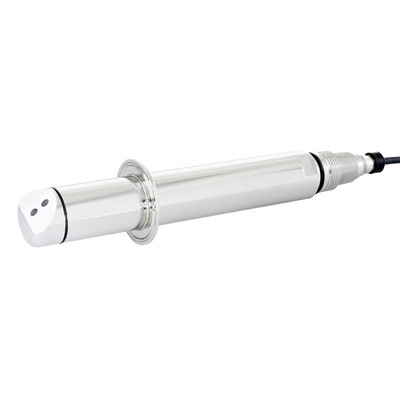 Endress+Hauser
Turbimax CUS52D
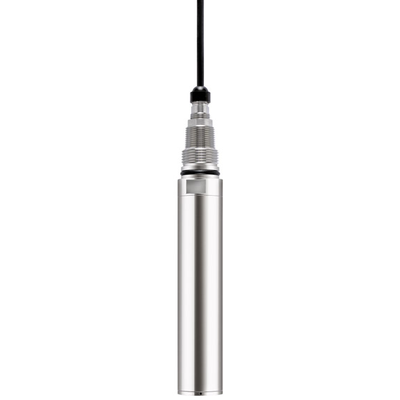 Endress+Hauser
Turbimax CUS51D
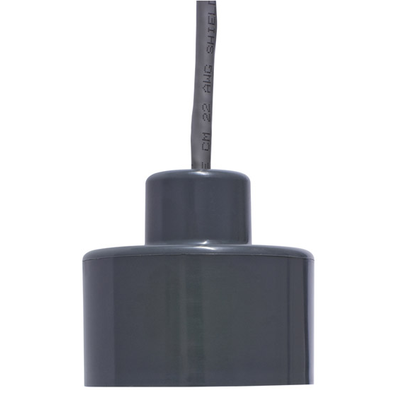 Endress+Hauser
Turbimax CUS71D
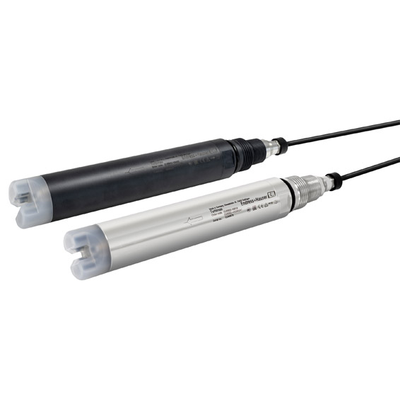 Endress+Hauser
Turbimax CUS50D
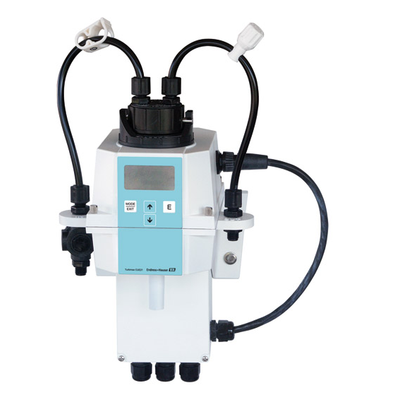 Endress+Hauser
Turbimax CUE22, compact white light
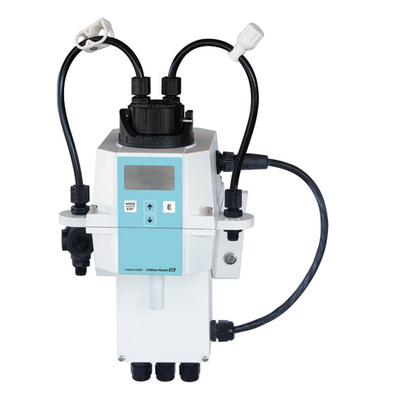 Endress+Hauser
Turbimax CUE21, compact infrared
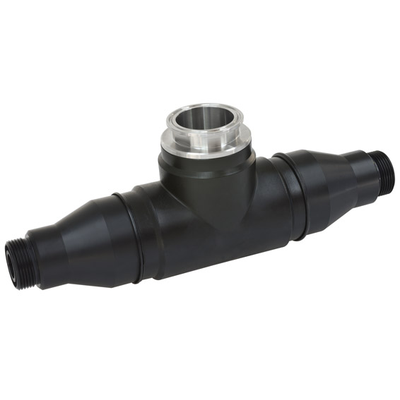 Endress+Hauser
Flowfit CUA252
 Endress+Hauser