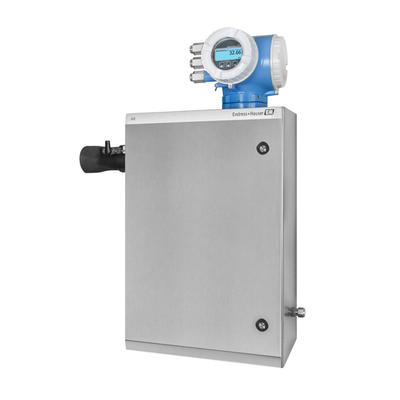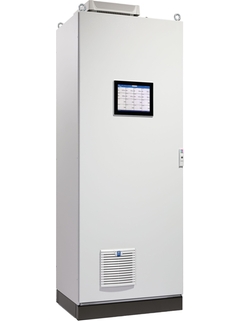
MCS200HW Reliable measurement technology for flue gas monitoring
Advantages
-
Simultaneous monitoring of up to 12 gas components with just one analyzer
-
Task-oriented, convenient operation
-
Remote access without additional software
-
Certified drift monitoring device (QAL3) without test gas ensures high availability
-
Data transmission via a single interface
-
Can be used in explosive atmospheres thanks to the rugged, overpressure-encapsulated housing
Application
The MCS200HW multi-component analyzer system can be used for continuous monitoring of up to 10 infrared measurement components in the flue gas of industrial incineration plants. The MCS200HW uses hot extraction: all media-contacting parts from the gas sampling probe to the sample cell are heated above the dew point, which prevents corrosion.
The built-in oxygen sensor also measures oxygen. Optional integrated GMS811 FIDORi enables additional TOC measurement (non-Ex versions only). Internal span point check enables quick measured value verification without test gas. Predefined task assistants in the network display and software make operation very simple. MCS200HW Ex also provides reliable emission testing in explosive atmospheres.
-
Emission monitoring in waste-to-energy plants as well as co-incineration facilities (e.g. cement plants) and power plants
-
Measurement of nitrogen oxides (NO, NO2, N2O) in nitric acid plants
Overview:
-
Measurement of up to 10 infrared components as well as O2 and TOC
-
Gas transport via jet pump with no mechanical wear parts
-
Span point check using built-in calibration filter
-
Web server for platform-independent device control
-
Dry test gas for HCl and NH3
-
Suitable for ATEX Zone 2, IIC T3 gb classification
Source:Endress+Hauser website public information
Case Studies
Municipal Wastewater Treatment · Gas Analysis — Application Case
Project Overview
The site is the inlet, biological and outlet stages of a municipal plant. The customer wanted Gas Analysis properly configured on the existing plant, with the aim of continuous analysis of target components in flue or process gas.
Technical Challenges
What actually causes trouble is high solids and corrosive fractions, with large diurnal flow swings, and effluent parameters drift and probes foul with sludge and biofilm. All of this means the Gas Analysis configuration has to involve choosing the analysis principle by range, background gas and conditioning.
Configuration
Supply and installation were organised through the analyser range: selecting as part of a complete water-analysis system. On site this meant choosing the analysis principle by range, background gas and conditioning, checked line by line against: stable compliance with Grade 1A discharge limits and online data reporting.
Performance
After commissioning the outcome is optimised combustion, cutting both fuel use and emissions, and the readings are now used for process tuning.
Food & Beverage · Gas Analysis — Application Case
Site Conditions
This is a Food & Beverage customer whose plant is at dosing, pasteurising, filling and CIP stages. The main task was continuous analysis of target components in flue or process gas.
The Problem
The difficulty lies in syrups, dairy and beverages that scale easily, under strict hygienic requirements; at the same time frequent cleaning demands instruments that withstand hot CIP/SIP caustic cycles. Specification therefore means choosing the analysis principle by range, background gas and conditioning.
What We Did
We took a analyser range approach — selecting as part of a complete water-analysis system. Delivery was built around choosing the analysis principle by range, background gas and conditioning, with point-by-point checks on: food-safety and hygienic design per 3-A / EHEDG.
Operating Outcome
In service the system performs as intended — optimised combustion, cutting both fuel use and emissions, with routine maintenance falling noticeably.
Chemical & Pharmaceutical · Gas Analysis — Application Case
Application Context
reactors, metering vessels and finished-product tanks is a typical Chemical & Pharmaceutical duty. The project started from Gas Analysis, focusing on continuous analysis of target components in flue or process gas.
Process Constraints
corrosion plus Ex protection shortens instrument life and makes downtime costly, and highly corrosive media with solvents and crystallisation, partly in explosive atmospheres only amplify it. The Gas Analysis specification must therefore cover choosing the analysis principle by range, background gas and conditioning.
Delivery Approach
Delivery was handled as the analyser range — selecting as part of a complete water-analysis system. Execution centred on choosing the analysis principle by range, background gas and conditioning, together with Ex certification and GMP traceability of records.
Field Results
Operation shows the benefit clearly — optimised combustion, cutting both fuel use and emissions, with confidence in this measuring point improving markedly.
Power & Energy · Gas Analysis — Application Case
Customer Profile
The typical setting in Power & Energy is boiler feedwater, turbine condensate and FGD/DeNOx systems. The measuring point is Gas Analysis; the focus is continuous analysis of target components in flue or process gas.
Key Difficulties
Conditions are high temperature and pressure with both steam and saline water and, on top of that, drift under high temperature and pressure, with very costly unplanned outages, which a standard configuration cannot handle for long. The design therefore starts with choosing the analysis principle by range, background gas and conditioning.
Implementation
The scope ran through the analyser range: selecting as part of a complete water-analysis system. Technically it hinges on choosing the analysis principle by range, background gas and conditioning, and on these requirements: compliance with power-industry codes and unit availability targets.
Customer Benefit
In practice this means optimised combustion, cutting both fuel use and emissions, which cut the workload on the site maintenance team.