
Technical Data
CompareChlorine analysis
| Measured parameter | Free chlorine / total chlorine |
| Measuring range | 0 to 10 mg/L |
| Measuring cycle | 2.5 to 60 min, adjustable |
| Accuracy | 0...5 mg/L: ±5% or ±0.04 mg/L (whichever is greater); 5...10 mg/L: ±10% |
| Limit of detection | LOD 0.018 mg/L; LOQ 0.06 mg/L |
| Sample flow | 60 to 200 mL/min |
| Sample pressure | 0.1...0.3 bar (to analyzer); 0.3...5.2 bar (to Y-strainer) |
| Power supply | 24 V DC ±10%, supplied by CM44x transmitter |
| Ingress protection | IP66 |
| Ambient temperature | 5 to 40 °C |
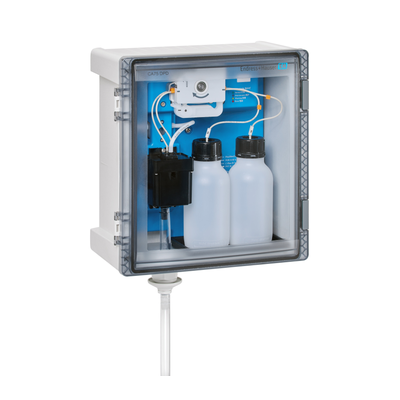
| Dimensions | 365 x 340 x 199 mm (H x W x D) |
| Weight | 5.35 kg (without reagents) |
| Mounting | Wall mounting |
| Output / communication | 4...20 mA; Modbus RS485, PROFIBUS DP etc. via CM44x |
Product overview
CA75DPD measures free or total chlorine online using the DPD colorimetric method. Pressurized sample passes a flow meter into the measuring cell, where a peristaltic pump doses DPD reagent and buffer; after mixing and color development, the photometer determines chlorine concentration from the absorbance change.
The analyzer is factory-calibrated, so frequent on-site calibration is not required. Combined with the CM44x transmitter it is quickly integrated and suits chlorination monitoring in drinking water, wastewater, industrial raw water and cooling circuits.
Benefits
- No frequent calibration: factory-stored calibration curve, low maintenance.
- Low detection limit: LOD 0.018 mg/L, LOQ 0.06 mg/L.
- Adjustable cycle: 2.5 to 60 min to balance operating cost and monitoring frequency.
- Economical reagents: one set runs at least 30 days at a 2.5 min cycle; 4 months shelf life once activated.
- Flow monitoring: integrated flow sensor supervises sample flow.
- System integration: 4...20 mA, Modbus RS485, PROFIBUS DP and more.
Field of application
- Chlorine monitoring in drinking water plants, distribution networks and secondary supply
- Effluent chlorine monitoring in wastewater treatment plants
- Industrial raw water and cooling water chlorination
- Pool water and pure water preparation in food & beverage
Measuring principle
DPD (N,N-diethyl-p-phenylenediamine) colorimetric method: the sample reacts with DPD reagent to form a red compound; the photometer measures the absorbance change and compares it with the stored curve to obtain free/total chlorine. Cycle, calibration and cleaning run automatically.
Configurator / Comparison
Case Studies
Municipal Wastewater Treatment · sterilize — Application Case
Customer Profile
The typical setting in Municipal Wastewater Treatment is the inlet, biological and outlet stages of a municipal plant. The measuring point is sterilize; the focus is monitoring and controlling disinfectant dosing and efficacy.
Key Difficulties
Conditions are high solids and corrosive fractions, with large diurnal flow swings and, on top of that, effluent parameters drift and probes foul with sludge and biofilm, which a standard configuration cannot handle for long. The design therefore starts with matching monitoring points to the disinfection route (chlorine, UV, ozone).
Implementation
The scope ran through the analyser range: selecting as part of a complete water-analysis system. Technically it hinges on matching monitoring points to the disinfection route (chlorine, UV, ozone), and on these requirements: stable compliance with Grade 1A discharge limits and online data reporting.
Customer Benefit
In practice this means on-demand dosing, lowering both by-products and cost, which cut the workload on the site maintenance team.
Food & Beverage · sterilize — Application Case
Project Background
The project covers dosing, pasteurising, filling and CIP stages. The work centres on sterilize and the core task is monitoring and controlling disinfectant dosing and efficacy.
Operating Challenges
The medium and duty are characterised by syrups, dairy and beverages that scale easily, under strict hygienic requirements, and frequent cleaning demands instruments that withstand hot CIP/SIP caustic cycles. So sterilize cannot be specified generically — it calls for matching monitoring points to the disinfection route (chlorine, UV, ozone).
Solution
The Ainstru engineering team worked through the analyser range: selecting as part of a complete water-analysis system. The configuration involves matching monitoring points to the disinfection route (chlorine, UV, ozone), with these requirements in view: food-safety and hygienic design per 3-A / EHEDG.
Results
Since start-up the system has run steadily; the practical result is on-demand dosing, lowering both by-products and cost.
Chemical & Pharmaceutical · sterilize — Application Case
Project Overview
The site is reactors, metering vessels and finished-product tanks. The customer wanted sterilize properly configured on the existing plant, with the aim of monitoring and controlling disinfectant dosing and efficacy.
Technical Challenges
What actually causes trouble is highly corrosive media with solvents and crystallisation, partly in explosive atmospheres, and corrosion plus Ex protection shortens instrument life and makes downtime costly. All of this means the sterilize configuration has to involve matching monitoring points to the disinfection route (chlorine, UV, ozone).
Configuration
Supply and installation were organised through the analyser range: selecting as part of a complete water-analysis system. On site this meant matching monitoring points to the disinfection route (chlorine, UV, ozone), checked line by line against: Ex certification and GMP traceability of records.
Performance
After commissioning the outcome is on-demand dosing, lowering both by-products and cost, and the readings are now used for process tuning.
Power & Energy · sterilize — Application Case
Site Conditions
This is a Power & Energy customer whose plant is at boiler feedwater, turbine condensate and FGD/DeNOx systems. The main task was monitoring and controlling disinfectant dosing and efficacy.
The Problem
The difficulty lies in high temperature and pressure with both steam and saline water; at the same time drift under high temperature and pressure, with very costly unplanned outages. Specification therefore means matching monitoring points to the disinfection route (chlorine, UV, ozone).
What We Did
We took a analyser range approach — selecting as part of a complete water-analysis system. Delivery was built around matching monitoring points to the disinfection route (chlorine, UV, ozone), with point-by-point checks on: compliance with power-industry codes and unit availability targets.
Operating Outcome
In service the system performs as intended — on-demand dosing, lowering both by-products and cost, with routine maintenance falling noticeably.
Related Products
 Endress+Hauser
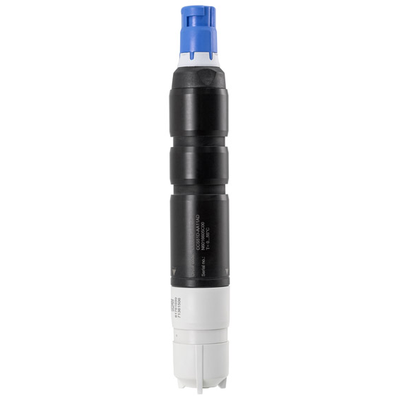
Free chlorine sensor
 Endress+Hauser
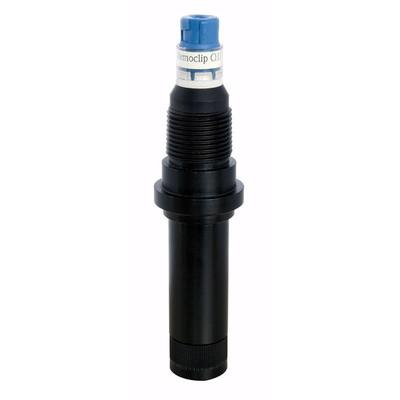
Chloromax CCS 142D
 Endress+Hauser
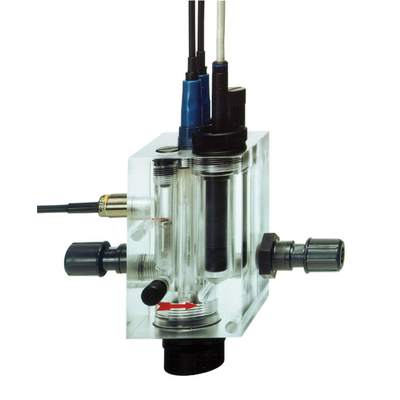
FLOWFIT-W CCA250
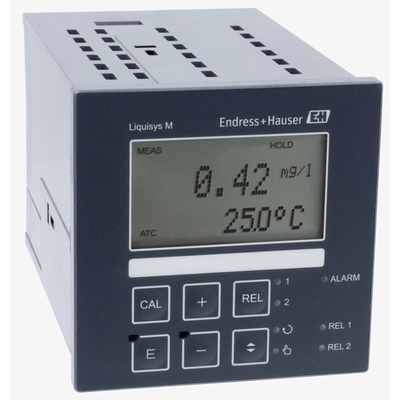 Endress+Hauser
Liquisys M CCM223
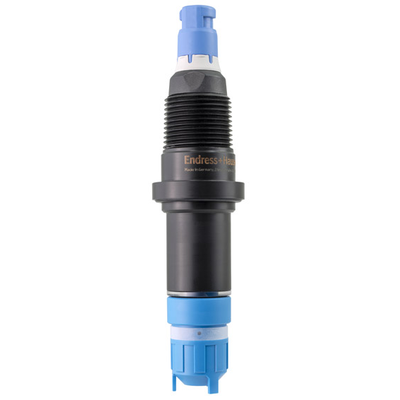 Endress+Hauser
Memosens CCS120D
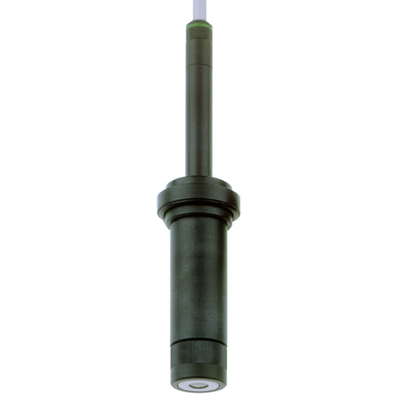 Endress+Hauser
Chlorine sensor cell CCS140
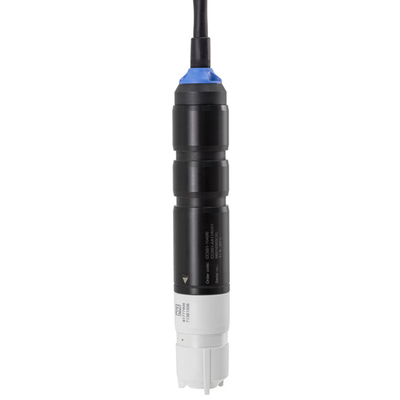 Endress+Hauser
Analog free chlorine sensor CCS51
 Endress+Hauser