
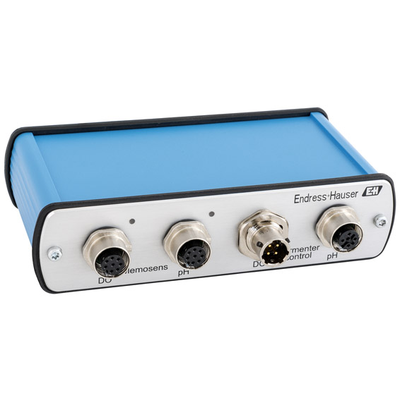
Technical Data
CompareOxygen
| Measuring Principle | Amperometric oxygen measurement |
| Application | CYM17 converter enables easy retrofit of conventional analog pH and oxygen sensor to Memosens CPS171D and COS81D in benchtop fermentation applications. |
| Material | Housing: Aluminum |
| Dimension | Height: 36.6 mm (1.44 in) Deep: 72 mm (2.8 in) Width 140.6 mm (5.5 in) |
| Process temperature | -5 to 50 °C (20 to 120 °F) |
| Input | M12 socket |
| Output / communication | Output pH: mV signal according to Nernst equation with 0 mV at pH 7 and -59 mV/pH Temperature pH: simulated PT1000 Output oxygen: 0 to 60 nA with 60 nA at 100% oxygen saturation Temperature oxygen: simulated 22 kOhm NTC |
pH
| Measuring Principle | Potentiometric |
| Application | CYM17 converter enables easy retrofit of conventional analog pH and oxygen sensor to Memosens CPS171D and COS81D in benchtop fermentation applications. |
| Material | Housing: Aluminum |
| Dimension | Height: 36.6 mm (1.44 in) Deep: 72 mm (2.8 in) Width 140.6 mm (5.5 in) |
| Process temperature | -5 to 50 °C (20 to 120 °F) |
| Ingress protection | IP54 |
| Input | M12 socket |
| Output / communication | Output pH: mV signal according to Nernst equation with 0 mV at pH 7 and -59 mV/pH Temperature pH: simulated PT1000 Output oxygen: 0 to 60 nA with 60 nA at 100% oxygen saturation Temperature oxygen: simulated 22 kOhm NTC |
CYM17 enables Memosens digital sensors to be conveniently used on laboratory fermenters without modifying the SOP
Advantages
-
Convenient replacement of existing analog sensors. Install the Memosens digital sensor directly in the fermenter and connect it to the converter.
-
Various adapter cables are available to conveniently connect a Memosens digital pH electrode (e.g. CPS171D) and a fluorescence dissolved oxygen sensor (e.g. COS81D).
-
With Memosens technology, the cable connection is unaffected by moisture, corrosion or soiling: the sensor offers maximum stability and testing offers maximum safety.
-
Memosens digital sensors perform excellently in process applications and fermenters. From initial laboratory testing to final batch production, they provide consistent measurement.
-
The converter continuously checks the Memosens digital sensor, ensuring maximum measuring reliability at all times and immediately triggering an alarm in the event of an error.
Field of application
The digital (Memosens)/analog converter CYM17 enables Memosens digital sensors to be conveniently used on laboratory fermenters without modifying the SOP. The Memosens digital technology not only offers maximum process and data integrity but is also easy to operate. It avoids all moisture problems and ensures stable signals after high-temperature sterilization.
With the digital (Memosens)/analog converter CYM17, Memosens digital sensors can be used on existing fermenters in laboratory and biotechnology industries.
Configurator / Comparison
Accessories/Spare parts
Source:Endress+Hauserpublic information from the website
Manuals & Documents 2
All documents for this model
Case Studies
Municipal Wastewater Treatment · Gateways and modems — Application Case
Project Background
The project covers the inlet, biological and outlet stages of a municipal plant. The work centres on Gateways and modems and the core task is converting field data into remote transmission channels.
Operating Challenges
The medium and duty are characterised by high solids and corrosive fractions, with large diurnal flow swings, and effluent parameters drift and probes foul with sludge and biofilm. So Gateways and modems cannot be specified generically — it calls for configured by protocol, tag count and carrier network conditions.
Solution
The Ainstru engineering team worked through the system components range: supplying as a full cabinet and signal-chain configuration. The configuration involves configured by protocol, tag count and carrier network conditions, with these requirements in view: stable compliance with Grade 1A discharge limits and online data reporting.
Results
Since start-up the system has run steadily; the practical result is remote sites can report back, making unattended operation possible.
Food & Beverage · Gateways and modems — Application Case
Project Overview
The site is dosing, pasteurising, filling and CIP stages. The customer wanted Gateways and modems properly configured on the existing plant, with the aim of converting field data into remote transmission channels.
Technical Challenges
What actually causes trouble is syrups, dairy and beverages that scale easily, under strict hygienic requirements, and frequent cleaning demands instruments that withstand hot CIP/SIP caustic cycles. All of this means the Gateways and modems configuration has to involve configured by protocol, tag count and carrier network conditions.
Configuration
Supply and installation were organised through the system components range: supplying as a full cabinet and signal-chain configuration. On site this meant configured by protocol, tag count and carrier network conditions, checked line by line against: food-safety and hygienic design per 3-A / EHEDG.
Performance
After commissioning the outcome is remote sites can report back, making unattended operation possible, and the readings are now used for process tuning.
Chemical & Pharmaceutical · Gateways and modems — Application Case
Site Conditions
This is a Chemical & Pharmaceutical customer whose plant is at reactors, metering vessels and finished-product tanks. The main task was converting field data into remote transmission channels.
The Problem
The difficulty lies in highly corrosive media with solvents and crystallisation, partly in explosive atmospheres; at the same time corrosion plus Ex protection shortens instrument life and makes downtime costly. Specification therefore means configured by protocol, tag count and carrier network conditions.
What We Did
We took a system components range approach — supplying as a full cabinet and signal-chain configuration. Delivery was built around configured by protocol, tag count and carrier network conditions, with point-by-point checks on: Ex certification and GMP traceability of records.
Operating Outcome
In service the system performs as intended — remote sites can report back, making unattended operation possible, with routine maintenance falling noticeably.
Power & Energy · Gateways and modems — Application Case
Application Context
boiler feedwater, turbine condensate and FGD/DeNOx systems is a typical Power & Energy duty. The project started from Gateways and modems, focusing on converting field data into remote transmission channels.
Process Constraints
drift under high temperature and pressure, with very costly unplanned outages, and high temperature and pressure with both steam and saline water only amplify it. The Gateways and modems specification must therefore cover configured by protocol, tag count and carrier network conditions.
Delivery Approach
Delivery was handled as the system components range — supplying as a full cabinet and signal-chain configuration. Execution centred on configured by protocol, tag count and carrier network conditions, together with compliance with power-industry codes and unit availability targets.
Field Results
Operation shows the benefit clearly — remote sites can report back, making unattended operation possible, with confidence in this measuring point improving markedly.
Related Products
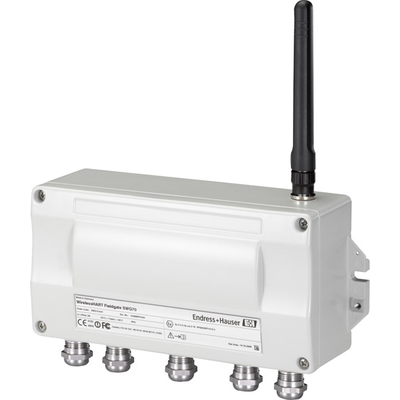 Endress+Hauser
WirelessHART Fieldgate SWG70
 Endress+Hauser
FieldPort SFP20
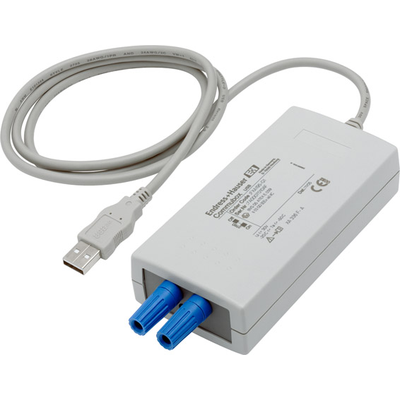 Endress+Hauser
Commubox FXA195
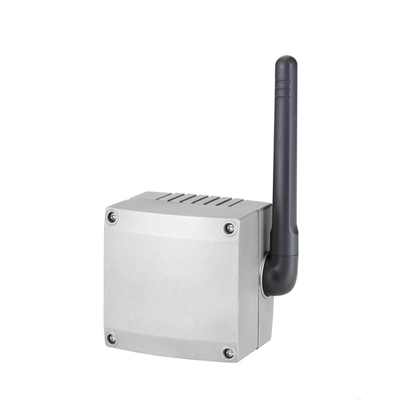 Endress+Hauser
WirelessHART Adapter SWA70
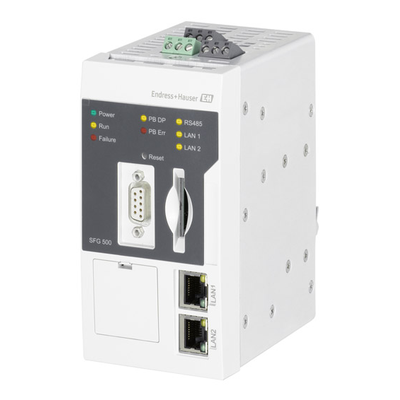 Endress+Hauser
Smart Ethernet gateway
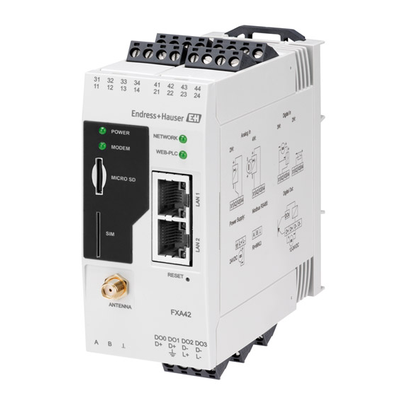 Endress+Hauser
Fieldgate FXA42
 VEGA
VEGA Tools app
 Endress+Hauser