
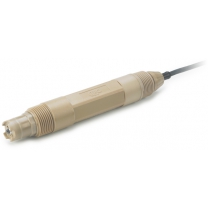
Operating Principle
The GLI differential ORP/pH sensor is based on differential electrode measurement technology, using three measuring electrodes instead of the two electrodes in traditional pH sensors. The pH values measured by the measuring electrode and the reference electrode are differential values relative to the third solution ground electrode. A preamplifier is used to amplify the output of each electrode, and the current signal is converted into the pH value of the water sample, which is the measurement result of the pH sensor.
Application Industries
The GLI differential ORP/pH sensor is suitable for industrial process monitoring in petroleum, pharmaceutical, papermaking and other industries; it measures, displays and transmits pH value and temperature in water treatment processes.
Features and Benefits
-
The GLI differential ORP/pH sensor adopts differential technology, with three electrodes replacing the two electrodes of traditional pH sensors, reducing drift and errors for accurate and reliable results.
-
The built-in preamplifier provides strong interference resistance, ensuring high-fidelity output signals from the pH sensor.
-
The GLI differential ORP/pH sensor offers a choice of Ryton or PEEK materials for measuring special water samples. The Ryton material pH sensor has good compatibility with strongly alkaline substances, reducing maintenance and downtime. The PEEK material pH sensor reduces thermal deformation.
-
The built-in field-replaceable salt bridge extends the service life of the GLI differential ORP/pH sensor.
-
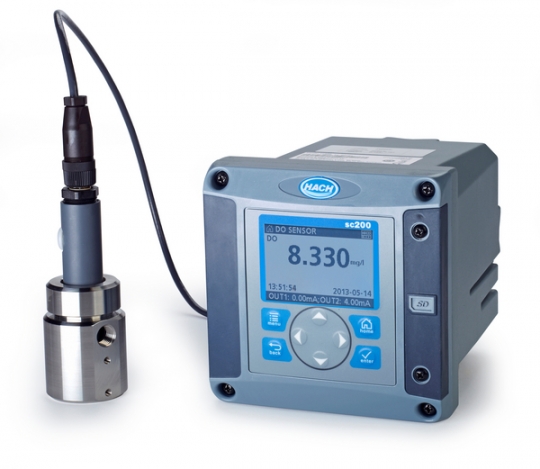
The pH sensor is compatible with the HACH sc200 or sc1000 universal controller, featuring plug-and-play operation and multiple mounting options.
-
Optional self-cleaning assembly
Specifications
-
Measuring range: pH: 0 ~14 pH
-
ORP: -1500~+1500mV
-
Sensitivity: pH: ± 0.01pH
-
ORP: ± 0.5mV
-
Temp. range: -5~95℃
-
Maximum pressure: 6.9bar at 105℃
-
Probe material: PEEK, Ryton optional
Accessories Information
-
1000F3374-002 PEEK electrode protective sleeve
-
1000F3374-003 Ryton electrode protective sleeve
-
SB-P1SV Salt bridge for PEEK electrode
-
SB-R1SV Salt bridge for Ryton electrode
-
25M2A1001- 115 200mV ORP standard solution, 500mL
-
25M2A1002- 115 600mV ORP standard solution, 500mL
-
25M1A1025 -115 Electrolyte
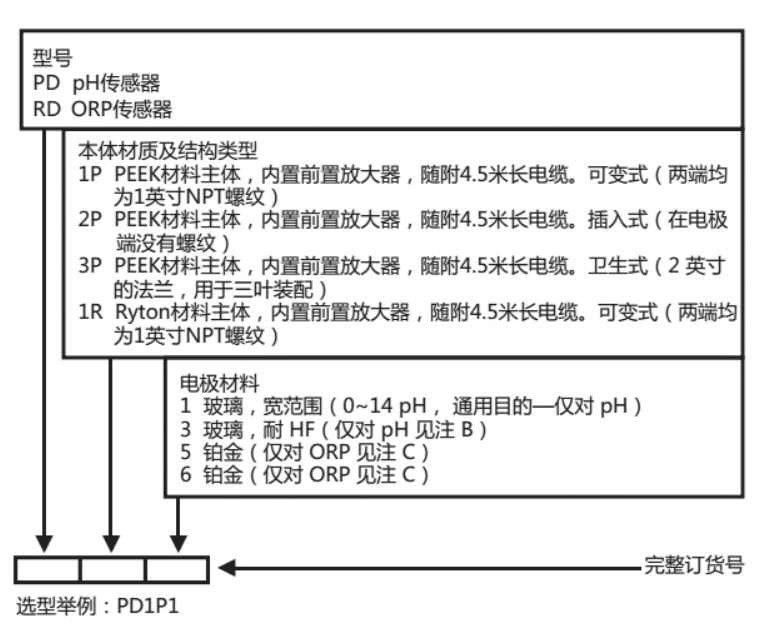
Ordering Guide
-
Note:
-
A. When using a convertible sensor for immersion mounting, it is recommended to order the optional protective sleeve, whose material must match that of the sensor. This protective sleeve is connected to the sensor via threads.
-
B. The HF-resistant glass electrode pH sensor is implemented through an internal PFE (perfluoroelastomer) O-ring. C. To obtain the best ORP measurement results in solutions containing zinc, cyanide, cadmium or nickel, please specify the gold electrode.
-
Source: Public information from the HACH Water Quality website
Case Studies
Municipal Wastewater Treatment · Controllers and Sensors — Application Case
Site Conditions
This is a Municipal Wastewater Treatment customer whose plant is at the inlet, biological and outlet stages of a municipal plant. The main task was online water monitoring with a controller and sensor combination.
The Problem
The difficulty lies in high solids and corrosive fractions, with large diurnal flow swings; at the same time effluent parameters drift and probes foul with sludge and biofilm. Specification therefore means matching each controller channel to its sensor type.
What We Did
We took a Hach channel approach — supplying against the Hach original part numbers. Delivery was built around matching each controller channel to its sensor type, with point-by-point checks on: stable compliance with Grade 1A discharge limits and online data reporting.
Operating Outcome
In service the system performs as intended — factory-matched combinations that make faults easier to locate, with routine maintenance falling noticeably.
Food & Beverage · Controllers and Sensors — Application Case
Application Context
dosing, pasteurising, filling and CIP stages is a typical Food & Beverage duty. The project started from Controllers and Sensors, focusing on online water monitoring with a controller and sensor combination.
Process Constraints
frequent cleaning demands instruments that withstand hot CIP/SIP caustic cycles, and syrups, dairy and beverages that scale easily, under strict hygienic requirements only amplify it. The Controllers and Sensors specification must therefore cover matching each controller channel to its sensor type.
Delivery Approach
Delivery was handled as the Hach channel — supplying against the Hach original part numbers. Execution centred on matching each controller channel to its sensor type, together with food-safety and hygienic design per 3-A / EHEDG.
Field Results
Operation shows the benefit clearly — factory-matched combinations that make faults easier to locate, with confidence in this measuring point improving markedly.
Chemical & Pharmaceutical · Controllers and Sensors — Application Case
Customer Profile
The typical setting in Chemical & Pharmaceutical is reactors, metering vessels and finished-product tanks. The measuring point is Controllers and Sensors; the focus is online water monitoring with a controller and sensor combination.
Key Difficulties
Conditions are highly corrosive media with solvents and crystallisation, partly in explosive atmospheres and, on top of that, corrosion plus Ex protection shortens instrument life and makes downtime costly, which a standard configuration cannot handle for long. The design therefore starts with matching each controller channel to its sensor type.
Implementation
The scope ran through the Hach channel: supplying against the Hach original part numbers. Technically it hinges on matching each controller channel to its sensor type, and on these requirements: Ex certification and GMP traceability of records.
Customer Benefit
In practice this means factory-matched combinations that make faults easier to locate, which cut the workload on the site maintenance team.
Power & Energy · Controllers and Sensors — Application Case
Project Background
The project covers boiler feedwater, turbine condensate and FGD/DeNOx systems. The work centres on Controllers and Sensors and the core task is online water monitoring with a controller and sensor combination.
Operating Challenges
The medium and duty are characterised by high temperature and pressure with both steam and saline water, and drift under high temperature and pressure, with very costly unplanned outages. So Controllers and Sensors cannot be specified generically — it calls for matching each controller channel to its sensor type.
Solution
The Ainstru engineering team worked through the Hach channel: supplying against the Hach original part numbers. The configuration involves matching each controller channel to its sensor type, with these requirements in view: compliance with power-industry codes and unit availability targets.
Results
Since start-up the system has run steadily; the practical result is factory-matched combinations that make faults easier to locate.
Related Products
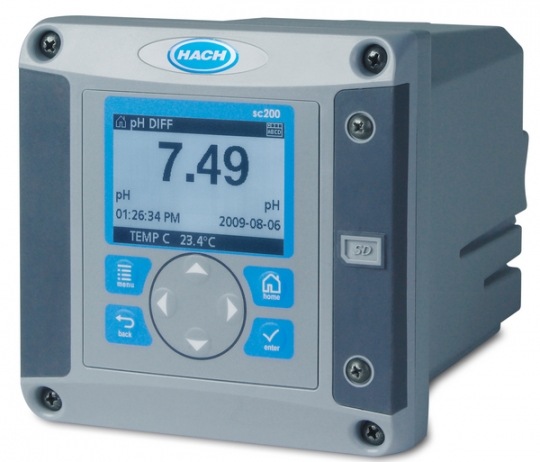 HACH
Universal controller
 HACH
sc turbidity / suspended solids (sludge) analyzer
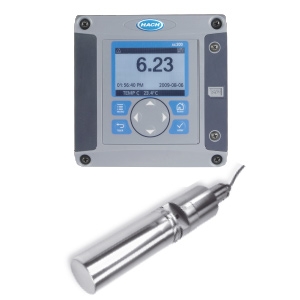 HACH
sc online nitrate analyzer
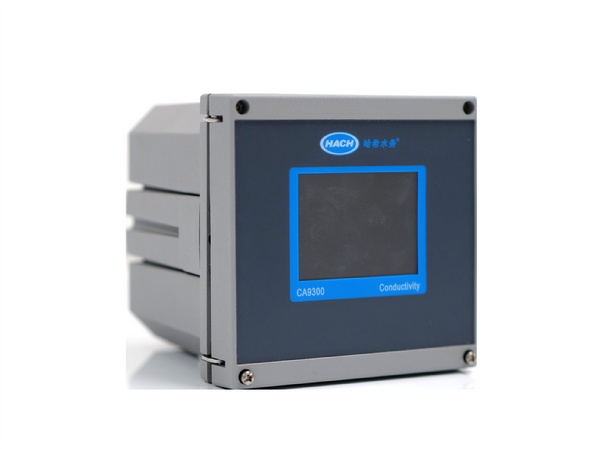 HACH
pH/ORP/conductivity controller
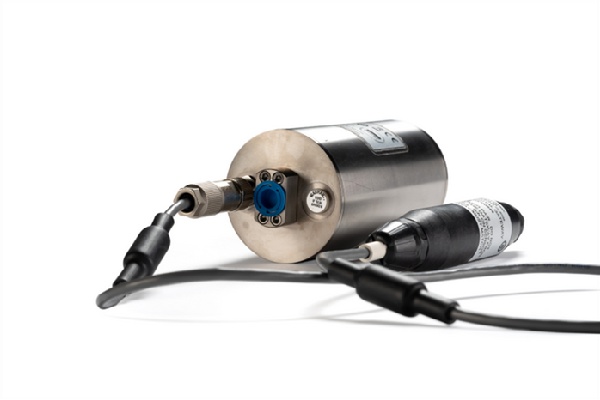 HACH
PAH (polycyclic aromatic hydrocarbons) analyzer
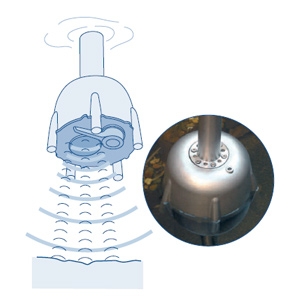 HACH
Sludge blanket monitor (ultrasonic)
 HACH
9582 dissolved oxygen meter
 HACH