
Technical Data
CompareElectrical & communication
| Operating voltage | Ʋ Nominal voltage AC 100 … 230 V (-15 %, +10 %) 50/60 Hz Ʋ Nominal voltage DC 24 … 65 V (-15 %, +10 %) |
| Power consumption | max. 13 VA; 5 W Sensor input |
Application area
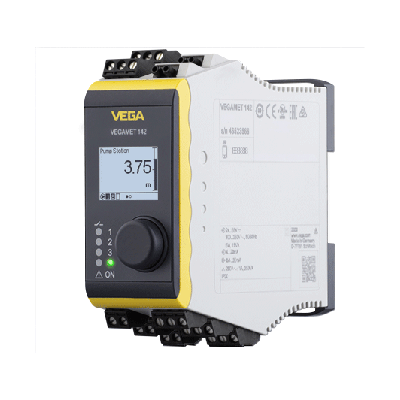
Controller VEGAMET 142 feeds the connected 4 … 20 mA sensors,processes the measured values and displays them. The compactdesign is ideal for mounting on carrier rails in switching cabinets. Agraphic display as well as a turn/push button for quick on-site control ofthe measuring point are also integrated.It enables simple implementation of pump controls, flow measurementson open channels and weirs, totalizers, difference, sum and averagevalue calculations. With VEGAMET 142, limit values can be reliablymonitored and relays can be switched, e.g. for an overfill protectionaccording to WHG.Due to its various possibilities it is suitable for many industrial branchesas well as plant manufacturers.
Your benefit
- Simple control of the measuring point through graphic display, even
- in darkness
- Complex programming of control tasks is no longer necessary
- Simple and reliable commissioning and diagnosis of the measuring
- points via smartphone
Function
The VEGAMET 142 controller can power the connected sensors andprocess their measurement signals. The requested parameter is shownon the display and also output to the integrated current output forfurther processing. The measurement signal can thus be transferred toa remote display or a superordinate control system. Operating relays forcontrol of pumps or other devices are also integrated.ApprovalsWorldwide approvals are available for VEGA instruments, e.g. for use inhazardous areas, on ships or in hygienic applications.The technical data in the respective safety instructions are valid for approved instruments (e.g. with Ex approval). In some cases, these datacan differ from the data listed herein.You can find detailed information on the existing approvals with the appropriate product on our homepage.
Case Studies
Municipal Wastewater Treatment · Process Measuring and Control Instrument — Application Case
Application Context
the inlet, biological and outlet stages of a municipal plant is a typical Municipal Wastewater Treatment duty. The project started from Process Measuring and Control Instrument, focusing on measurement, control and recording for process loops.
Process Constraints
effluent parameters drift and probes foul with sludge and biofilm, and high solids and corrosive fractions, with large diurnal flow swings only amplify it. The Process Measuring and Control Instrument specification must therefore cover configured by input type, loop count and communication.
Delivery Approach
Delivery was handled as the system components range — supplying as a full cabinet and signal-chain configuration. Execution centred on configured by input type, loop count and communication, together with stable compliance with Grade 1A discharge limits and online data reporting.
Field Results
Operation shows the benefit clearly — configured on site, cutting back-and-forth during system commissioning, with confidence in this measuring point improving markedly.
Food & Beverage · Process Measuring and Control Instrument — Application Case
Customer Profile
The typical setting in Food & Beverage is dosing, pasteurising, filling and CIP stages. The measuring point is Process Measuring and Control Instrument; the focus is measurement, control and recording for process loops.
Key Difficulties
Conditions are syrups, dairy and beverages that scale easily, under strict hygienic requirements and, on top of that, frequent cleaning demands instruments that withstand hot CIP/SIP caustic cycles, which a standard configuration cannot handle for long. The design therefore starts with configured by input type, loop count and communication.
Implementation
The scope ran through the system components range: supplying as a full cabinet and signal-chain configuration. Technically it hinges on configured by input type, loop count and communication, and on these requirements: food-safety and hygienic design per 3-A / EHEDG.
Customer Benefit
In practice this means configured on site, cutting back-and-forth during system commissioning, which cut the workload on the site maintenance team.
Chemical & Pharmaceutical · Process Measuring and Control Instrument — Application Case
Project Background
The project covers reactors, metering vessels and finished-product tanks. The work centres on Process Measuring and Control Instrument and the core task is measurement, control and recording for process loops.
Operating Challenges
The medium and duty are characterised by highly corrosive media with solvents and crystallisation, partly in explosive atmospheres, and corrosion plus Ex protection shortens instrument life and makes downtime costly. So Process Measuring and Control Instrument cannot be specified generically — it calls for configured by input type, loop count and communication.
Solution
The Ainstru engineering team worked through the system components range: supplying as a full cabinet and signal-chain configuration. The configuration involves configured by input type, loop count and communication, with these requirements in view: Ex certification and GMP traceability of records.
Results
Since start-up the system has run steadily; the practical result is configured on site, cutting back-and-forth during system commissioning.
Power & Energy · Process Measuring and Control Instrument — Application Case
Project Overview
The site is boiler feedwater, turbine condensate and FGD/DeNOx systems. The customer wanted Process Measuring and Control Instrument properly configured on the existing plant, with the aim of measurement, control and recording for process loops.
Technical Challenges
What actually causes trouble is high temperature and pressure with both steam and saline water, and drift under high temperature and pressure, with very costly unplanned outages. All of this means the Process Measuring and Control Instrument configuration has to involve configured by input type, loop count and communication.
Configuration
Supply and installation were organised through the system components range: supplying as a full cabinet and signal-chain configuration. On site this meant configured by input type, loop count and communication, checked line by line against: compliance with power-industry codes and unit availability targets.
Performance
After commissioning the outcome is configured on site, cutting back-and-forth during system commissioning, and the readings are now used for process tuning.
Related Products
 Endress+Hauser
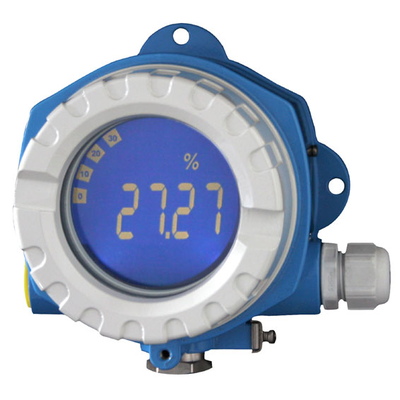
Field Indicator RIA14
 Endress+Hauser
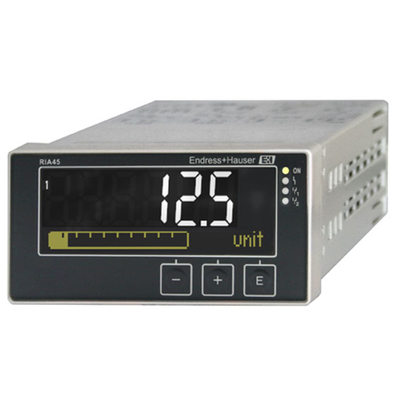
Panel Meter with Control Unit RIA45
 Endress+Hauser
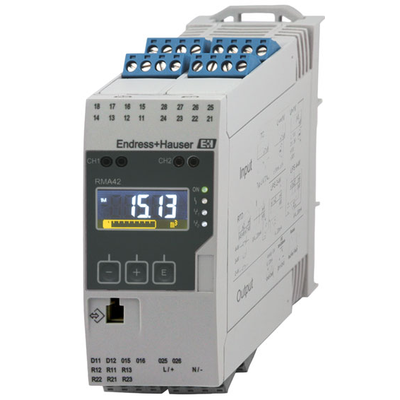
Process Transmitter + Control Unit RMA42
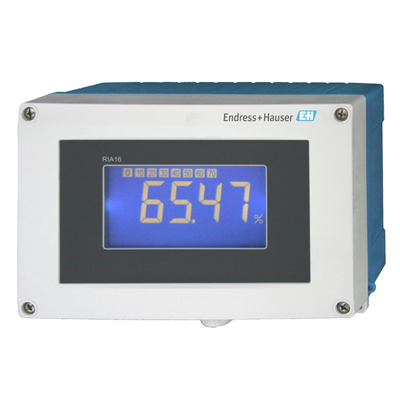 Endress+Hauser
Field Indicator RIA16
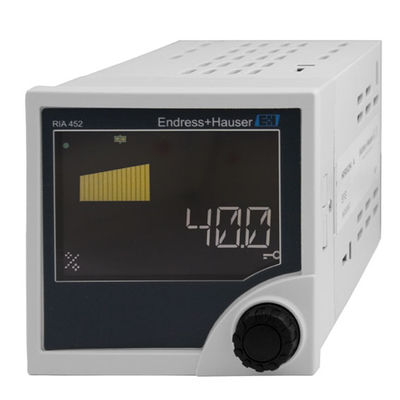 Endress+Hauser
Panel Meter RIA452
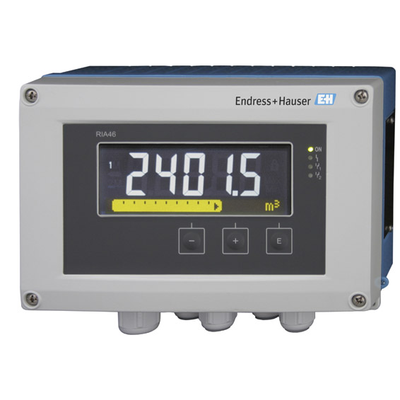 Endress+Hauser
Field Meter with Control Unit RIA46
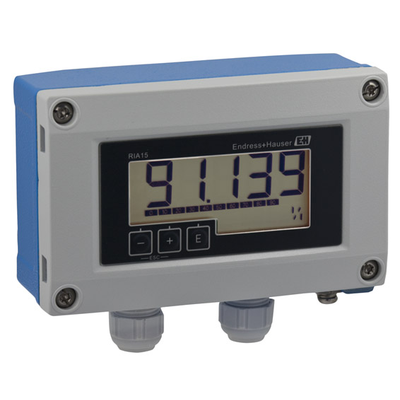 Endress+Hauser
Loop Powered Process Indicator RIA15
 Endress+Hauser