
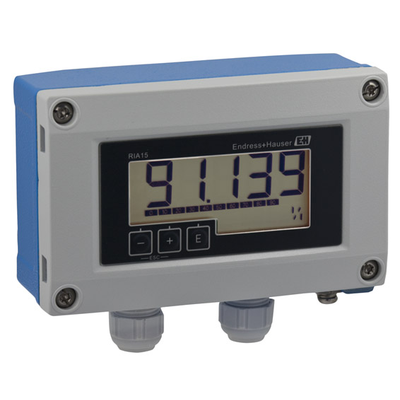
Technical Data
CompareProcess indicator & control units
| Measuring Principle | Loop powered indicators |
| Measuring principle | Loop-powered field indicator |
| Function | Display |
| Display | LCD 17 mm (0.67") 5-digit 7-segment bargraph Plain text display for unit/TAG Activatable backlight |
| Power Supply | Loop powered |
| Input | 1 x analogue 4...20 mA/HART® |
| Output | Not defined |
| Software functions | Not defined |
| Certificates | ATEX Ex ib [ia Ga] CSA C/US IS, NI CSA Ex ia FM IS EAC Ex ib IECEx Ex ib [ia Ga] JPN Ex ib NEPSI Ex ib UK Ex ib [ia Ga] ATEX IECEx Ex ib [ia Ga] marine certificate UL C/US IND Ex PESO Ex KC |
| SIL | Not defined |
| Panel mounting | field panel mounting |
The process indicator supports the 4...20 mA or HART® protocol. Using the HART® protocol, it can alternately display up to 4 measured values of one sensor and can be set as a HART® master or secondary master to acquire data from the sensor. The device is a one-piece design that can be field-mounted or panel-mounted and is suitable for a wide range of applications. Especially in Ex applications, voltage drop: <1V (< 1.9V (HART®)
Advantages
4...20 mA measured value display or selective display of 4 HART® process variables of one sensor, suitable for all industries; can be used as HART® master or secondary master
5-digit measured value display, character height: 17 mm (0.67"), including size and bar graph, backlight can be activated
Local display can use a panel-mount housing (IP65) or a field housing (IP66; Ex approval); minimal installation depth
No external power supply required; voltage drop ≤1 V (HART® ≤1.9 V)
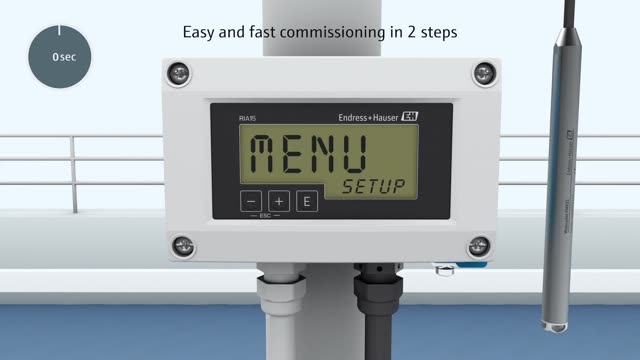
3-key operation for simple device setup
International approvals; marine approvals
SIL immunity approval in accordance with EN 60508
Application areas
Can be used in any industrial application to display 4-20mA measured values or HART® process variables
Panel-mount or field housing with field display
Scalable display values
The “level” or “analysis” options allow basic setup of selected sensors and quick, easy setting of available measured values and units.
Spare Parts & Accessories 7
7 spare parts · click to collapse
| Order code | Description | |
|---|---|---|
| XPR0005- | Main board | Enquire |
| XPR0006- | Spare part RIA15 | Enquire |
| XPR0006- | Spare part RIA15 | Enquire |
| XPR0006- | Spare part RIA15 | Enquire |
| XPR0006- | Spare part RIA15 | Enquire |
| RK01- | System component RK01 | Enquire |
| XPRFID- | Spare RFID TAGConsists of: RFID TAG, fixing wire, crimp sleeve. | Enquire |
Configurator / Comparison
Accessories / Spare parts
Measuring principle video
 Click to play
Manuals & Documents 6
All documents for this modelProduct Videos
Case Studies
Municipal Wastewater Treatment · Process Measuring and Control Instrument — Application Case
Application Context
the inlet, biological and outlet stages of a municipal plant is a typical Municipal Wastewater Treatment duty. The project started from Process Measuring and Control Instrument, focusing on measurement, control and recording for process loops.
Process Constraints
effluent parameters drift and probes foul with sludge and biofilm, and high solids and corrosive fractions, with large diurnal flow swings only amplify it. The Process Measuring and Control Instrument specification must therefore cover configured by input type, loop count and communication.
Delivery Approach
Delivery was handled as the system components range — supplying as a full cabinet and signal-chain configuration. Execution centred on configured by input type, loop count and communication, together with stable compliance with Grade 1A discharge limits and online data reporting.
Field Results
Operation shows the benefit clearly — configured on site, cutting back-and-forth during system commissioning, with confidence in this measuring point improving markedly.
Food & Beverage · Process Measuring and Control Instrument — Application Case
Customer Profile
The typical setting in Food & Beverage is dosing, pasteurising, filling and CIP stages. The measuring point is Process Measuring and Control Instrument; the focus is measurement, control and recording for process loops.
Key Difficulties
Conditions are syrups, dairy and beverages that scale easily, under strict hygienic requirements and, on top of that, frequent cleaning demands instruments that withstand hot CIP/SIP caustic cycles, which a standard configuration cannot handle for long. The design therefore starts with configured by input type, loop count and communication.
Implementation
The scope ran through the system components range: supplying as a full cabinet and signal-chain configuration. Technically it hinges on configured by input type, loop count and communication, and on these requirements: food-safety and hygienic design per 3-A / EHEDG.
Customer Benefit
In practice this means configured on site, cutting back-and-forth during system commissioning, which cut the workload on the site maintenance team.
Chemical & Pharmaceutical · Process Measuring and Control Instrument — Application Case
Project Background
The project covers reactors, metering vessels and finished-product tanks. The work centres on Process Measuring and Control Instrument and the core task is measurement, control and recording for process loops.
Operating Challenges
The medium and duty are characterised by highly corrosive media with solvents and crystallisation, partly in explosive atmospheres, and corrosion plus Ex protection shortens instrument life and makes downtime costly. So Process Measuring and Control Instrument cannot be specified generically — it calls for configured by input type, loop count and communication.
Solution
The Ainstru engineering team worked through the system components range: supplying as a full cabinet and signal-chain configuration. The configuration involves configured by input type, loop count and communication, with these requirements in view: Ex certification and GMP traceability of records.
Results
Since start-up the system has run steadily; the practical result is configured on site, cutting back-and-forth during system commissioning.
Power & Energy · Process Measuring and Control Instrument — Application Case
Project Overview
The site is boiler feedwater, turbine condensate and FGD/DeNOx systems. The customer wanted Process Measuring and Control Instrument properly configured on the existing plant, with the aim of measurement, control and recording for process loops.
Technical Challenges
What actually causes trouble is high temperature and pressure with both steam and saline water, and drift under high temperature and pressure, with very costly unplanned outages. All of this means the Process Measuring and Control Instrument configuration has to involve configured by input type, loop count and communication.
Configuration
Supply and installation were organised through the system components range: supplying as a full cabinet and signal-chain configuration. On site this meant configured by input type, loop count and communication, checked line by line against: compliance with power-industry codes and unit availability targets.
Performance
After commissioning the outcome is configured on site, cutting back-and-forth during system commissioning, and the readings are now used for process tuning.
Related Products
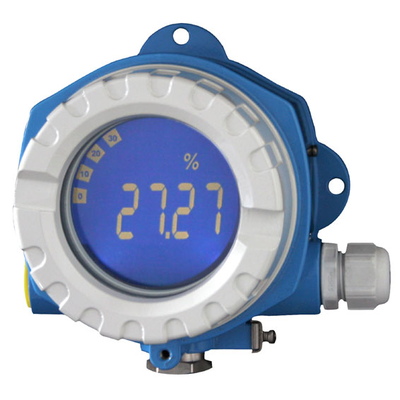 Endress+Hauser
Field Indicator RIA14
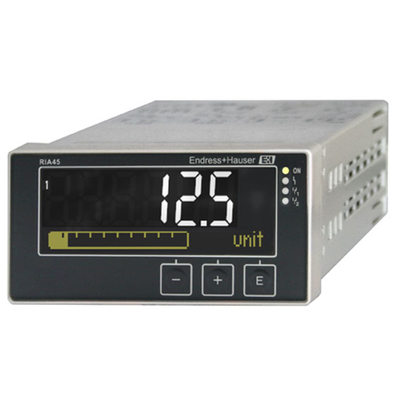 Endress+Hauser
Panel Meter with Control Unit RIA45
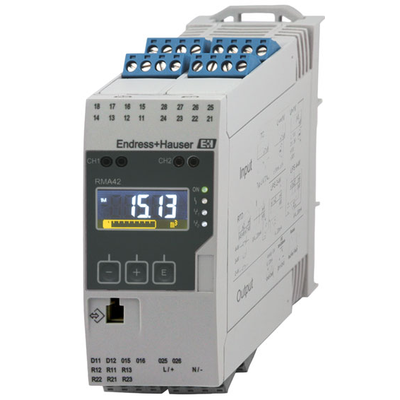 Endress+Hauser
Process Transmitter + Control Unit RMA42
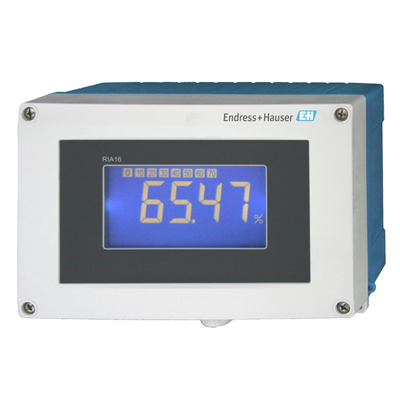 Endress+Hauser
Field Indicator RIA16
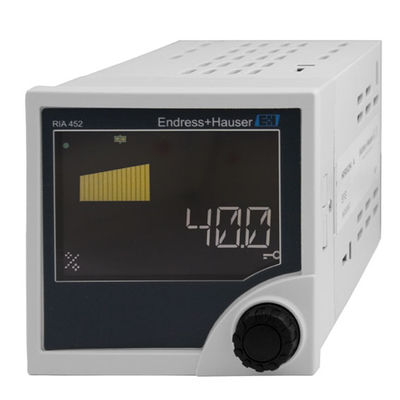 Endress+Hauser
Panel Meter RIA452
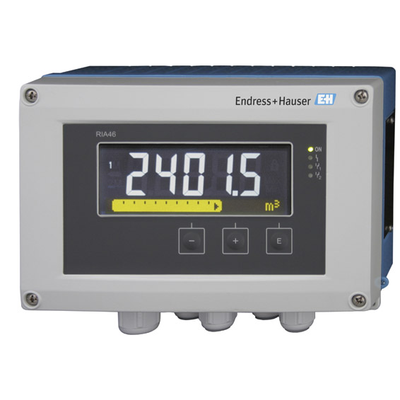 Endress+Hauser
Field Meter with Control Unit RIA46
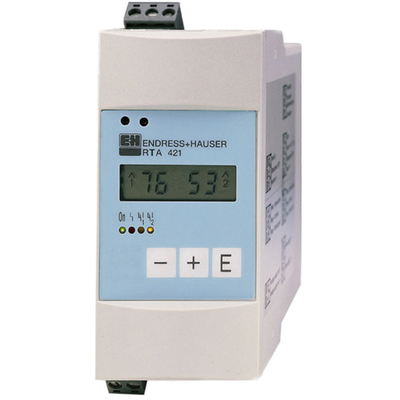 Endress+Hauser
Contactor RTA421
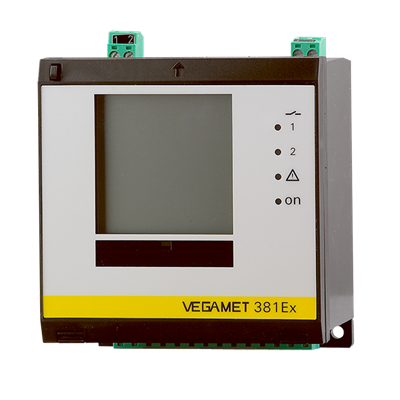 VEGA