
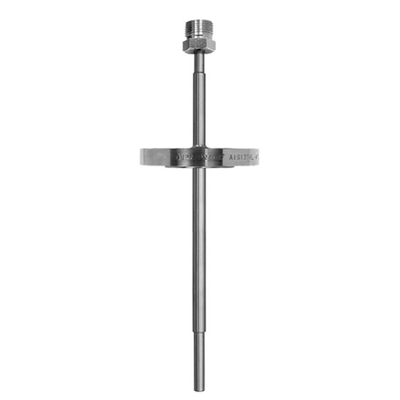
Technical Data
CompareThermowell
| Measuring Principle | Fabricated Thermowell |
| Characteristic / Application | Fabricated protection tube Similar to DIN 43772 Form 2F/3F |
| Head connection | external thread: M24 x 1.5 |
| Maximum standard immersion length | 445 mm, other lenghts on request |
| Process connection | Flange: DN25 PN40 B1 (EN1092-1) DN25 PN63 B1 (EN1092-1) |
| Thermowell root diameter | 16 x 10 mm |
| Medium contact material | 1.4571 |
| Tip shape | Reduced Ø12 x 7 x 50 mm |
| Temperature range | 200…600 °C (-328...1.112 °F) |
| Max. process pressure at 400 °C | Depending on pressure rating up to PN63 |
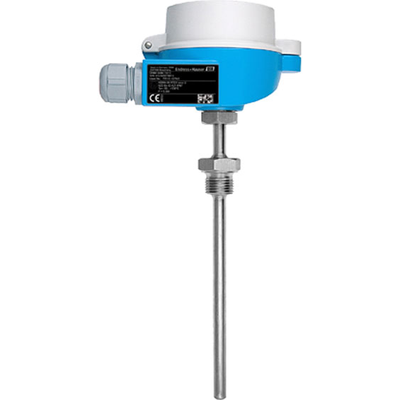
The thermowell is an important component of the temperature measuring point and is suitable for almost all industrial processes, especially in the oil & gas industry. It protects the measuring insert or measuring component against corrosive process media, high pressure and the flow of the temperature sensor itself, thus ensuring that the thermometer can be replaced during operation.
Advantages
-
Thermowell manufactured from welded tube
-
Flange process connection
-
Extension neck, insertion depth and total length can be selected according to process requirements
-
Special versions can be produced according to customer requirements
Application
The thermowell is designed for use in the oil & gas industry and can also be used in conventional applications. The modular design ensures it can be used in all industrial processes with severe thermal and mechanical stress.
Accessories/Spare parts
Source:Endress+Hauserwebsite public information
Configurator / Comparison
Case Studies
Municipal Wastewater Treatment · thermocouples — Application Case
Project Background
The project covers the inlet, biological and outlet stages of a municipal plant. The work centres on thermocouples and the core task is high-temperature measurement with thermocouples.
Operating Challenges
The medium and duty are characterised by high solids and corrosive fractions, with large diurnal flow swings, and effluent parameters drift and probes foul with sludge and biofilm. So thermocouples cannot be specified generically — it calls for choosing the type by temperature limit, atmosphere and response speed.
Solution
The Ainstru engineering team worked through the temperature range: temperature solution matched to measuring point and response needs. The configuration involves choosing the type by temperature limit, atmosphere and response speed, with these requirements in view: stable compliance with Grade 1A discharge limits and online data reporting.
Results
Since start-up the system has run steadily; the practical result is strong high-temperature capability, measuring furnace temperatures directly.
Food & Beverage · thermocouples — Application Case
Project Overview
The site is dosing, pasteurising, filling and CIP stages. The customer wanted thermocouples properly configured on the existing plant, with the aim of high-temperature measurement with thermocouples.
Technical Challenges
What actually causes trouble is syrups, dairy and beverages that scale easily, under strict hygienic requirements, and frequent cleaning demands instruments that withstand hot CIP/SIP caustic cycles. All of this means the thermocouples configuration has to involve choosing the type by temperature limit, atmosphere and response speed.
Configuration
Supply and installation were organised through the temperature range: temperature solution matched to measuring point and response needs. On site this meant choosing the type by temperature limit, atmosphere and response speed, checked line by line against: food-safety and hygienic design per 3-A / EHEDG.
Performance
After commissioning the outcome is strong high-temperature capability, measuring furnace temperatures directly, and the readings are now used for process tuning.
Chemical & Pharmaceutical · thermocouples — Application Case
Site Conditions
This is a Chemical & Pharmaceutical customer whose plant is at reactors, metering vessels and finished-product tanks. The main task was high-temperature measurement with thermocouples.
The Problem
The difficulty lies in highly corrosive media with solvents and crystallisation, partly in explosive atmospheres; at the same time corrosion plus Ex protection shortens instrument life and makes downtime costly. Specification therefore means choosing the type by temperature limit, atmosphere and response speed.
What We Did
We took a temperature range approach — temperature solution matched to measuring point and response needs. Delivery was built around choosing the type by temperature limit, atmosphere and response speed, with point-by-point checks on: Ex certification and GMP traceability of records.
Operating Outcome
In service the system performs as intended — strong high-temperature capability, measuring furnace temperatures directly, with routine maintenance falling noticeably.
Power & Energy · thermocouples — Application Case
Application Context
boiler feedwater, turbine condensate and FGD/DeNOx systems is a typical Power & Energy duty. The project started from thermocouples, focusing on high-temperature measurement with thermocouples.
Process Constraints
drift under high temperature and pressure, with very costly unplanned outages, and high temperature and pressure with both steam and saline water only amplify it. The thermocouples specification must therefore cover choosing the type by temperature limit, atmosphere and response speed.
Delivery Approach
Delivery was handled as the temperature range — temperature solution matched to measuring point and response needs. Execution centred on choosing the type by temperature limit, atmosphere and response speed, together with compliance with power-industry codes and unit availability targets.
Field Results
Operation shows the benefit clearly — strong high-temperature capability, measuring furnace temperatures directly, with confidence in this measuring point improving markedly.
Related Products
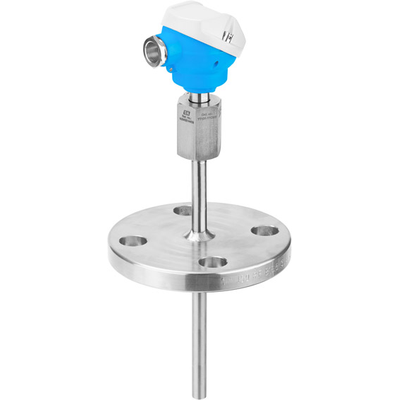 Endress+Hauser
iTHERM ModuLine TM121
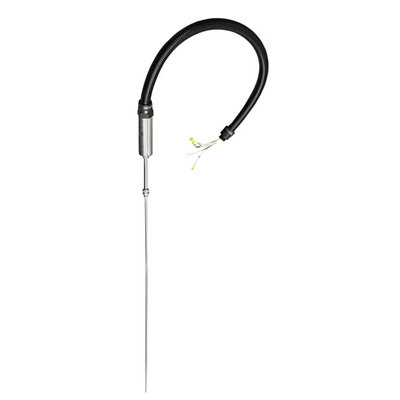 Endress+Hauser
iTHERM MultiSens Slim TMS21
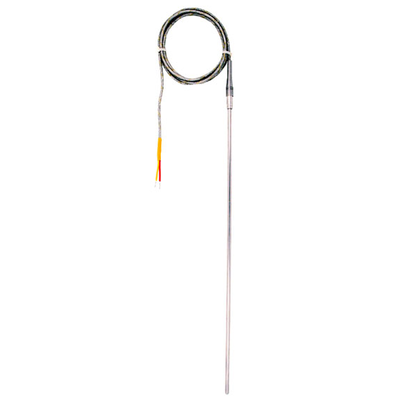 Endress+Hauser
Thermocouple sensor, wire probe
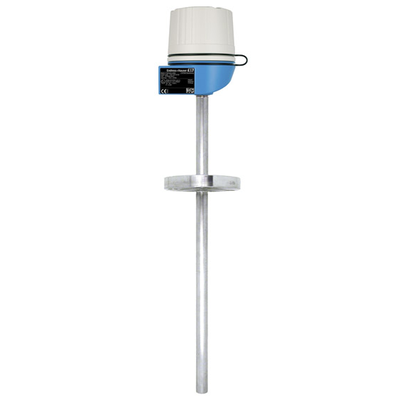 Endress+Hauser
Thermocouple TC63
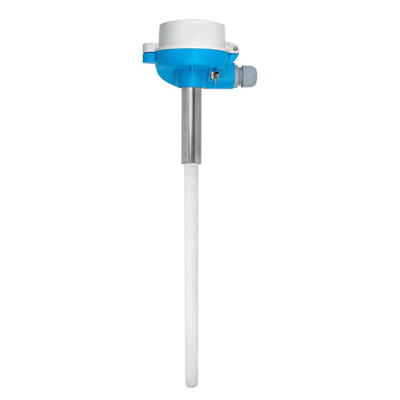 Endress+Hauser
iTHERM FlameLine TAF12D
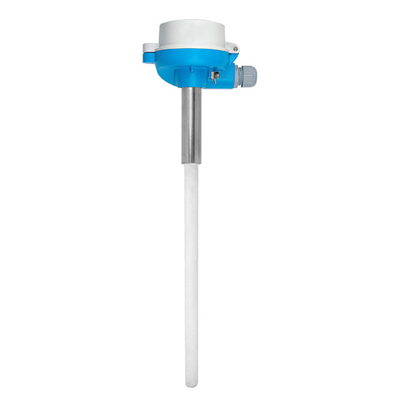 Endress+Hauser
iTHERM FlameLine TAF11
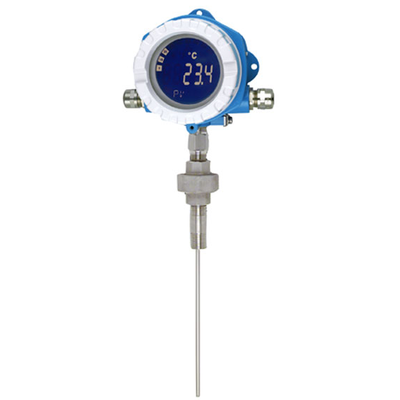 Endress+Hauser
Thermocouple TMT142C
 Endress+Hauser