
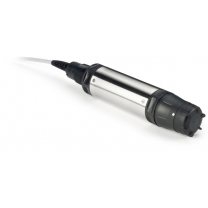
Principle of Operation:
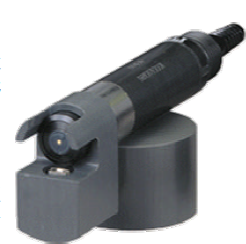
The LDO® II dissolved oxygen sensor is based on the principle of fluorescence quenching. Blue light is directed onto a fluorescent material, exciting it to emit red light. Because oxygen molecules can carry away energy, the time and intensity of the excited red light are inversely proportional to the concentration of oxygen molecules. The dissolved oxygen meter measures the phase difference between the excited red light and a reference light, and compares it with an internal calibration value to calculate the oxygen molecule concentration.
Typical Applications:
The LDO® II dissolved oxygen sensor is suitable for dissolved oxygen measurement in municipal wastewater, industrial water, drinking water, and other industries.
Features and Benefits:
-
No calibration required
-
The LDO® II dissolved oxygen sensor is calibrated at the factory and is ready to use out of the box with no calibration required. The fluorescence cap has a service life of up to two years.
-
No membrane replacement required
-
Featuring HACH's breakthrough fluorescence technology, this dissolved oxygen sensor requires virtually no maintenance, as there is no need to replace membranes, replenish electrolyte solution, or polish and clean the anode and cathode.
-
No missed service
-
This dissolved oxygen sensor features a customizable cleaning service reminder function that automatically triggers a service reminder message when due during dissolved oxygen measurement, alerting the user to clean the dissolved oxygen sensor and ensuring no cleaning cycle is missed.
-
No drift
-
The groundbreaking 3D calibration technology ensures that the LDO® II dissolved oxygen sensor is accurately calibrated at the factory, making dissolved oxygen measurement more accurate than ever before!
-
More rugged
-
The LDO® II dissolved oxygen sensor housing uses new materials while incorporating dual O-ring and ultrasonic sealing, providing corrosion resistance and water ingress protection for improved durability. The probe size has also been reduced, making dissolved oxygen measurement simpler and more suitable for harsh environments such as municipal wastewater and industrial wastewater.
Specifications
-
Measuring range 0 ~ 20.00 ppm
-
0 ~ 20.0 mg/L
-
0 ~200% saturation
-
Sensor immersion depth Pressure limit: 34 m, 345 kPa (112 ft), 345 kPa (50 psi);
-
Measuring accuracy ±0.1 ppm below 5 ppm
-
±0.2 ppm above 5 ppm
-
Temperature: ±0.2°C
-
Transmission distance Up to 1000 m (3280 ft) with junction box
-
Response time At 20ºC:
-
95% within approximately 60 seconds
-
90% within approximately 40 seconds
-
Cable length 10 m
-
Resolution 0.01 ppm (mg/L) / 0.1% saturation
-
Wetted materials Fluorescence cap: acrylic resin. Probe body: CPVC, polyurethane, Viton, Noryl, 316 stainless steel
-
Repeatability ±0.1 ppm (mg/L)
-
Dimensions Diameter x length: 49.53 x 255.27 mm (1.95 x 10.05 in)
-
Operating temperature 0 to 50°C (32 to 122°F)
-
Weight 1 kg (2.2 lb)
-
Flow rate Not required
Ordering Guide
-
9020000SLU LDO® II probe, 10 m cable
-
9020000-UPGRADE LDO® II probe with conversion adapter
-
9020000-SC200 LDO® II probe with conversion adapter, dual-channel SC200 controller
Source: Public information from the HACH Water Quality website
Case Studies
Municipal Wastewater Treatment · Controllers and Sensors — Application Case
Site Conditions
This is a Municipal Wastewater Treatment customer whose plant is at the inlet, biological and outlet stages of a municipal plant. The main task was online water monitoring with a controller and sensor combination.
The Problem
The difficulty lies in high solids and corrosive fractions, with large diurnal flow swings; at the same time effluent parameters drift and probes foul with sludge and biofilm. Specification therefore means matching each controller channel to its sensor type.
What We Did
We took a Hach channel approach — supplying against the Hach original part numbers. Delivery was built around matching each controller channel to its sensor type, with point-by-point checks on: stable compliance with Grade 1A discharge limits and online data reporting.
Operating Outcome
In service the system performs as intended — factory-matched combinations that make faults easier to locate, with routine maintenance falling noticeably.
Food & Beverage · Controllers and Sensors — Application Case
Application Context
dosing, pasteurising, filling and CIP stages is a typical Food & Beverage duty. The project started from Controllers and Sensors, focusing on online water monitoring with a controller and sensor combination.
Process Constraints
frequent cleaning demands instruments that withstand hot CIP/SIP caustic cycles, and syrups, dairy and beverages that scale easily, under strict hygienic requirements only amplify it. The Controllers and Sensors specification must therefore cover matching each controller channel to its sensor type.
Delivery Approach
Delivery was handled as the Hach channel — supplying against the Hach original part numbers. Execution centred on matching each controller channel to its sensor type, together with food-safety and hygienic design per 3-A / EHEDG.
Field Results
Operation shows the benefit clearly — factory-matched combinations that make faults easier to locate, with confidence in this measuring point improving markedly.
Chemical & Pharmaceutical · Controllers and Sensors — Application Case
Customer Profile
The typical setting in Chemical & Pharmaceutical is reactors, metering vessels and finished-product tanks. The measuring point is Controllers and Sensors; the focus is online water monitoring with a controller and sensor combination.
Key Difficulties
Conditions are highly corrosive media with solvents and crystallisation, partly in explosive atmospheres and, on top of that, corrosion plus Ex protection shortens instrument life and makes downtime costly, which a standard configuration cannot handle for long. The design therefore starts with matching each controller channel to its sensor type.
Implementation
The scope ran through the Hach channel: supplying against the Hach original part numbers. Technically it hinges on matching each controller channel to its sensor type, and on these requirements: Ex certification and GMP traceability of records.
Customer Benefit
In practice this means factory-matched combinations that make faults easier to locate, which cut the workload on the site maintenance team.
Power & Energy · Controllers and Sensors — Application Case
Project Background
The project covers boiler feedwater, turbine condensate and FGD/DeNOx systems. The work centres on Controllers and Sensors and the core task is online water monitoring with a controller and sensor combination.
Operating Challenges
The medium and duty are characterised by high temperature and pressure with both steam and saline water, and drift under high temperature and pressure, with very costly unplanned outages. So Controllers and Sensors cannot be specified generically — it calls for matching each controller channel to its sensor type.
Solution
The Ainstru engineering team worked through the Hach channel: supplying against the Hach original part numbers. The configuration involves matching each controller channel to its sensor type, with these requirements in view: compliance with power-industry codes and unit availability targets.
Results
Since start-up the system has run steadily; the practical result is factory-matched combinations that make faults easier to locate.
Related Products
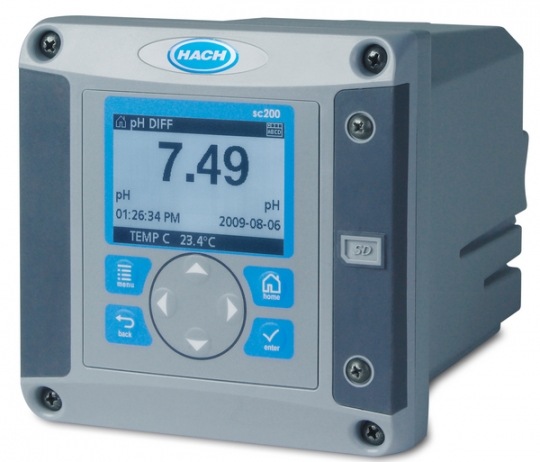 HACH
Universal controller
 HACH
sc turbidity / suspended solids (sludge) analyzer
 HACH
sc online nitrate analyzer
 HACH
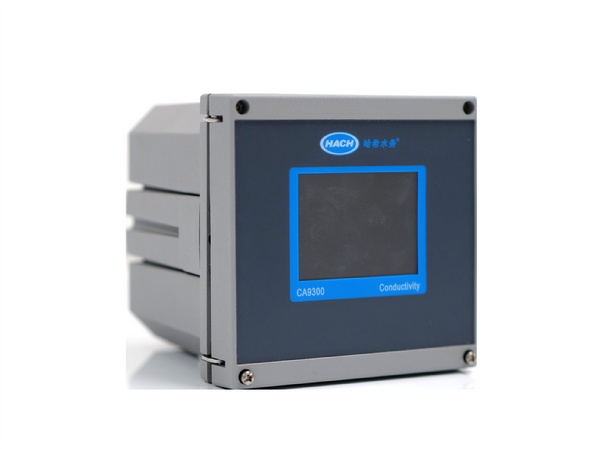
pH/ORP/conductivity controller
 HACH
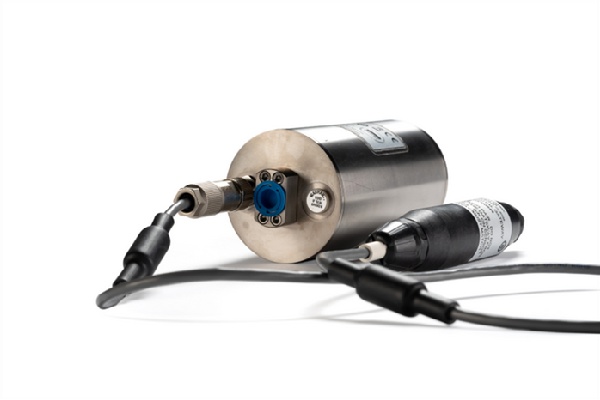
PAH (polycyclic aromatic hydrocarbons) analyzer
 HACH
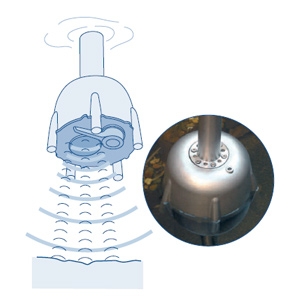
Sludge blanket monitor (ultrasonic)
 HACH
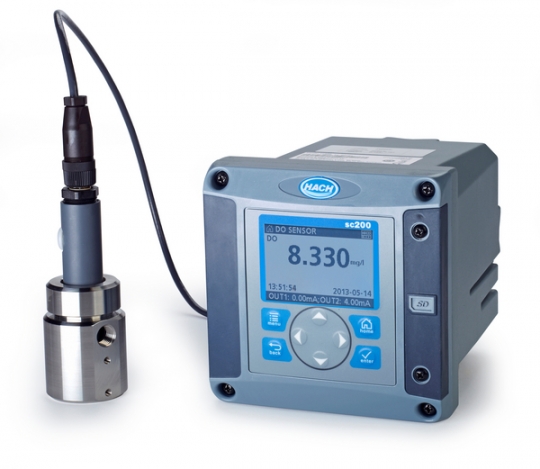
9582 dissolved oxygen meter
 HACH