

Technical Data
CompareContinuous / Liquids
| Measuring Principle | Level radar |
| Characteristic / Application | Compact device for continuous non-contact level measurement with hygienic requirements (3A, EHEDG, ASME BPE, USP Class VI); For small containers with many internals |
| Specialities | Heartbeat Technology Bluetooth® commissioning Operation and maintenance with SmartBlue app 180 GHz for very small process connections and narrow beam angles |
| Supply / Communication | 2-wire HART IO-Link Bluetooth® wireless technology |
| Frequency | 80 GHz 180 GHz |
| Accuracy | +/-1 mm (0.04 in) |
| Ambient temperature | -40 °C … +80 °C (-40 °F … +176 °F) |
| Process temperature | -40 to +150 °C (-40 to +302 °F) |
| Process pressure / max. overpressure limit | -1 to +20 bar (-14.5 to +290 psi) |
| Main wetted parts | PEEK PTFE 316L (for threaded connections) |
| Process connection | Thread ASME B1.20.1, NPT Thread ISO228, G |
| Process connection hygienic | NEUMO BioControl Clamp/Tri-Clamp Thread metric (DIN13) |
| Max. measurement distance | 15 m (49 ft) |
| Communication | HART IO-Link Bluetooth® wireless technology and app (optional) |
| Certificates / Approvals | ATEX, CAN/US, EAC Ex, JPN Ex, KC Ex, INMETRO Ex, NEPSI Ex, UK Ex |
| Safety approvals | Overfill protection WHG |
| Design approvals | Acceptance test certificate 3.1, EN10204; Declaration of Conformity ASME B31.3; Conformity to cGMP; CRN approval; Surface roughness test ISO4287/Ra; Delta-Ferrite test |
| Hygienic approvals | 3-A; EHEDG; CoC-ASME BPE; EU Food Contact Material (EC) 1935/2004; US Food Contact Material FDA CFR 21; CN Food Contact Materials GB 4806 |
| Drinking water approvals | KTW NSF/ANSI 61 |
| Options | Display, Customized settings, App 'SmartBlue' for commissioning and operation via Bluetooth |
Micropilot FMR43 – radar sensor for hygienic processes
High-performance sensor, particularly compact and ideal for rapidly changing level applications
Advantages
Excellent ease of use thanks to easy setup and operation using guided wizards
Increased process and product safety through configuration integrity - the checksum algorithm (CRC) ensures that safety-related parameters remain unchanged
Increased productivity through traceable and documented on-demand verification, including ensuring radar accuracy without interrupting the process using Heartbeat Technology
Documented compliance through certified hygienic design and verified material consistency and traceability
Flexible scaling - thanks to the compact sensor design and small process connections, it can be installed in confined spaces and also used for large tanks and silos
Field of application
The Micropilot FMR43 is a free-space radar sensor for continuous non-contact level measurement and part of the Compact Line family. This product family was developed specifically for hygienic applications and combines a compact design with full performance. The device ensures reliable measurement even under rapidly changing or turbulent process conditions. In addition to the proven 80 GHz technology, the 180 GHz frequency option ensures use even in particularly small process tanks.
The Micropilot FMR43 is suitable for free-space applications up to 15 m (49 ft) and offers an additional 180 GHz sensor option for small vessels.
The Micropilot FMR43 is suitable for a wide range of hygienic applications:
Configurator / Comparison
Technical documentation
Technical data
Documents/Manuals/Software
Accessories/Spare parts
Source:Endress+Hauserpublic information from the website
Manuals & Documents 10
All documents for this model10 documents · click to expand
BA Micropilot FMR43 HART Chinese
BA Micropilot FMR43 IO-Link Chinese
BA Micropilot FMR43 HART English
BA Micropilot FMR43 IO-Link English
TI 焊接接头、过程转接头和法兰 Chinese
TI Micropilot FMR43 HART Chinese
TI Micropilot FMR43 IO-Link Chinese
TI Weld-in adapter, process adapter and flanges English
TI Micropilot FMR43 HART English
TI Micropilot FMR43 IO-Link English
Case Studies
Municipal Wastewater Treatment · radar — Application Case
Project Overview
The site is the inlet, biological and outlet stages of a municipal plant. The customer wanted radar properly configured on the existing plant, with the aim of continuous radar level measurement of liquids and solids.
Technical Challenges
What actually causes trouble is high solids and corrosive fractions, with large diurnal flow swings, and effluent parameters drift and probes foul with sludge and biofilm. All of this means the radar configuration has to involve choosing antenna type by dielectric constant, range and process connection.
Configuration
Supply and installation were organised through the level range: level solution matched to the actual tank and silo geometry. On site this meant choosing antenna type by dielectric constant, range and process connection, checked line by line against: stable compliance with Grade 1A discharge limits and online data reporting.
Performance
After commissioning the outcome is reliable under heavy dust and vapour, reducing manual dipping, and the readings are now used for process tuning.
Food & Beverage · radar — Application Case
Site Conditions
This is a Food & Beverage customer whose plant is at dosing, pasteurising, filling and CIP stages. The main task was continuous radar level measurement of liquids and solids.
The Problem
The difficulty lies in syrups, dairy and beverages that scale easily, under strict hygienic requirements; at the same time frequent cleaning demands instruments that withstand hot CIP/SIP caustic cycles. Specification therefore means choosing antenna type by dielectric constant, range and process connection.
What We Did
We took a level range approach — level solution matched to the actual tank and silo geometry. Delivery was built around choosing antenna type by dielectric constant, range and process connection, with point-by-point checks on: food-safety and hygienic design per 3-A / EHEDG.
Operating Outcome
In service the system performs as intended — reliable under heavy dust and vapour, reducing manual dipping, with routine maintenance falling noticeably.
Chemical & Pharmaceutical · radar — Application Case
Application Context
reactors, metering vessels and finished-product tanks is a typical Chemical & Pharmaceutical duty. The project started from radar , focusing on continuous radar level measurement of liquids and solids.
Process Constraints
corrosion plus Ex protection shortens instrument life and makes downtime costly, and highly corrosive media with solvents and crystallisation, partly in explosive atmospheres only amplify it. The radar specification must therefore cover choosing antenna type by dielectric constant, range and process connection.
Delivery Approach
Delivery was handled as the level range — level solution matched to the actual tank and silo geometry. Execution centred on choosing antenna type by dielectric constant, range and process connection, together with Ex certification and GMP traceability of records.
Field Results
Operation shows the benefit clearly — reliable under heavy dust and vapour, reducing manual dipping, with confidence in this measuring point improving markedly.
Power & Energy · radar — Application Case
Customer Profile
The typical setting in Power & Energy is boiler feedwater, turbine condensate and FGD/DeNOx systems. The measuring point is radar ; the focus is continuous radar level measurement of liquids and solids.
Key Difficulties
Conditions are high temperature and pressure with both steam and saline water and, on top of that, drift under high temperature and pressure, with very costly unplanned outages, which a standard configuration cannot handle for long. The design therefore starts with choosing antenna type by dielectric constant, range and process connection.
Implementation
The scope ran through the level range: level solution matched to the actual tank and silo geometry. Technically it hinges on choosing antenna type by dielectric constant, range and process connection, and on these requirements: compliance with power-industry codes and unit availability targets.
Customer Benefit
In practice this means reliable under heavy dust and vapour, reducing manual dipping, which cut the workload on the site maintenance team.
Related Products
 Endress+Hauser
Micropilot FMR20
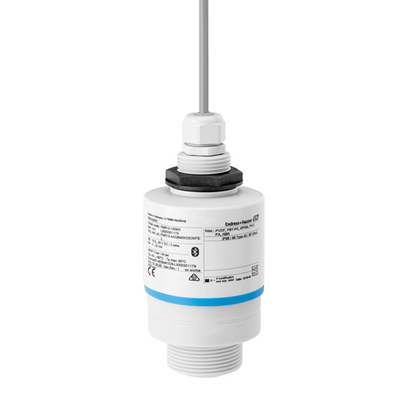 Endress+Hauser
Micropilot FMR10
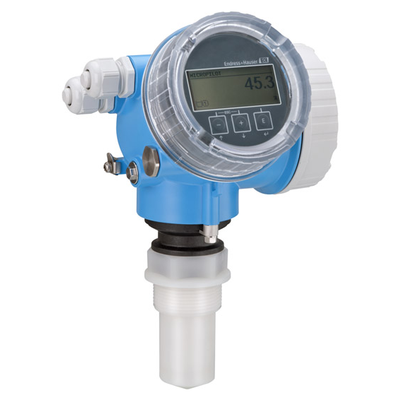 Endress+Hauser
Micropilot FMR50
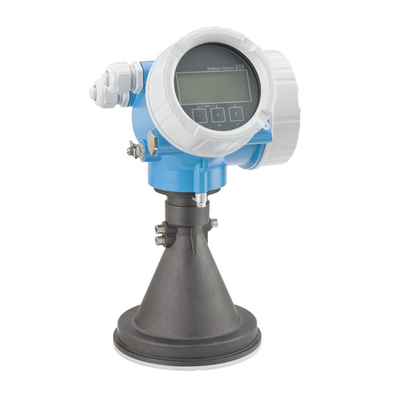 Endress+Hauser
Micropilot FMR56
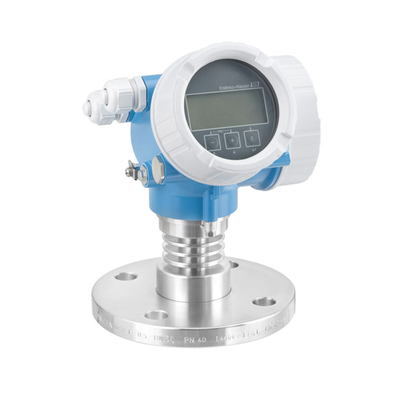 Endress+Hauser
Micropilot FMR52
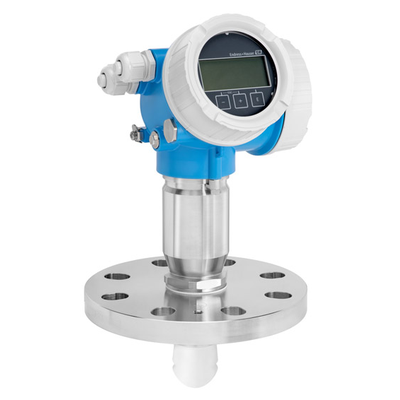 Endress+Hauser
Micropilot FMR60
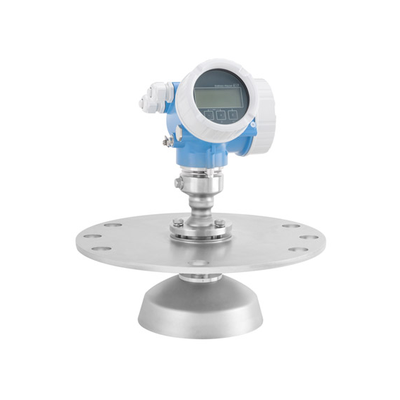 Endress+Hauser
Micropilot FMR57
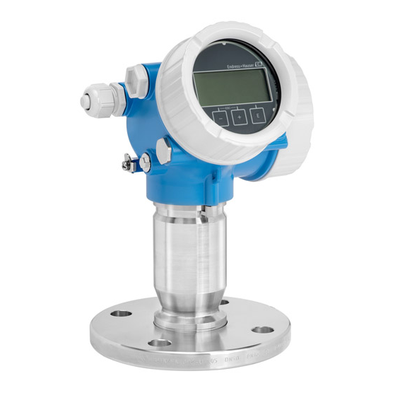 Endress+Hauser