
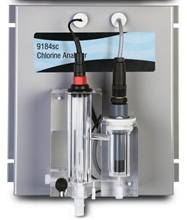
Principle of Operation:
-
The principle of the 9184sc online free chlorine analyzer is as follows: the electrolyte and the permeable membrane separate the electrolytic cell from the water sample, and the permeable membrane can selectively allow ClO- to penetrate; there is a fixed potential difference between the two electrodes, and the generated current intensity can be converted into free chlorine concentration.
-
At the cathode: ClO-+2H++2e-→Cl-+H2O
-
At the anode: Cl-+Ag→AgCl+e-
-
Since under specific temperature and pH conditions, there is a fixed conversion relationship among HOCl, ClO- and free chlorine, free chlorine measurement is carried out in this way.
Industry Applications:
The 9184sc online free chlorine analyzer is suitable for hypochlorous acid (HOCL)/free chlorine measurement in drinking water and industrial process water disinfection processes, and is especially suitable for free chlorine measurement in the influent of membrane treatment processes such as reverse osmosis.
Instrument Features:
-
The 9184sc online free chlorine analyzer has a wide measuring range and a low detection limit, meeting the needs of users measuring in low ranges.
-
The 9184sc online free chlorine analyzer uses a selective membrane sensor.
-
The 9184sc online free chlorine analyzer has pH and temperature compensation, making readings closer to the true value.
-
The 9184sc online free chlorine analyzer has a built-in flow control device.
-
Low maintenance: calibrate once every two months, and replace the electrolyte and membrane once every six months.
-
Plug and play: it uses the electrode method; when in use, simply plug in the electrode and power on to perform free chlorine measurement.
Technical Specifications
-
Measuring range: 0.005 - 20 ppm (mg/L) HOCl
-
Minimum detection limit: 5 ppb or 0.005 mg/L HOCl
-
Accuracy: 2% or± 10 ppb HOCl, whichever is greater
-
Response time: 90% in less than about 90 seconds
-
Sample flow rate: 200~250 mL/min automatically adjustable
-
Storage temperature: -20~60℃
-
Operating temperature: 0~45℃
-
Sample temperature: 2~45℃
-
Sample pH range: 4 ~ 8
-
Calibration method: laboratory comparison method
-
Calibration interval: once/2 months
-
Maintenance interval: generally replace the membrane and electrolyte once every six months
-
Sample inlet connection: 1/4-in. O.D.
-
Drain connection: 1/2-in. I.D.
-
Protection class: IP-66/NEMA 4X
-
Instrument dimensions: 270 x 250 mm
Ordering Guide
TFC Analyzer Panel
-
LXV432.99.00001 includes 9184sc TFC sensor, panel, pH sensor
-
LXV430.99.00001 9184sc HClO sensor, panel, without pH sensor
Controller
-
LXV404.99.00552 sc200 standard controller, dual-channel, digital, 4-20mA
-
LXV404.99.01552 sc200 controller, dual-channel, digital, MODBUS RS232/485
-
For other sc200 ordering options, please refer to the ordering instructions in the sc200 datasheet
Accessories
-
Z368417,00000 pH sensor
-
Z09184=A=1001 9184sc sensor
-
Z09184=A=3500 9184sc membrane, pre-assembled, 4 pcs
-
Z09184=A=3600 9184sc electrolyte
Source: Public information from the HACH Water Quality website
Case Studies
Municipal Wastewater Treatment · HACH-ONLINE — Application Case
Project Background
The project covers the inlet, biological and outlet stages of a municipal plant. The work centres on HACH-ONLINE and the core task is continuous outfall monitoring with Hach online instruments.
Operating Challenges
The medium and duty are characterised by high solids and corrosive fractions, with large diurnal flow swings, and effluent parameters drift and probes foul with sludge and biofilm. So HACH-ONLINE cannot be specified generically — it calls for configured by monitoring range, reagent replacement interval and conditioning.
Solution
The Ainstru engineering team worked through the online water-analysis line: integrating around each online monitoring point. The configuration involves configured by monitoring range, reagent replacement interval and conditioning, with these requirements in view: stable compliance with Grade 1A discharge limits and online data reporting.
Results
Since start-up the system has run steadily; the practical result is steady reagent and consumable supply, making upkeep predictable.
Food & Beverage · HACH-ONLINE — Application Case
Project Overview
The site is dosing, pasteurising, filling and CIP stages. The customer wanted HACH-ONLINE properly configured on the existing plant, with the aim of continuous outfall monitoring with Hach online instruments.
Technical Challenges
What actually causes trouble is syrups, dairy and beverages that scale easily, under strict hygienic requirements, and frequent cleaning demands instruments that withstand hot CIP/SIP caustic cycles. All of this means the HACH-ONLINE configuration has to involve configured by monitoring range, reagent replacement interval and conditioning.
Configuration
Supply and installation were organised through the online water-analysis line: integrating around each online monitoring point. On site this meant configured by monitoring range, reagent replacement interval and conditioning, checked line by line against: food-safety and hygienic design per 3-A / EHEDG.
Performance
After commissioning the outcome is steady reagent and consumable supply, making upkeep predictable, and the readings are now used for process tuning.
Chemical & Pharmaceutical · HACH-ONLINE — Application Case
Site Conditions
This is a Chemical & Pharmaceutical customer whose plant is at reactors, metering vessels and finished-product tanks. The main task was continuous outfall monitoring with Hach online instruments.
The Problem
The difficulty lies in highly corrosive media with solvents and crystallisation, partly in explosive atmospheres; at the same time corrosion plus Ex protection shortens instrument life and makes downtime costly. Specification therefore means configured by monitoring range, reagent replacement interval and conditioning.
What We Did
We took a online water-analysis line approach — integrating around each online monitoring point. Delivery was built around configured by monitoring range, reagent replacement interval and conditioning, with point-by-point checks on: Ex certification and GMP traceability of records.
Operating Outcome
In service the system performs as intended — steady reagent and consumable supply, making upkeep predictable, with routine maintenance falling noticeably.
Power & Energy · HACH-ONLINE — Application Case
Application Context
boiler feedwater, turbine condensate and FGD/DeNOx systems is a typical Power & Energy duty. The project started from HACH-ONLINE, focusing on continuous outfall monitoring with Hach online instruments.
Process Constraints
drift under high temperature and pressure, with very costly unplanned outages, and high temperature and pressure with both steam and saline water only amplify it. The HACH-ONLINE specification must therefore cover configured by monitoring range, reagent replacement interval and conditioning.
Delivery Approach
Delivery was handled as the online water-analysis line — integrating around each online monitoring point. Execution centred on configured by monitoring range, reagent replacement interval and conditioning, together with compliance with power-industry codes and unit availability targets.
Field Results
Operation shows the benefit clearly — steady reagent and consumable supply, making upkeep predictable, with confidence in this measuring point improving markedly.
Related Products
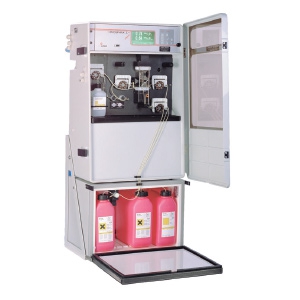 HACH
Sigma total phosphorus / orthophosphate analyzer
sc dichromate COD online analyzer
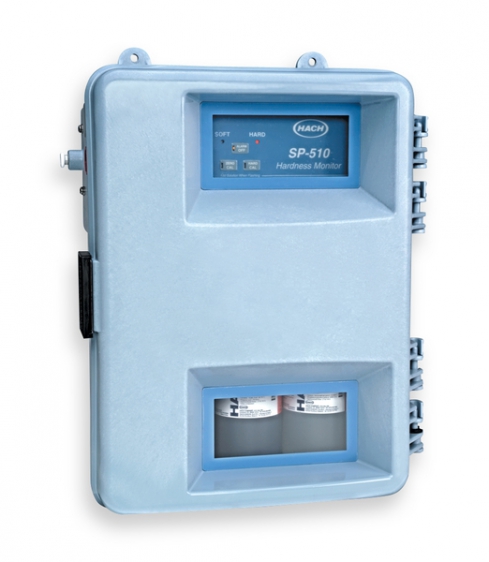 HACH
Online water hardness analyzer
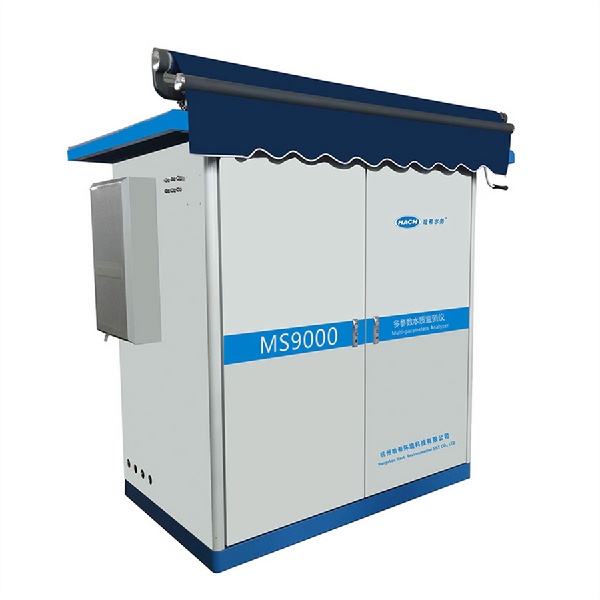 HACH
Multi-parameter automatic water analyzer
 HACH
Multi-parameter online water analyzer
 HACH
Online silica analyzer
 HACH
Ammonia nitrogen analyzer
 HACH